In industrial automation and machinery design, proximity sensors play a critical role in non-contact detection, position sensing, and object counting. Among the diverse range of proximity sensors available, the 18mm barrel-style inductive proximity sensor stands out as a particularly versatile and widely adopted component. Characterized by its robust cylindrical housing with an 18mm diameter, this sensor type is engineered to deliver reliable performance in demanding environments. This article delves into the technical specifications, operational principles, selection criteria, and typical applications of 18mm barrel proximity sensors, providing essential insights for engineers and system integrators.
The fundamental operating principle of an inductive 18mm barrel proximity sensor is based on electromagnetic induction. The sensor generates a high-frequency oscillating electromagnetic field from its active face. When a metallic target object enters this detection field, eddy currents are induced within the target. This causes a change in the oscillation amplitude within the sensor's internal LC tank circuit. The sensor's embedded electronics detect this change and trigger a solid-state switching output, typically in the form of a PNP (sourcing) or NPN (sinking) transistor signal. It is crucial to note that standard inductive sensors are designed primarily for detecting ferrous and non-ferrous metals; detection ranges can vary based on the target material's properties, with a standardized reduction factor applied for metals like aluminum or copper.
Key technical features define the 18mm form factor. The sensing distance, or nominal range, for a standard 18mm inductive sensor is commonly 5mm or 8mm, though specialized versions may offer different ranges. The housing is typically constructed from nickel-plated brass or stainless steel, providing excellent resistance to mechanical impact, coolant, and oil ingress, often meeting IP67 or IP68 protection ratings. Electrical connections are usually facilitated via a pre-wired cable or a quick-disconnect (QD) connector system, with M12 connectors being a prevalent industry standard for this size. Output configurations are diverse, including DC 3-wire (PNP/NPN), 2-wire AC/DC, and analog (4-20mA or 0-10V) variants. Many models incorporate LED status indicators for power and output state, aiding in installation and troubleshooting.
Selecting the appropriate 18mm barrel sensor requires careful consideration of several parameters beyond just the physical size. The operating voltage range (e.g., 10-30V DC) must match the control system's power supply. The output type (PNP vs. NPN) must be compatible with the PLC or controller input card logic. The switching frequency, which indicates how many on/off cycles per second the sensor can handle, is vital for high-speed applications. Environmental factors are paramount; sensors intended for washdown areas or exposed to harsh chemicals may require specific housing materials like PTFE-coated stainless steel. Additionally, factors like temperature rating, short-circuit and reverse polarity protection, and immunity to electromagnetic interference (EMI) contribute to long-term reliability.
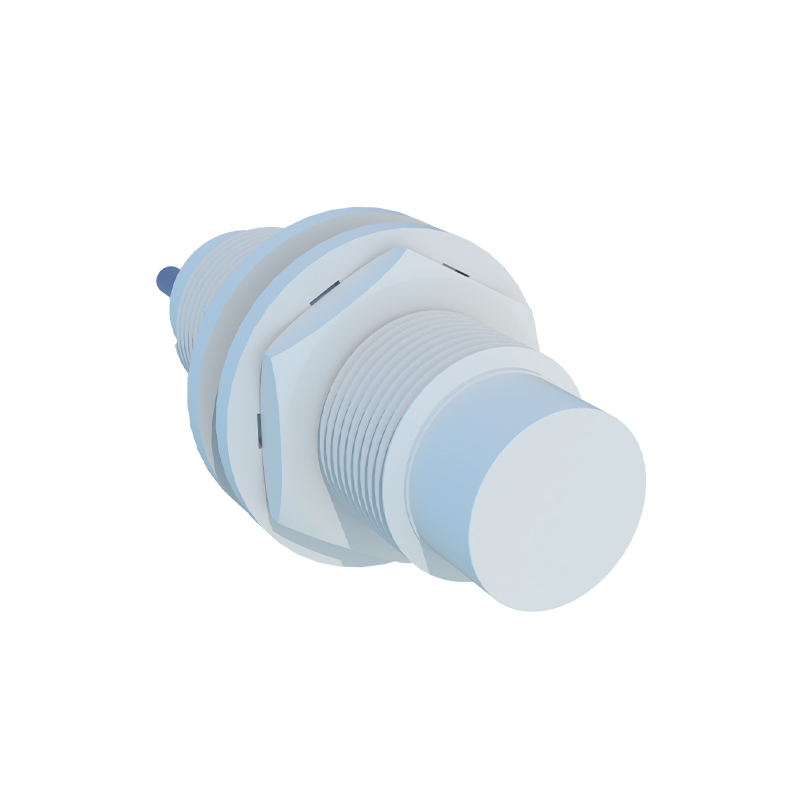
The applications for 18mm barrel proximity sensors are extensive across manufacturing and process industries. They are frequently employed for end-of-travel detection on pneumatic and hydraulic cylinders, often using a built-in magnet or a designated target. In conveyor systems, they serve as part counters or jam detectors. On machine tools, they verify the presence of a tool in the spindle or confirm the closed position of a safety guard. In assembly automation, they detect the presence of metal components, pallets, or fixtures with high precision and repeatability. Their robust construction makes them suitable for use in material handling, packaging, automotive assembly, and woodworking machinery.
Installation and maintenance practices significantly impact sensor performance and lifespan. Proper mounting is essential; sensors should be installed with adequate clearance from surrounding metal structures to prevent false triggering—a concept known as the flush-mountable or non-flush-mountable characteristic. Non-flush (shielded) sensors can be embedded in metal, while flush (unshielded) types require a metal-free zone around the sensing face. Regular cleaning of the sensing face to remove debris, metal chips, or buildup is necessary. While these sensors are generally maintenance-free, periodic functional checks should be integrated into the equipment's preventive maintenance schedule to ensure continuous operational integrity.
In conclusion, the 18mm barrel proximity sensor is a fundamental building block in modern industrial control systems. Its standardized size, combined with a wide array of electrical and performance options, offers engineers a reliable solution for countless detection tasks. By understanding its operating principles, key specifications, and application best practices, professionals can effectively select, deploy, and maintain these sensors to enhance machine efficiency, safety, and productivity. As automation evolves, these sensors continue to be refined with features like IO-Link communication for smart factory integration, ensuring their relevance in the Industrial Internet of Things (IIoT) landscape.