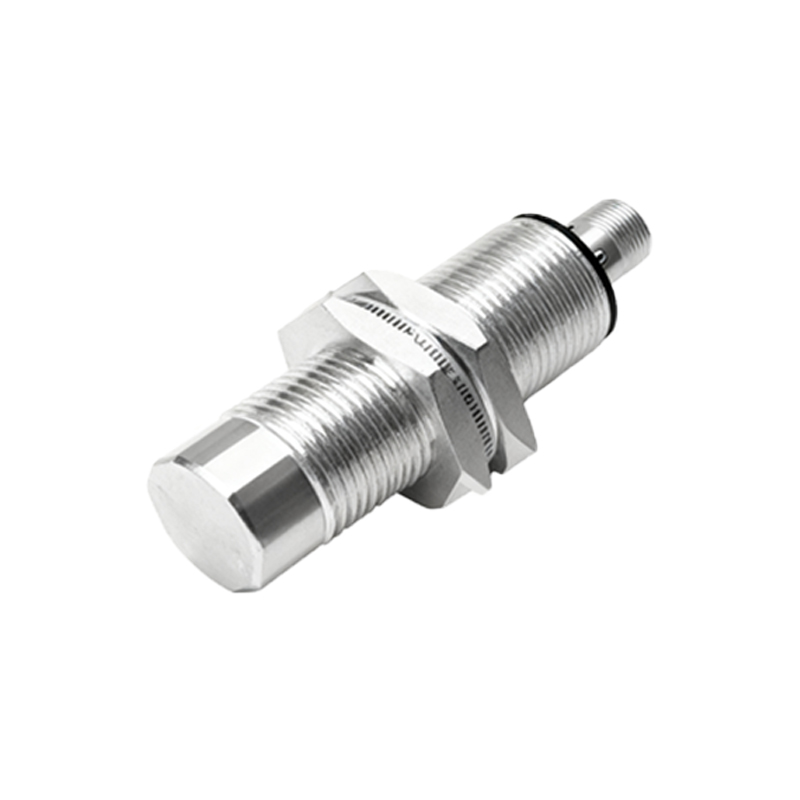
In the intricate world of industrial automation and machine design, sensor integration is a critical factor influencing system performance, reliability, and spatial efficiency. Among the diverse array of sensing solutions, the right-angle proximity sensor stands out as a specialized component engineered to address specific installation challenges. Unlike standard cylindrical or block-style sensors, a right-angle proximity sensor features a housing where the sensing face is oriented at a 90-degree angle to the body and cable exit. This distinctive geometry is not merely a packaging choice but a deliberate design strategy with profound implications for machine layout and functionality.
The fundamental operating principle remains consistent with standard inductive or capacitive proximity sensors. Inductive variants, the most common for metal detection, generate an electromagnetic field from the sensing face. When a metallic target enters this field, it induces eddy currents, causing a change in oscillation amplitude that is detected by the sensor's circuitry, triggering an output signal. Capacitive sensors operate by detecting changes in capacitance, making them suitable for non-metallic materials like plastics, wood, or liquids. The right-angle configuration does not alter this core technology; instead, it reorients the effective detection zone to allow for installation in tight corners, along machine edges, or in areas where direct, inline mounting is physically impossible.
The primary advantage of the right-angle form factor is its exceptional space-saving capability. In compact machinery, control panels, or robotic cells, real estate is at a premium. A standard sensor protruding from a mounting bracket can consume valuable clearance or create interference. The right-angle sensor tucks neatly into corners, allowing the sensing face to be positioned parallel to the machine frame while the body extends along it. This minimizes the sensor's footprint and reduces the risk of accidental impact or damage from passing materials or maintenance activities. This design is particularly beneficial for edge detection on conveyor systems, position verification of slides or actuators in confined linear guides, and end-of-travel sensing within compact pneumatic or hydraulic cylinders.
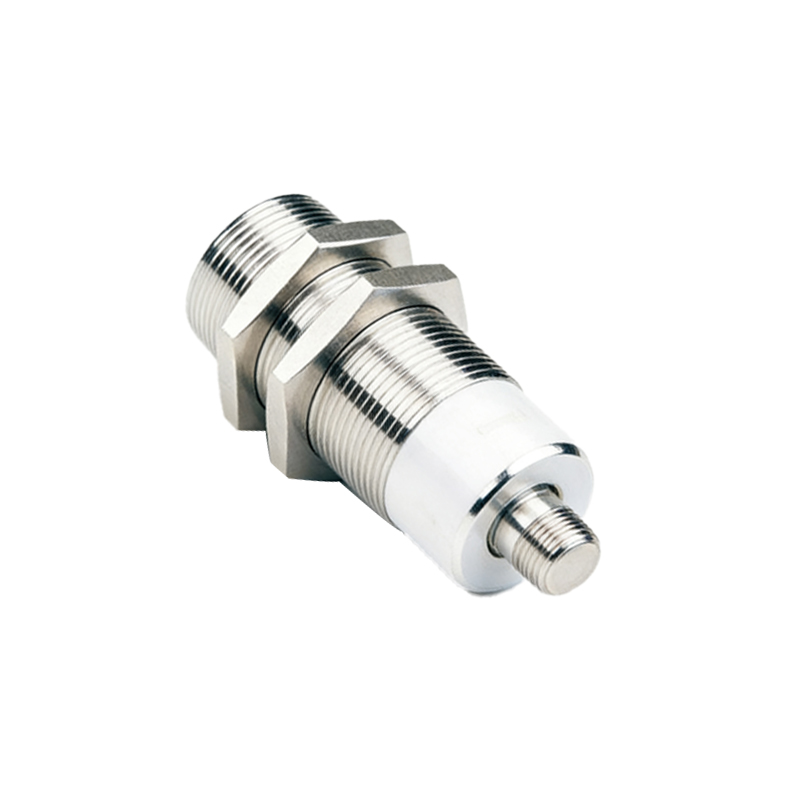
When selecting a right-angle proximity sensor for an application, several technical parameters demand careful consideration beyond the basic sensing technology. Sensing range, typically specified for a standard mild steel target in inductive models, is crucial. The right-angle housing may influence the shape of the electromagnetic field slightly, but reputable manufacturers provide precise specifications. The housing material, often nickel-plated brass, stainless steel, or rugged PBT plastic, must be chosen based on the environmental conditions, including exposure to coolants, oils, washdowns (requiring high IP ratings like IP67 or IP69K), or metallic chips. Output configuration is another key decision; PNP (sourcing) or NPN (sinking) transistor outputs are standard, with some models offering analog outputs or IO-Link digital communication for advanced diagnostics and parameter setting.
Electrical characteristics such as operating voltage (commonly 10-30V DC), current consumption, and switching frequency (for high-speed applications) must align with the control system's capabilities. The inclusion of built-in diagnostics, like LED status indicators visible from multiple angles, is invaluable for quick troubleshooting. Furthermore, the mechanical design of the mounting, whether it uses a precise threaded barrel for adjustable positioning or a flat housing with integrated bolt holes, affects installation rigidity and long-term stability against vibration.
In practice, these sensors are workhorses in material handling, packaging, automotive assembly, and CNC machining. A classic application is in automated storage and retrieval systems (AS/RS), where right-angle sensors mounted on vertical posts detect the presence of shuttle carts or lifting platforms without obstructing the travel path. In robotic welding cells, they provide discrete position feedback for tool changers or part fixtures located in cramped corners. For food and beverage processing, capacitive right-angle sensors with hygienic housings monitor fill levels in pipes or containers mounted close to walls.
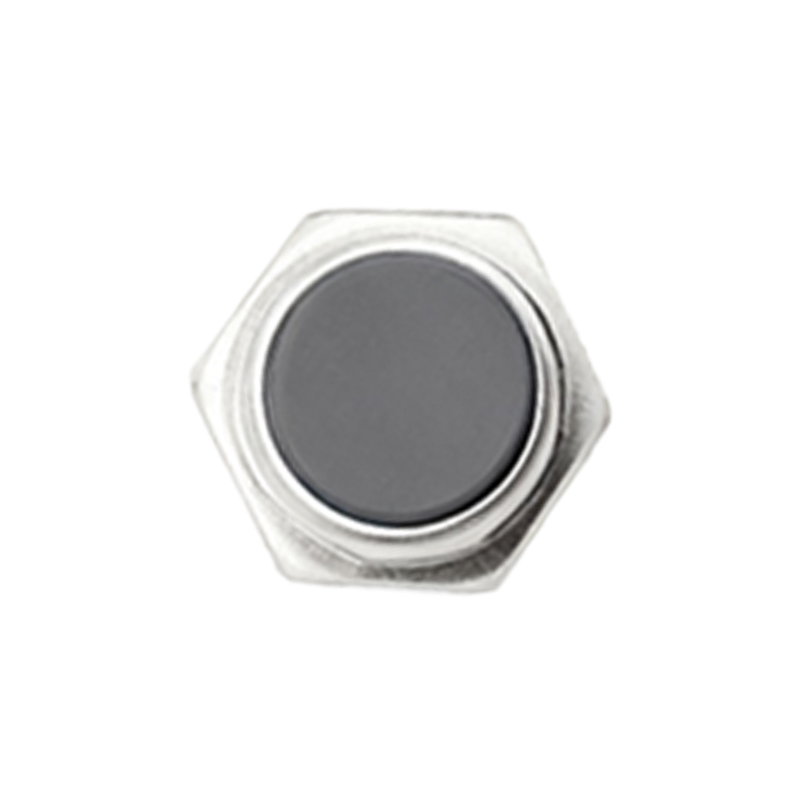
Installation and alignment, however, require attention. While the right-angle design simplifies placement in corners, the sensing face must be positioned within its specified range and parallel to the target's approach path for optimal performance. Incorrect alignment can lead to reduced effective sensing distance or erratic switching. Adequate clearance behind the sensor body for wiring and connector mating is also essential, even with the side-exiting cable or connector.
In conclusion, the right-angle proximity sensor is a testament to purposeful engineering in industrial components. It solves a fundamental spatial constraint without compromising on the robust sensing performance required in demanding environments. By carefully evaluating factors such as sensing technology, environmental rating, electrical interface, and mechanical form, engineers and system integrators can leverage these sensors to build cleaner, more compact, and highly reliable automated systems. Their continued evolution, particularly with the integration of smart sensor features, ensures they will remain a vital tool for optimizing machine design and operational efficiency.