In the realm of precision measurement and automation, CCD laser sensors stand as a cornerstone technology. These devices combine the principles of Charge-Coupled Device (CCD) imaging with laser triangulation to deliver highly accurate, non-contact measurements of distance, height, thickness, and profile. Unlike simple photoelectric sensors, they capture detailed positional data by analyzing the displacement of a laser spot on a CCD array. This capability makes them indispensable in industries where micron-level accuracy is paramount.
The core working principle is elegant in its simplicity. A laser diode projects a focused beam onto the target object. The light reflected from the surface is then focused through a lens onto a linear CCD array. The position of the light spot on this array shifts precisely in proportion to the change in the target's distance. An internal processor calculates this displacement using triangulation algorithms, converting it into a precise digital measurement. This method allows for high-speed, repeatable readings unaffected by the target's material, color, or surface texture within specified parameters, though highly reflective or absorbent surfaces may require specific sensor configurations.
Applications for CCD laser sensors are vast and varied. In manufacturing, they are deployed for real-time inspection of component dimensions, verification of assembly presence, and monitoring of weld seam profiles. The electronics industry relies on them for measuring chip coplanarity, solder paste height, and PCB warpage. Furthermore, they play a critical role in automated guidance systems, controlling robot positioning, and ensuring precise alignment in printing and packaging machinery. Their non-contact nature prevents damage to delicate products, making them ideal for food, pharmaceutical, and cosmetic production lines.
When selecting a CCD laser sensor, several key specifications demand attention. Measurement range and resolution are primary; a sensor must cover the necessary working distance while providing the required detail. Spot size influences the minimum detectable feature and performance on curved or rough surfaces. Response speed, or sampling rate, determines if the sensor can keep pace with high-speed production lines. Environmental robustness is another crucial factor, with many models offering IP67 ratings for resistance to dust, moisture, and coolant ingress. Finally, output options (analog, digital, serial communication) and software features for data logging and analysis must align with the existing control system architecture.
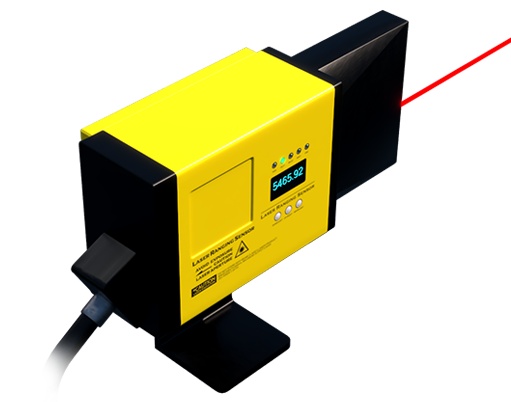
Modern advancements continue to enhance their capabilities. Integration with smart factory systems via Industrial Ethernet protocols like EtherCAT or PROFINET is now common. Some models incorporate advanced algorithms to compensate for environmental vibrations or target surface variations automatically. The development of blue laser models has improved performance on organic materials and transparent objects like glass or plastic films, which traditionally posed challenges for standard red lasers.
Despite their advantages, users must be aware of limitations. Extreme ambient light can interfere with the laser signal, though optical filters often mitigate this. As with any optical system, keeping the lens clean is essential for consistent performance. Proper installation and calibration, following the manufacturer's guidelines for beam angle and stand-off distance, are fundamental to achieving specified accuracy.

In conclusion, CCD laser sensors represent a mature yet continuously evolving technology that bridges the gap between simple detection and complex metrology. By offering high precision in a robust, non-contact package, they solve critical measurement challenges across diverse sectors. Understanding their operating principles, key specifications, and ideal applications is the first step toward leveraging their full potential to improve quality control, enhance automation, and drive operational efficiency in modern industrial environments.