In the world of automation and smart technology, proximity sensors are the silent workhorses that enable countless devices and systems to interact with their environment without physical contact. These electronic devices detect the presence or absence of an object within a specified range, triggering an output signal. Their ability to perform reliably in harsh conditions, provide high-speed response, and offer long operational life makes them indispensable in modern engineering.
At their core, proximity sensors operate on various physical principles, leading to distinct types suited for different applications. The most common categories include inductive, capacitive, ultrasonic, and photoelectric sensors.
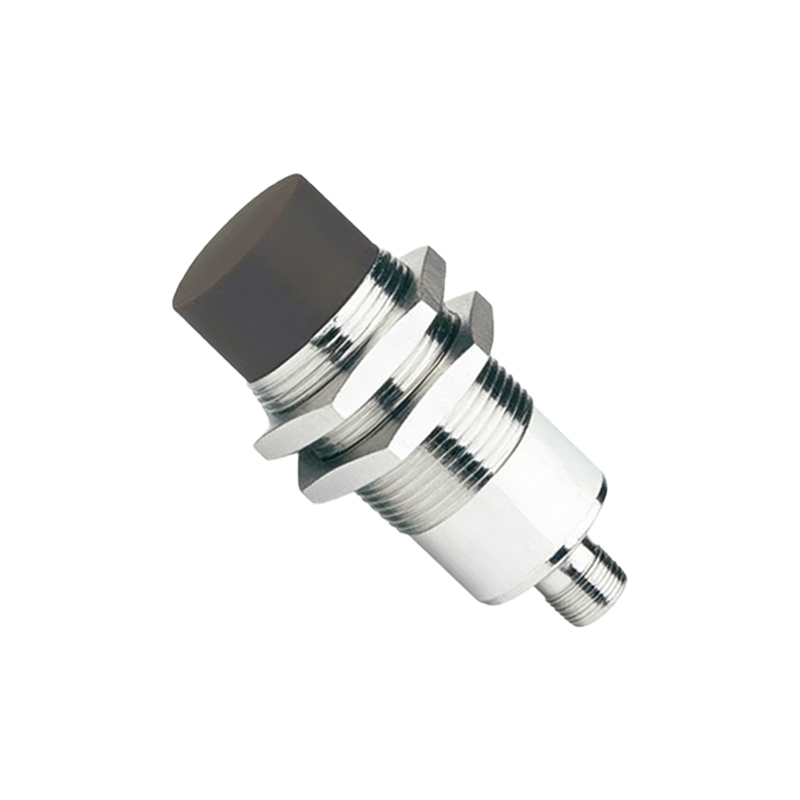
Inductive proximity sensors are the stalwarts of industrial automation. They generate an electromagnetic field and detect the eddy current losses caused when a metallic object enters this field. This makes them ideal for detecting metals, such as steel, aluminum, or copper, in manufacturing lines, machine tools, and robotic arms. Their key advantages are insensitivity to non-metallic materials, robustness against dirt and dust, and high switching frequency. However, their detection range is typically limited and varies based on the target metal's properties.
Capacitive proximity sensors, in contrast, can detect both metallic and non-metallic materials, including liquids, plastics, glass, and wood. They function by measuring changes in capacitance. The sensor forms one plate of a capacitor, with the target object acting as the other plate. When an object enters the sensing field, it alters the dielectric constant, changing the capacitance and triggering detection. This versatility makes them perfect for applications like liquid level detection in tanks, material handling of granular substances, or detecting filled vs. empty bottles on a conveyor belt, even through thin non-metallic walls.
For longer-range detection or where the target's material is irrelevant, ultrasonic sensors are a powerful choice. They emit high-frequency sound waves and calculate the time for the echo to return. By measuring this "time-of-flight," they can determine the distance to an object with high accuracy. These sensors excel in challenging environments with smoke, dust, or varying light conditions. Common uses include parking assistance systems, bulk material level monitoring in silos, and collision avoidance in automated guided vehicles (AGVs).
Photoelectric sensors use light, typically infrared or laser, to detect objects. They consist of an emitter and a receiver. There are three main operating modes: through-beam (where the object breaks a light beam between separate units), retro-reflective (using a reflector), and diffuse (where the sensor detects light reflected directly from the object). They offer the longest sensing ranges and can detect virtually any material. You'll find them in packaging machinery, security systems, and automated door controls. Their performance can be affected by environmental factors like color, transparency, and ambient light.
Selecting the right proximity sensor requires careful consideration of several factors. First, identify the target material—is it metal, plastic, liquid, or something else? This immediately narrows the choice to inductive or capacitive types for most solid objects. Next, determine the required sensing distance or range. Inductive sensors have short ranges (a few millimeters to tens of millimeters), while ultrasonic and photoelectric sensors can detect objects several meters away.
The operating environment is critical. Will the sensor be exposed to oils, coolants, extreme temperatures, or heavy vibration? Industrial-grade sensors with high IP (Ingress Protection) ratings are necessary for harsh conditions. Electrical requirements are also vital: what output type is needed (e.g., NPN, PNP, analog, IO-Link), and what is the supply voltage? Finally, consider the physical form factor—cylindrical, rectangular, or slot-type—to ensure proper mounting and integration into the machinery.
The applications of proximity sensors are vast and growing. In automotive assembly, they ensure precise positioning of components. In consumer electronics, they deactivate smartphone screens during calls to save power. In the food and beverage industry, they count products and monitor fill levels without contamination. As Industry 4.0 and the Internet of Things (IoT) advance, smart sensors with digital communication capabilities are becoming standard, providing not just a simple on/off signal but also diagnostic data for predictive maintenance.
In conclusion, proximity sensors are fundamental components that bridge the physical and digital worlds. Understanding their operating principles, strengths, and limitations is key to designing efficient, reliable, and intelligent automated systems. From a simple limit switch replacement to a complex distance measurement task, choosing the correct sensor type ensures optimal performance, safety, and cost-effectiveness for any application.