In the realm of industrial automation and precision measurement, the evolution of sensor technology continues to push the boundaries of accuracy, reliability, and operational efficiency. Among the most significant advancements in recent years is the development and deployment of multi-point pump laser sensors. These sophisticated devices represent a paradigm shift from traditional single-point measurement systems, offering unparalleled capabilities for monitoring and controlling complex processes across various sectors, including manufacturing, energy, and chemical processing.
At its core, a multi-point pump laser sensor operates on the principle of laser-based detection, typically utilizing techniques such as laser triangulation, time-of-flight, or interferometry. The term "pump" in this context often refers to the active mechanism that generates the laser signal or to its application in systems involving fluid flow, such as in pump monitoring itself. Unlike conventional sensors that capture data at a single discrete location, these systems are engineered to simultaneously measure multiple predetermined points along a line, surface, or within a volume. This is achieved through advanced optical components, scanning mechanisms, or the use of multiple laser emitters and detectors integrated into a single unit.
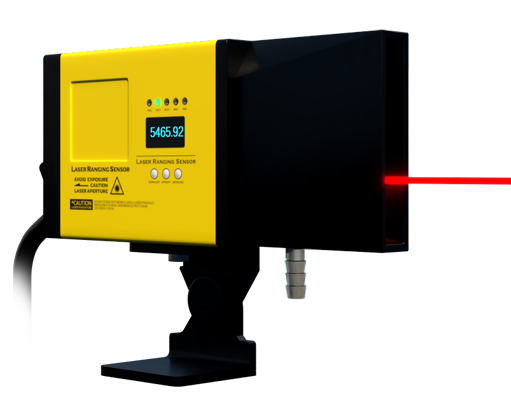
The architecture of a typical multi-point pump laser sensor involves a laser source that emits a beam, which is then split, steered, or scanned across the target area. High-speed photodetectors capture the reflected or scattered light from each measurement point. Sophisticated onboard processors then analyze this optical data in real-time, calculating critical parameters such as distance, displacement, thickness, vibration, or presence. The integration of powerful microprocessors and intelligent algorithms allows for the compensation of environmental variables like ambient light, temperature fluctuations, and material surface characteristics, ensuring consistent and reliable readings.
The applications for multi-point pump laser sensors are vast and transformative. In automotive manufacturing, they are indispensable for inline inspection of body panel gaps and flushness at multiple points, guaranteeing aesthetic quality and structural integrity. Within the semiconductor industry, these sensors provide nanometer-level precision in monitoring wafer warpage and alignment across several points during lithography processes. For energy sector applications, they enable continuous monitoring of turbine blade tip clearance and vibration at multiple stages in gas turbines, optimizing performance and preventing catastrophic failures. In the context of pump health monitoring—a direct application—they can track shaft displacement, bearing wear, and casing deformation at several critical locations simultaneously, facilitating predictive maintenance.
The advantages over traditional single-point sensors or contact-based measurement tools are substantial. Firstly, they dramatically increase data density without a proportional increase in installation footprint or cost per measurement point. This leads to a more comprehensive understanding of process dynamics. Secondly, they enable true real-time, synchronized measurement across multiple locations, which is crucial for analyzing relationships and interactions between different points on a target. Thirdly, their non-contact nature eliminates issues of wear, mechanical loading, and contamination, making them ideal for sterile environments or applications involving delicate materials. Finally, the wealth of data generated supports advanced analytics, paving the way for Industry 4.0 initiatives like digital twins and AI-driven process optimization.
However, the implementation of multi-point pump laser sensors is not without challenges. System calibration can be complex, requiring precise alignment of multiple measurement axes. The initial capital investment is typically higher than for simpler sensor arrays. Furthermore, processing the high-volume, high-velocity data streams demands robust communication networks (e.g., IO-Link, Ethernet-APL) and data infrastructure. Engineers must also carefully consider the sensor's specifications—including measurement range, resolution, scanning rate, and laser class—to ensure suitability for the specific application's environmental and performance requirements.

Looking ahead, the future of multi-point pump laser sensors is intertwined with trends in miniaturization, increased processing power, and smarter edge computing. We can anticipate sensors with even higher point densities, faster sampling rates, and embedded machine learning capabilities for autonomous anomaly detection. Their integration with wireless industrial networks and cloud platforms will further enhance remote monitoring and centralized control capabilities.
In conclusion, multi-point pump laser sensors are far more than incremental improvements; they are foundational technologies enabling a new level of industrial intelligence. By providing dense, synchronized, and precise measurement data from multiple locations, they empower engineers to achieve unprecedented control over manufacturing quality, equipment health, and process efficiency. As industries continue their march toward greater automation and data-driven decision-making, the role of these advanced optical sensors will only become more central, solidifying their status as a cornerstone of modern industrial measurement and control systems.