In the realm of industrial automation and process control, accurate speed measurement is a cornerstone of efficiency, safety, and quality. Among the diverse technologies employed for this critical task, proximity switch-based speed sensors stand out for their robustness, reliability, and non-contact operation. This article delves into the working principles, common types, key applications, and essential selection criteria for these indispensable devices.
At its core, a proximity switch speed sensor detects the presence or passage of a target object without physical contact. When used for speed measurement, it typically monitors a rotating element, such as a gear tooth, keyway, or a dedicated pulse wheel with evenly spaced protrusions. The fundamental principle involves generating a discrete electrical signal—often a voltage pulse—each time a target passes the sensor's active face. By counting these pulses over a known time interval, the rotational speed (RPM) or linear speed can be precisely calculated. The frequency of the pulse train is directly proportional to the speed of the target.
Several proximity technologies are harnessed for speed sensing, each with distinct advantages. Inductive proximity sensors are the most prevalent in industrial environments for metallic target detection. They generate an electromagnetic field; when a ferrous or non-ferrous metal target enters this field, it causes a change in oscillation amplitude, triggering a solid-state switch. These sensors are highly durable, resistant to environmental contaminants like oil and dust, and excel in measuring the speed of gears, shafts, and motor rotors. For non-metallic targets, such as plastic bottles on a conveyor or detecting transparent materials, capacitive proximity sensors are the tool of choice. They sense changes in capacitance caused by any material that alters the dielectric constant near their sensing face. While versatile, they can be more sensitive to environmental factors like humidity. A third major category is the magnetic proximity sensor or Hall-effect sensor. These devices respond to changes in magnetic field strength, making them ideal for use with permanent magnets embedded in or attached to a rotating component. They offer excellent precision, can operate at very high frequencies, and are commonly found in automotive applications (e.g., crankshaft/camshaft position) and high-speed counting tasks.
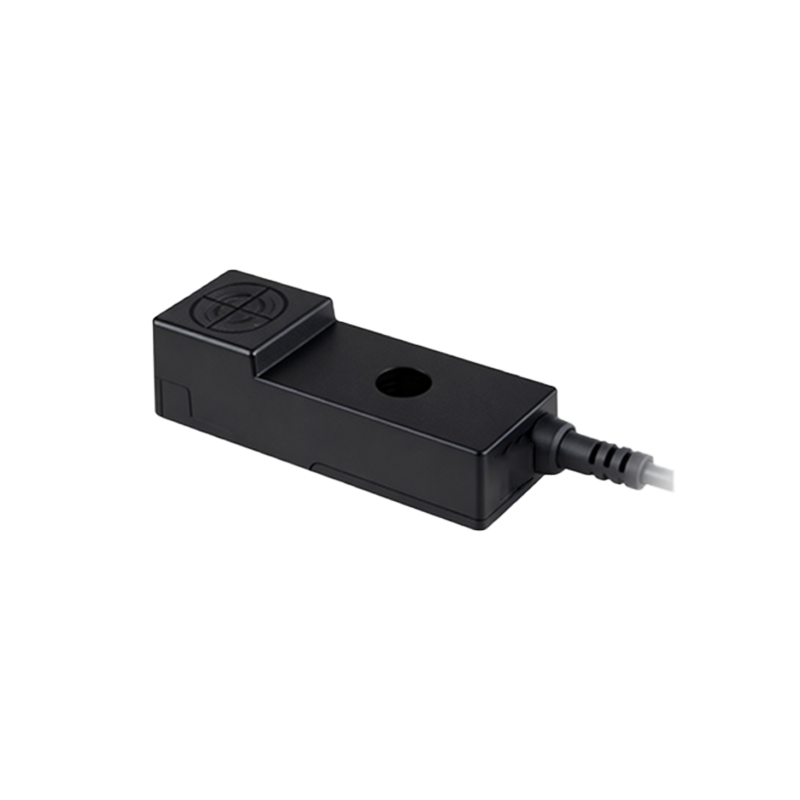
The applications of proximity switch speed sensors span virtually every industry. In manufacturing, they monitor conveyor belt speeds, control the RPM of motors and spindles in CNC machinery, and ensure synchronization in assembly lines. The automotive sector relies on them for anti-lock braking systems (ABS), transmission control, and engine timing. In the wind energy sector, they are critical for monitoring the rotational speed of turbine blades and generators to optimize performance and prevent overspeed conditions. They also play a vital role in paper mills, printing presses, and packaging machinery, where consistent speed is synonymous with product quality.
Selecting the right proximity sensor for a speed measurement application requires careful consideration of several parameters. First, the target material dictates whether an inductive, capacitive, or magnetic sensor is needed. The sensing distance must be specified, ensuring the target reliably triggers the switch without risk of collision; note that the rated operating distance is typically defined for a standard mild steel target and may vary with material. Switching frequency is paramount—it defines the maximum number of pulses per second the sensor can output and must exceed the maximum anticipated pulse frequency from the target. For a gear with n teeth rotating at S RPM, the required frequency is (n S) / 60 Hz. The output type is another key decision: PNP (sourcing) or NPN (sinking) transistor outputs are standard for connection to PLCs and counters, while some applications may require analog (4-20 mA) or specialized IO-Link digital outputs for enhanced diagnostics and parameterization. Environmental factors cannot be overlooked; an appropriate Ingress Protection (IP) rating is necessary for harsh conditions involving washdowns, dust, or coolants. Finally, the physical form factor—barrel-style (cylindrical) or rectangular—and mounting method must suit the mechanical constraints of the installation.
Installation and alignment are critical for consistent performance. The sensor must be mounted securely to prevent vibration-induced errors. The gap between the sensor face and the target should be set within the sensor's specified operating range, typically 50% to 80% of its nominal sensing distance, to account for mechanical tolerances and thermal expansion. For gear measurement, the sensor is usually aligned with the flank of the tooth for a clean signal transition.
In conclusion, proximity switch speed sensors are a mature, versatile, and highly effective solution for a vast array of rotational and linear speed monitoring challenges. Their non-contact nature ensures long service life and minimal maintenance. By understanding the underlying technologies and meticulously applying selection criteria based on the target, required performance, and operating environment, engineers can deploy these sensors to achieve precise,