In the realm of industrial automation, proximity sensors stand as critical components for non-contact object detection, ensuring precision, reliability, and efficiency in manufacturing and control systems. Among these, the Proximity Sensor 1M18 has garnered significant attention for its robust performance and adaptability in demanding environments. This article delves into the technical specifications, operational principles, applications, and advantages of the 1M18 model, providing a detailed guide for engineers and industry professionals.
The Proximity Sensor 1M18 is an inductive-type sensor designed to detect metallic objects without physical contact. It operates on the principle of electromagnetic induction, where an oscillator generates a high-frequency magnetic field. When a metallic target enters this field, eddy currents are induced, causing a change in the oscillator's amplitude. This change is detected by a threshold circuit, which triggers an output signal—typically a switching action. The 1M18 is known for its high switching frequency and immunity to environmental factors like dust, oil, and moisture, making it suitable for harsh industrial settings.
Key technical specifications of the 1M18 include a sensing range of up to 18 mm, depending on the target material and size. It features a compact, cylindrical housing, often constructed from stainless steel or nickel-plated brass, ensuring durability and resistance to mechanical stress. The sensor operates within a wide voltage range, commonly 10-30 V DC, and offers both normally open (NO) and normally closed (NC) output configurations. Its response time is typically in the microsecond range, enabling high-speed detection in automated processes. Additionally, the 1M18 is equipped with short-circuit and overload protection, enhancing its longevity and safety in complex circuits.
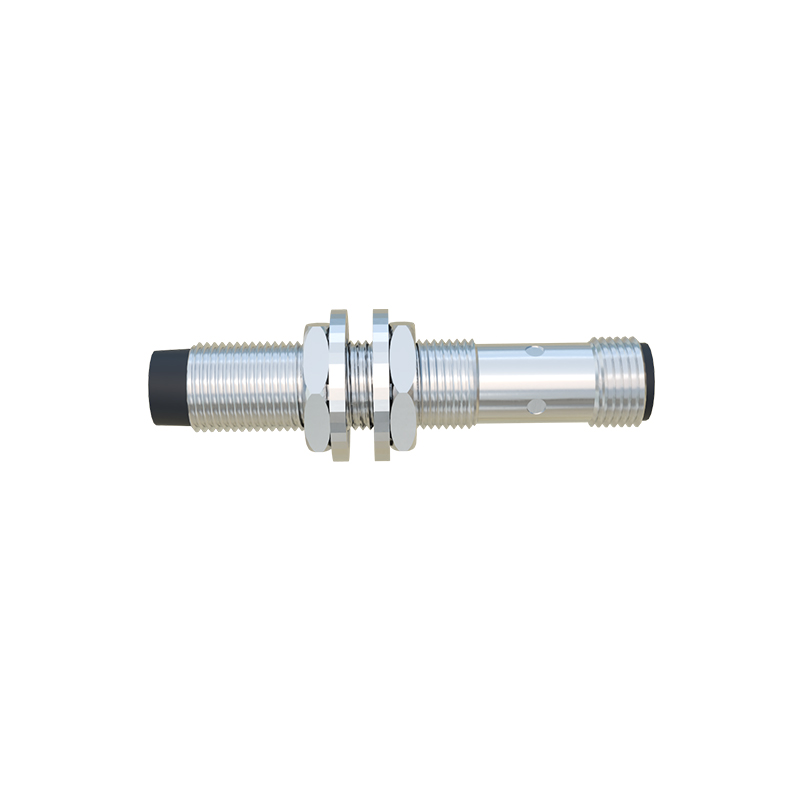
Applications of the Proximity Sensor 1M18 span various industries, including automotive manufacturing, packaging, material handling, and robotics. In automotive assembly lines, it is used for position sensing of metal components, such as detecting the presence of engine parts or monitoring conveyor belt movements. In packaging machinery, the 1M18 ensures accurate counting and sorting of metallic items, while in robotics, it aids in precise object positioning and collision avoidance. Its ability to function in extreme temperatures and under vibration further extends its utility in outdoor or heavy-duty equipment.
One of the standout advantages of the 1M18 is its ease of installation and maintenance. With a standard M18 threaded barrel design, it can be quickly mounted into existing systems without extensive modifications. The sensor's LED indicator provides visual feedback on its operational status, simplifying diagnostics and troubleshooting. Moreover, its non-contact nature eliminates wear and tear associated with mechanical switches, reducing downtime and maintenance costs. Engineers appreciate its compatibility with programmable logic controllers (PLCs) and other control devices, facilitating seamless integration into automated networks.
When selecting a proximity sensor like the 1M18, factors such as target material, environmental conditions, and required sensing distance must be considered. For instance, ferrous metals (e.g., iron, steel) yield the maximum sensing range, while non-ferrous metals (e.g., aluminum, copper) may require calibration or reduced ranges. The 1M18's robust design mitigates interference from adjacent sensors or electrical noise, ensuring stable performance in crowded industrial setups. Regular calibration and adherence to manufacturer guidelines are recommended to optimize its lifespan and accuracy.
In conclusion, the Proximity Sensor 1M18 represents a reliable and versatile solution for modern industrial automation. Its combination of technical precision, durability, and adaptability makes it a preferred choice for engineers seeking to enhance operational efficiency. As industries continue to evolve towards smarter, more connected systems, sensors like the 1M18 will play a pivotal role in driving innovation and productivity. For those in the field, understanding its capabilities and applications is essential for leveraging its full potential in diverse automation challenges.