In the rapidly evolving landscape of industrial automation and precision measurement, mid-range laser sensors have carved out a critical niche. These devices, typically operating at distances from a few centimeters up to several meters, bridge the gap between short-range proximity sensors and long-range LiDAR systems. Their applications are vast and integral to modern manufacturing, robotics, and quality control processes. This article delves into the world of leading mid-range laser sensor manufacturers, exploring their core technologies, product offerings, and the trends shaping this dynamic sector.
The demand for reliable, accurate, and fast non-contact measurement has propelled several key players to the forefront of mid-range laser sensor technology. Companies like Keyence, SICK AG, Banner Engineering, Omron, and Panasonic are often cited as industry pioneers. Each brings a distinct philosophy and technological edge to the table.
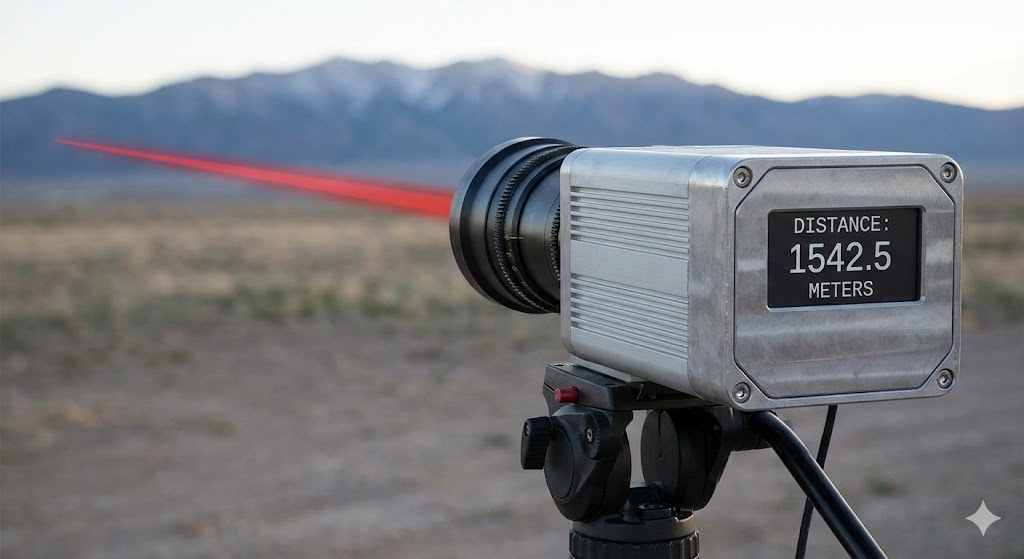
Keyence, for instance, is renowned for its high-precision and user-friendly sensor solutions. Their IL series of laser displacement sensors exemplifies this, offering sub-micron resolution and high-speed response, making them ideal for intricate inspection tasks in electronics and semiconductor manufacturing. Keyence's strength lies in integrating sophisticated optics with intuitive software, reducing setup complexity for end-users.
SICK AG, a German powerhouse, emphasizes robustness and versatility for harsh industrial environments. Their DT50 series of distance sensors is a workhorse in logistics, material handling, and automotive assembly lines. SICK sensors are often built to withstand significant dust, vibration, and temperature variations, a testament to their design-for-industry approach. Their expertise in safety laser scanners also informs the reliability of their standard sensing products.
Banner Engineering, an American leader, focuses on providing cost-effective and highly reliable solutions without compromising on performance. Their Q4X series laser distance sensor is a prime example, featuring a durable stainless-steel housing and reliable measurement even on challenging surfaces. Banner excels at delivering solid value and excellent support, making their sensors a popular choice for a wide range of OEM and end-user applications.
From Japan, Omron and Panasonic contribute deep expertise in automation and electronics. Omron's ZX-L series offers advanced functionalities like multi-point measurement and profile scanning, catering to complex robotic guidance and inspection systems. Panasonic's HG-C series focuses on compact size and high-speed, stable detection, which is crucial for high-throughput production lines in consumer goods and packaging.
Beyond these established giants, several innovative specialists are pushing technological boundaries. Companies like Micro-Epsilon (known for exceptional precision in measurement technology), Baumer (with a strong focus on innovation and customer-specific solutions), and ifm electronic (emphasizing IO-Link connectivity for Industry 4.0 readiness) are significant contributors. The rise of Tri-Tronics (now part of Banner) and Datalogic in specific application areas like packaging and logistics further enriches the competitive landscape.
The current technological trends among these manufacturers are clear. First, there is a strong push towards miniaturization without sacrificing performance, enabling integration into smaller machines and robotic end-effectors. Second, enhanced connectivity through IO-Link, EtherNet/IP, and PROFINET is becoming standard, facilitating seamless data integration into Industrial IoT (IIoT) and Industry 4.0 frameworks. This allows for predictive maintenance, real-time process adjustment, and centralized data analytics.
Third, improved algorithm intelligence is a major differentiator. Modern mid-range laser sensors incorporate advanced onboard processors capable of handling complex tasks like edge detection, pattern matching, and outputting processed data directly, reducing the load on central PLCs. Fourth, resilience is key; manufacturers are continually improving resistance to environmental interference such as ambient light, oil, steam, and surface color variations.
Choosing the right manufacturer depends heavily on the specific application. For ultra-high-precision laboratory or semiconductor environments, Keyence or Micro-Epsilon might be preferred. For a rugged automotive plant, SICK or Banner could be the optimal choice. For a highly networked smart factory, sensors with robust IIoT capabilities from Omron or ifm electronic would be advantageous.
In conclusion, the market for mid-range laser sensors is both competitive and collaborative, driven by a consortium of established leaders and agile innovators. Manufacturers are not merely selling a sensor; they are providing a critical component for efficiency, quality, and intelligence in automation. As industries worldwide continue to embrace automation and data-driven processes, the role of these precise optical measurement tools—and the companies that perfect them—will only become more central to operational success. The future points towards even smarter, more connected, and more application-specific sensor solutions, continuing the trajectory of innovation set by today's leading manufacturers.