In the rapidly evolving landscape of industrial automation and smart systems, the architecture of intelligent proximity sensors represents a critical convergence of precision sensing, embedded processing, and network connectivity. Moving far beyond simple on/off detection, modern intelligent proximity sensors are sophisticated devices engineered for reliability, adaptability, and data-rich operation in demanding environments. Their structure is a meticulously designed integration of several core subsystems.
The foundation lies in the sensing element itself. Depending on the technology—inductive, capacitive, ultrasonic, or photoelectric—this component generates a primary signal in response to the presence, absence, or specific characteristics of a target object. For instance, an inductive sensor's oscillator coil creates an electromagnetic field, with metallic object detection causing a change in oscillation amplitude. This raw analog signal is the first critical data point.
Immediately interfacing with the sensing element is the signal conditioning circuitry. This stage is paramount for transforming the often weak, noisy, or non-linear raw signal into a clean, stable, and standardized electrical signal suitable for further processing. It involves amplification, filtering, and demodulation. Advanced designs incorporate temperature compensation circuits here to ensure consistent performance across a wide operational temperature range, a non-negotiable requirement in industrial settings.
The heart of intelligence is the embedded microcontroller unit (MCU) or a dedicated application-specific integrated circuit (ASIC). This digital brain processes the conditioned signal using sophisticated algorithms. It performs critical functions such as precise threshold comparison, hysteresis control to prevent output chatter, and time-based functions like on-delay, off-delay, or one-shot pulses. More importantly, it enables programmability. Parameters like sensing range, output logic (NO/NC), and response time can often be configured via teach-in buttons or digital interfaces, allowing a single sensor model to adapt to multiple applications.
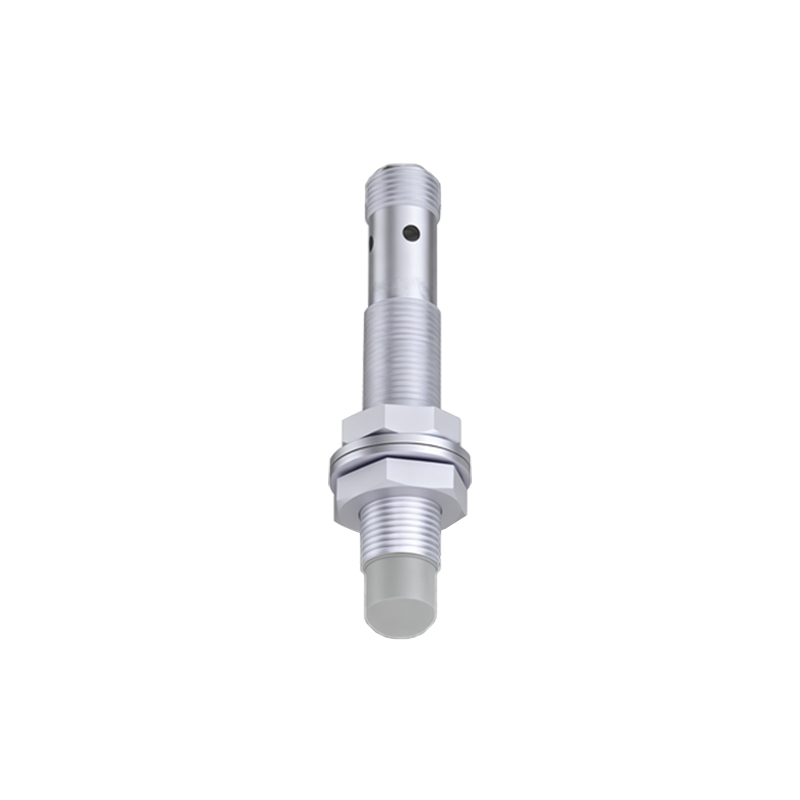
The output stage translates the MCU's decision into an actionable industrial signal. Traditional discrete outputs include NPN/PNP transistors for DC sensors or solid-state relays for AC models, providing robust switching capabilities. The defining feature of intelligent sensors, however, is the integrated digital communication interface. Protocols like IO-Link have become a standard. IO-Link transforms a standard 3-wire sensor into a bi-directional data point. Beyond just switching, it enables the transmission of detailed process data (e.g., actual measured distance as a analog value, signal strength), parameter download, and advanced diagnostics (e.g., temperature warnings, contamination alerts, operating hour counters). This turns the sensor from a simple switch into a source of valuable process intelligence.
Physically, this entire electronics stack is encapsulated within a housing designed for harsh industrial duty. Materials like nickel-plated brass, stainless steel (V2A/V4A), or robust PBT plastics are selected for mechanical strength, chemical resistance, and environmental sealing, typically to IP67, IP68, or IP69K ratings. The design also incorporates status indicators, usually LEDs for power, output state, and communication activity.
The final architectural layer is the software and connectivity. Intelligent sensors are nodes in larger Industrial IoT (IIoT) ecosystems. Data transmitted via IO-Link to a master module can be fed into PLCs, SCADA systems, and cloud platforms for predictive maintenance, process optimization, and data analytics. The sensor's ability to report its own health—predicting failures before they cause downtime—is a key value proposition of its intelligent architecture.
In application, this structured intelligence manifests in complex tasks. In automated assembly, an intelligent inductive sensor not only detects a metal component but also verifies its correct composition or measures its distance to ensure proper seating. In packaging machinery, a capacitive sensor can adjust its sensitivity automatically to detect different materials on a conveyor, while reporting its status to a central controller. The architectural principles of robust sensing, intelligent local processing, and rich data communication are driving the next wave of efficiency, flexibility, and insight in factory automation, robotics, and smart infrastructure.