In modern industrial automation and quality control systems, laser sensor technology has become a cornerstone for achieving high-precision contour measurement. Laser sensors, utilizing principles of triangulation, time-of-flight, or interferometry, project a focused beam onto a target surface. The reflected or scattered light is captured by a detector, enabling the calculation of distance or surface profile with micron-level accuracy. This non-contact method is particularly advantageous for measuring delicate, hot, or rapidly moving objects where physical probes would fail or cause damage.
The core of contour measurement lies in the sensor's ability to capture dense point clouds along a surface. A single-point laser sensor, when combined with precise motion systems, can scan a path to build a 2D profile. For more complex 3D contours, line laser sensors or structured light scanners project a line or pattern, capturing thousands of data points simultaneously. This data is processed through specialized software to reconstruct a detailed digital model of the object's surface, identifying features such as height, width, angle, radius, and even surface defects like scratches or dents.
Key performance parameters for laser sensors in contour measurement include resolution, measurement range, sampling speed, and linearity. Resolution determines the smallest detectable change in distance, critical for applications like semiconductor wafer inspection or precision machining. Sampling speed, often reaching hundreds of thousands of points per second, is vital for in-line production monitoring. Environmental factors such as ambient light, surface reflectivity (from matte to mirror-like), and material transparency (like glass or plastic) pose significant challenges. Modern sensors incorporate adaptive exposure control, filters, and advanced algorithms to compensate for these variables, ensuring reliable data across diverse conditions.
Industrial applications are vast and demanding. In automotive manufacturing, laser sensors measure the contour of body panels, weld seams, and gap dimensions to ensure assembly quality and aesthetic consistency. In aerospace, they inspect turbine blade profiles and airfoil surfaces for strict adherence to aerodynamic designs. The electronics industry relies on them for measuring component coplanarity, solder paste volume, and PCB warpage. Furthermore, in reverse engineering and rapid prototyping, laser scanning creates accurate CAD models from physical parts.
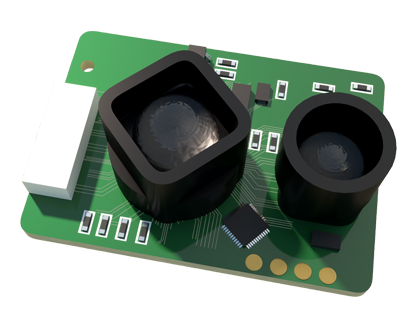
The integration of laser sensors with robotics and Industry 4.0 frameworks marks a significant advancement. Robotic arms equipped with laser scanners can perform adaptive measurements on complex, multi-sided parts without repositioning, dramatically increasing flexibility. Data from sensors feeds directly into cloud-based analytics platforms, enabling real-time statistical process control (SPC), predictive maintenance, and closed-loop manufacturing systems that automatically adjust machinery based on measurement feedback. This connectivity enhances traceability and reduces scrap rates.

Future trends point toward miniaturization, higher speeds, and smarter sensors. The development of MEMS-based laser scanners and CMOS detector arrays is driving down costs and size while improving performance. Artificial intelligence and machine learning algorithms are being embedded to enable sensors to not only collect data but also classify features and make pass/fail decisions autonomously. Additionally, multi-wavelength laser systems are emerging to handle a broader spectrum of materials, including challenging transparent or highly reflective surfaces.
In conclusion, laser sensor technology for contour measurement is a dynamic field central to modern precision manufacturing. Its non-contact nature, high speed, and exceptional accuracy make it indispensable for quality assurance, process optimization, and innovation across countless industries. As technology evolves, these sensors will become even more integrated, intelligent, and capable, pushing the boundaries of what can be measured and controlled in the industrial landscape.