In today's rapidly advancing industrial landscape, laser sensors have become indispensable tools for automation, quality control, and precise measurement. Selecting the right laser sensor manufacturer is crucial for ensuring system reliability, accuracy, and long-term performance. This guide explores the key players and considerations in the global supply chain for these critical components.
The core technology behind laser sensors involves emitting a laser beam and analyzing the reflected light to determine distance, position, presence, or profile of an object. Major manufacturers have developed specialized variants, including laser distance sensors, laser displacement sensors, laser profile sensors, and laser triangulation sensors. Each type serves distinct applications, from simple object detection on conveyor belts to micron-level 3D contour scanning.
Several established companies dominate the market for high-performance industrial laser sensors. Keyence Corporation, a Japanese multinational, is renowned for its innovative and user-friendly sensor solutions, offering an extensive portfolio for factory automation. Omron, another Japanese leader, provides robust laser sensors integrated with advanced vision and safety systems. Sick AG, a German sensor specialist, excels in laser-based measurement and ranging sensors for logistics and automotive applications. Banner Engineering, based in the United States, is a prominent supplier known for its durable and versatile laser sensor offerings for diverse industrial environments.
Beyond these giants, a tier of specialized manufacturers caters to niche requirements. Companies like Micro-Epsilon (Germany) focus on ultra-high-precision laser displacement and profile sensors for metrology and R&D. Panasonic Industry Europe (a division of Panasonic) offers competitive laser sensor solutions for automation. Emerging manufacturers, particularly from Asia, are also gaining traction by providing cost-effective alternatives without significant compromises on core specifications.
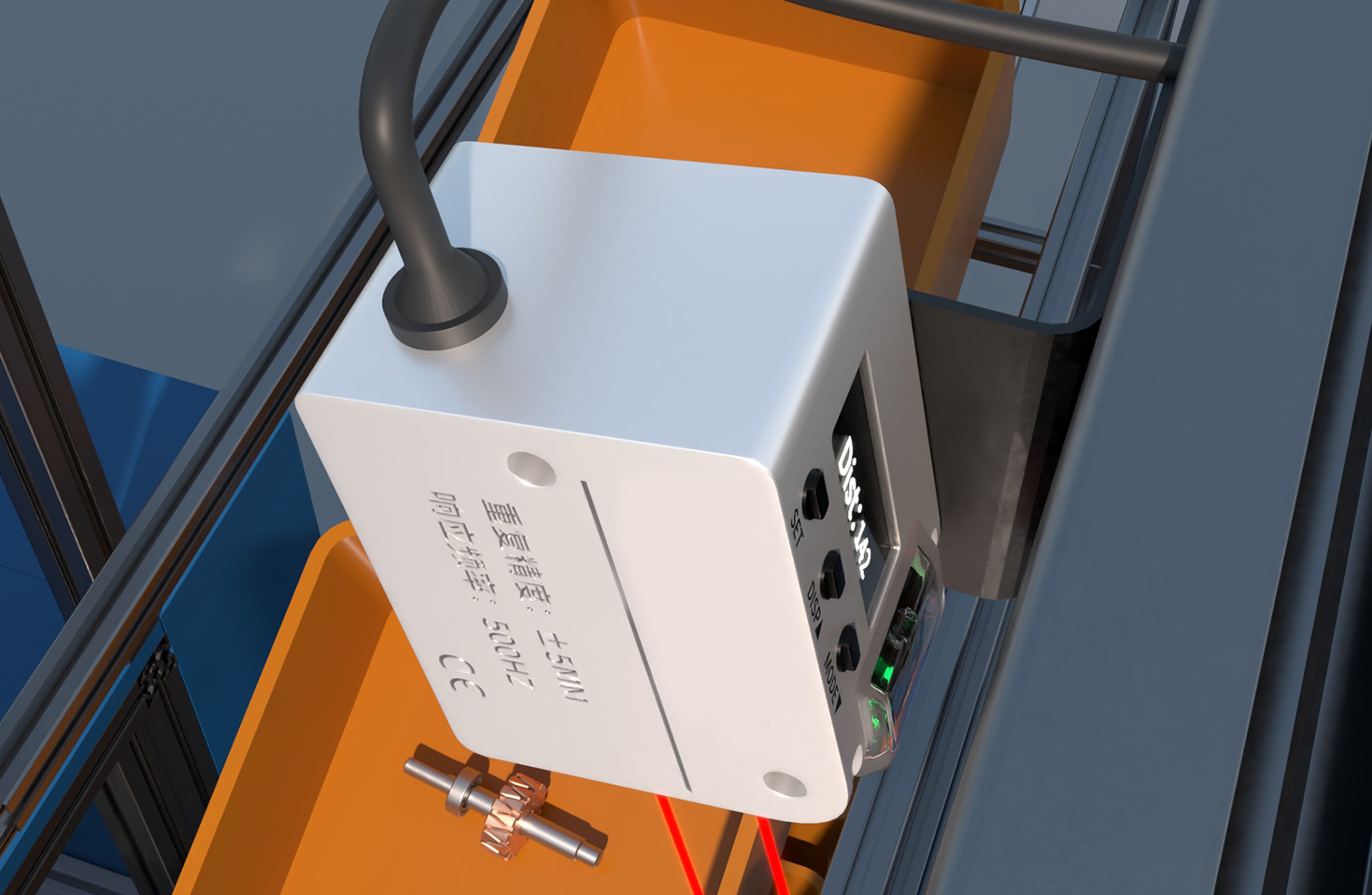
When sourcing from a laser sensor manufacturer, several technical and commercial factors must be evaluated. Critical specifications include measuring range, resolution, repeatability, linearity, and response time. The sensor's output interface (analog, digital, IO-Link, Ethernet) must be compatible with the existing control system. Environmental durability is paramount; look for ingress protection (IP) ratings, resistance to vibrations, and performance stability across a wide temperature range. The manufacturer's support ecosystem—comprising software for configuration and analysis, detailed documentation, application engineering assistance, and reliable global distribution—is as important as the hardware itself.
The application largely dictates the choice of manufacturer and sensor type. In automotive assembly, laser displacement sensors are used for gap and flush measurement. In electronics manufacturing, laser profile sensors inspect solder paste volume and component placement. Logistics and warehousing rely on laser distance sensors for palletizing and dimensioning. Food and pharmaceutical industries utilize hygienic-design laser sensors for packaging and level detection.
Future trends in laser sensor manufacturing point toward increased miniaturization, higher data acquisition speeds, and enhanced connectivity for Industry 4.0. Smart sensors with embedded intelligence for edge computing and predictive maintenance are becoming more common. Furthermore, the integration of artificial intelligence for complex pattern recognition and anomaly detection directly within the sensor unit is an emerging frontier.
Procurement strategies should involve requesting samples for real-world testing under actual operating conditions. Engaging with manufacturers' technical sales teams can provide valuable insights into the optimal model for a specific challenge. Considering total cost of ownership—which includes initial price, installation effort, calibration needs, and expected lifespan—is more prudent than focusing solely on the unit price.
In conclusion, the market for laser sensor manufacturers is diverse and competitive, offering solutions for every precision and budgetary requirement. Success hinges on a clear understanding of the application's technical demands and a thorough evaluation of potential suppliers' capabilities and support structures. By partnering with a reputable manufacturer, businesses can leverage laser sensor technology to enhance productivity, ensure quality, and drive innovation in their operations.