Laser sensors have revolutionized precision measurement and detection across numerous industries, from advanced manufacturing to autonomous systems. A critical advancement enhancing their performance and applicability is the implementation of multilayer and multi-pass strategies. These techniques fundamentally manipulate the interaction path between the laser beam and the target medium, unlocking new levels of sensitivity, accuracy, and capability for challenging environments.
At its core, a standard laser sensor operates by emitting a coherent light beam towards a target. The properties of the reflected or transmitted beam—such as its time-of-flight, phase shift, intensity attenuation, or wavelength shift—are analyzed to determine parameters like distance, presence, thickness, or composition. However, single-layer or single-pass configurations have inherent limitations. Signal strength can be weak over long distances or through attenuating media like fumes, dust, or certain liquids. Furthermore, surface characteristics like high gloss or deep matte finishes can cause unreliable reflections, leading to measurement noise or dropout.
This is where the multilayer concept becomes pivotal. In this context, "multilayer" often refers to the sensor's ability to penetrate and analyze stratified materials or to utilize multiple, distinct sensing layers of information. For instance, in quality control for transparent polymer films or coated metals, a precisely tuned laser sensor can sequentially measure the thickness or integrity of each layer without physical contact. By employing specific wavelengths that interact differently with each material layer, the sensor can deconstruct a composite signal to report on individual strata. This is invaluable in semiconductor fabrication, pharmaceutical coating verification, and automotive paint inspection, where the integrity of each layer is critical to product performance.
The multi-pass strategy, sometimes called a multipath or folded-path technique, addresses different challenges, primarily signal-to-noise ratio (SNR) and resolution. Instead of a single traversal from emitter to detector, the laser beam is directed to make multiple passes through the measurement zone. This is achieved using precisely aligned mirrors or retro-reflectors that create an extended optical path within a confined physical space. Each pass allows the laser light to interact further with the target medium. For gas detection sensors, a multi-pass cell dramatically increases the absorption path length. According to the Beer-Lambert law, the absorption signal is proportional to the path length. Therefore, a 10-pass cell can theoretically increase sensitivity by an order of magnitude, enabling the detection of trace gas concentrations at parts-per-billion levels, crucial for environmental monitoring and leak detection.
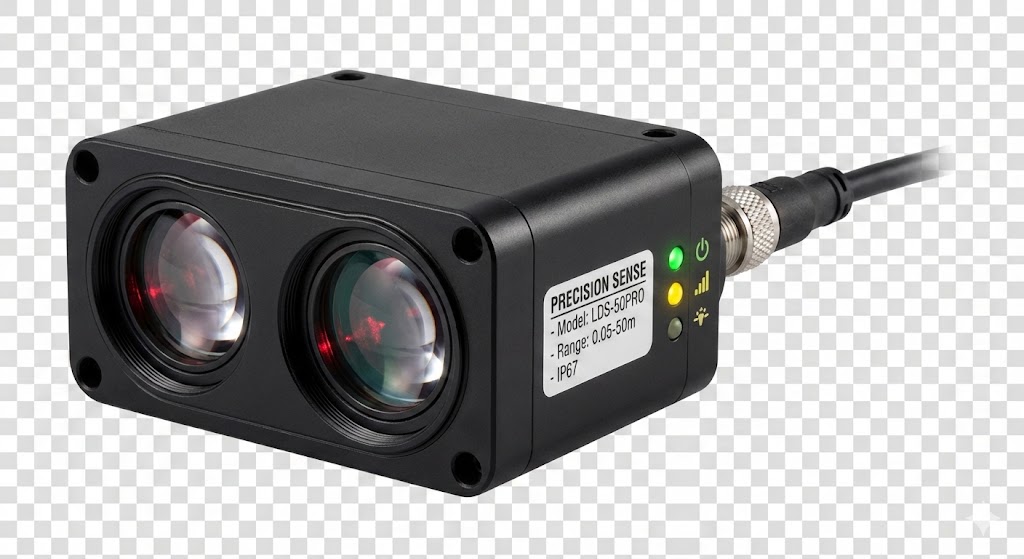
Similarly, in distance measurement (LIDAR) or vibrometry, multi-pass interferometric techniques can amplify minute phase shifts caused by displacement or velocity, yielding sub-micron resolution. The key advantage is that this enhanced sensitivity is achieved without increasing the laser power, which is often constrained by safety regulations (Class limits) or could cause damage to sensitive targets.
The synergy of multilayer and multi-pass approaches is where true engineering innovation shines. Consider a laser-based sensor system for monitoring a complex industrial process like additive manufacturing (3D printing). A multilayer analysis capability can assess the fusion quality and potential voids within each newly printed layer. Simultaneously, a co-aligned multi-pass interferometer could monitor the precise height and thermal deformation of the entire build plate in real-time, with enhanced accuracy due to the extended optical path. This combined data stream allows for closed-loop process control, immediately correcting parameters to prevent a flawed build.
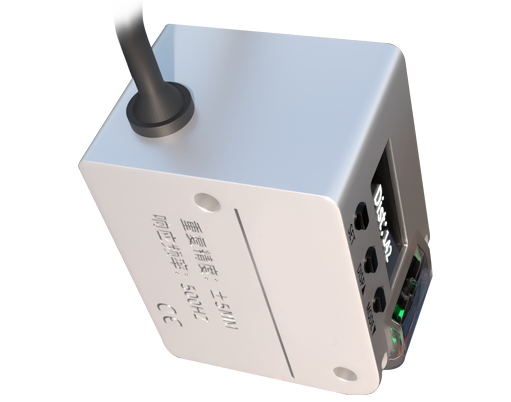
Designing such systems presents significant challenges. Optical alignment for multi-pass cells must be exceptionally stable and resistant to thermal drift and vibration. Signal processing algorithms must become more sophisticated to disentangle the complex data from multilayer interactions, often employing advanced techniques like spectral decomposition or time-domain analysis. Furthermore, the choice of laser source—wavelength, coherence length, pulse duration—must be meticulously matched to the application. A near-infrared diode laser might be ideal for plastic layer analysis, while a mid-infrared quantum cascade laser is necessary for specific gas absorption lines.
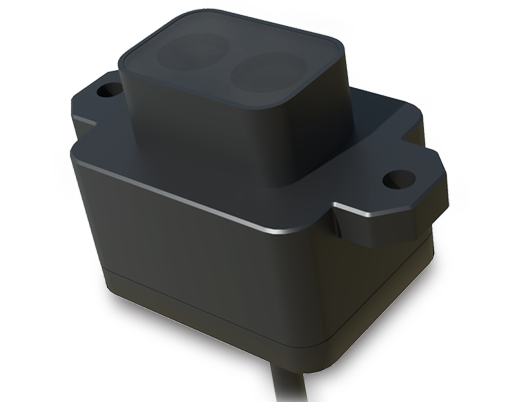
The future trajectory points toward greater integration and intelligence. Emerging trends include the use of photonic integrated circuits (PICs) to miniaturize complex multi-pass optical layouts onto a single chip. Machine learning algorithms are being deployed to automatically interpret multilayer sensor data, identifying defects or anomalies faster than traditional threshold-based methods. Additionally, the development of frequency-modulated continuous-wave (FMCW) laser radar seamlessly combines the principles of extended path analysis with exceptional ranging precision.
In conclusion, multilayer and multi-pass strategies are not mere incremental improvements but foundational methodologies that expand the frontier of laser sensing. By engineering the photon's journey—making it interrogate multiple layers or traverse the measurement domain repeatedly—engineers can extract profound information that remains hidden to conventional single-pass systems. As materials become more complex and industrial tolerances tighten, these advanced laser sensor configurations will become indispensable tools for ensuring quality, safety, and innovation in the high-tech landscape.