Capacitive proximity sensors are versatile and reliable devices widely used in industrial automation, manufacturing, and various electronic applications. Unlike their inductive counterparts that detect only metals, capacitive sensors can detect a vast range of materials, including liquids, plastics, glass, wood, and granular substances. This capability makes them indispensable in modern automation systems.
The fundamental operating principle is based on changes in capacitance. A capacitive sensor essentially forms one plate of a capacitor, with the target object acting as the other plate. The sensor generates an electrostatic field. When a target enters this field, it alters the dielectric constant and thus the capacitance of the system. The sensor's internal oscillator circuit detects this change. Once the capacitance reaches a specific threshold, the sensor triggers a switching action, sending an output signal to the control system. This non-contact detection method ensures no physical wear and tear on the sensor or the target.
Key components include the sensing electrode (often the active face of the sensor), the oscillator, the trigger circuit, and the output switching device. Modern sensors often incorporate microprocessors for advanced functions like compensation for contamination, temperature stability, and adjustable sensing ranges. A critical feature is the ability to adjust sensitivity, typically via a potentiometer. This allows engineers to fine-tune the sensor to ignore background materials (like a container wall) and focus on the target material (like the liquid inside), preventing false triggers.
The applications for capacitive proximity sensors are extensive. In packaging, they detect the presence or absence of labels, foil, or plastic films on production lines. In food and beverage processing, they monitor fill levels in non-metallic containers, ensuring bottles or cartons are filled correctly. They are crucial in woodworking and paper industries for stack height monitoring and sheet counting. Furthermore, they serve as non-contact liquid level switches in tanks, detecting everything from water to aggressive chemicals, provided the sensor housing is suitably rated. Another growing application is in human-machine interfaces, where they form the basis of touch-sensitive controls.
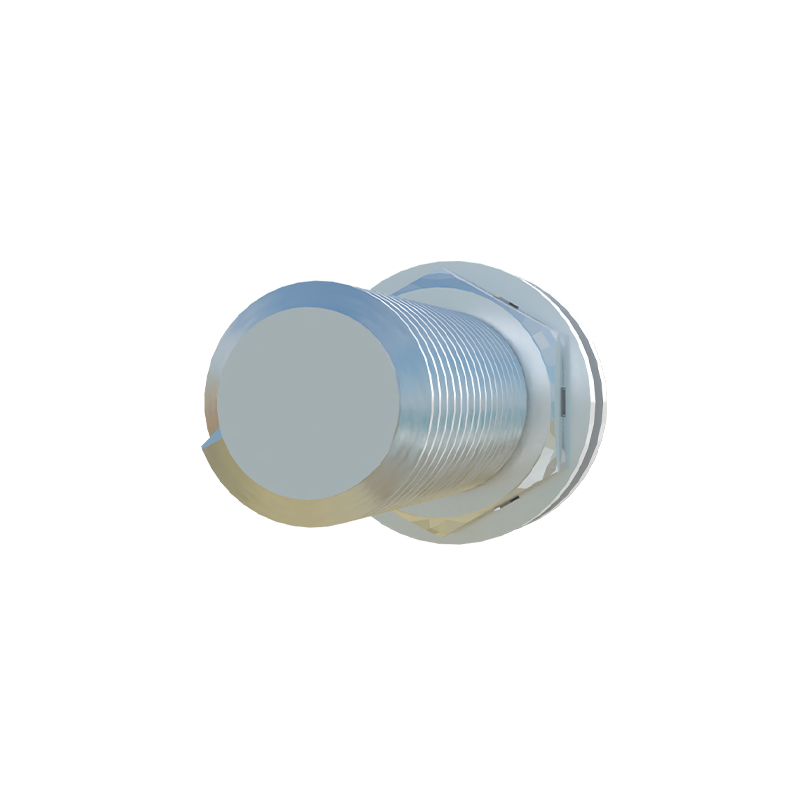
Selecting the right capacitive sensor requires careful consideration of several parameters. First, the sensing distance, which is typically shorter than for inductive sensors and is rated for a standard target (often metal). For non-metallic materials, the effective sensing range is reduced and must be derated according to the material's dielectric constant. The housing material and style are vital; cylindrical (threaded barrel) and rectangular shapes are common, with materials like PTFE, PBT, or stainless steel chosen for chemical resistance or food-grade applications. Output type is another key decision: PNP (sourcing) or NPN (sinking) DC configurations, or AC two-wire models, must match the control system's input card. Additional features like short-circuit protection, reverse polarity protection, and IO-Link communication for Industry 4.0 integration are increasingly important.
Installation and environmental factors significantly impact performance. Flush-mountable sensors can be installed embedded in metal without affecting their field, while non-flush types require a clearance zone for their radial field. Factors like humidity, dust, temperature extremes, and the presence of conductive contaminants can influence operation. Proper shielding and grounding are essential in electrically noisy environments to prevent erratic behavior. Regular maintenance, primarily cleaning the sensing face from buildup, ensures long-term reliability.
In conclusion, capacitive proximity sensors offer a unique solution for non-contact detection of diverse materials. Their operating principle, centered on dielectric changes, provides flexibility unmatched by other sensor types. By understanding their working mechanism, key specifications, and application requirements, engineers and technicians can effectively integrate these sensors to enhance automation processes, improve quality control, and increase operational efficiency across countless industries. As technology advances, we can expect even smarter, more robust, and more integrated capacitive sensing solutions to emerge.