In the demanding landscape of modern industrial automation and machinery health monitoring, the need for precise, reliable, and non-contact speed measurement is paramount. Standard off-the-shelf laser tachometers serve many applications adequately, but complex, harsh, or highly specialized environments often necessitate custom-engineered solutions. A custom laser tachometer, tailored to specific operational parameters and environmental challenges, transcends the limitations of generic models, offering unparalleled accuracy, durability, and integration capabilities.
The core principle of a laser tachometer, or laser tach, remains consistent: it projects a focused beam of coherent light onto a rotating or moving surface. A reflective marker, or the inherent texture of the target, intermittently reflects this light back to the sensor's photodetector. The instrument's internal processor converts these reflected pulses into a precise rotational or linear speed reading, typically displayed in revolutions per minute (RPM) or meters per second. However, customization begins where this basic functionality ends.
The primary driver for customization is the operating environment. Consider a high-temperature foundry where machinery operates near molten metal. A standard plastic-housed sensor would fail rapidly. A custom solution would employ a hardened stainless-steel housing, integrated active or passive cooling systems, and high-temperature optical components to ensure signal integrity and sensor survival. Similarly, in environments with excessive ambient light—such as outdoor applications or areas with intense arc welding—a custom sensor can be designed with specialized optical filters. These filters are tuned to the specific wavelength of the laser diode, dramatically improving the signal-to-noise ratio and preventing false triggers from extraneous light sources.
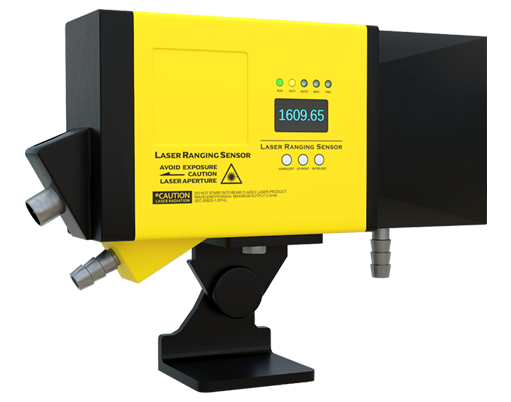
Another critical aspect is the measurement target itself. Standard tachometers often assume an ideal, moderately reflective surface. Customization addresses non-ideal targets. For dark, low-reflectivity surfaces like rubber belts or carbon-fiber composites, the laser power and detector sensitivity can be increased. For extremely shiny or specular surfaces that cause signal saturation, the optical system can be adjusted to accept diffuse reflection at an optimal angle. In applications where applying a reflective tape is impossible, sophisticated algorithms can be implemented to detect natural surface irregularities, a feature that requires deep collaboration between optical engineers and software developers.

Integration into larger control and data acquisition systems is a further realm for customization. While many standard units offer basic analog (4-20 mA, 0-10 V) or digital (RS-232) outputs, a custom sensor can be equipped with industrial Ethernet protocols like EtherCAT or PROFINET, enabling seamless integration into Industry 4.0 frameworks. It can also include onboard data logging, programmable alarm thresholds for predictive maintenance, or wireless communication modules (e.g., Wi-Fi, Bluetooth, LoRa) for monitoring hard-to-reach or mobile equipment. The form factor itself is customizable; sensors can be designed as ultra-compact units for space-constrained installations, or as long-range variants capable of measuring from several meters away for safety in hazardous zones.
The development process for a custom laser tachometer is inherently collaborative. It starts with a detailed application audit: defining the exact measurement range, required accuracy (often down to ±0.05% or better), target material, ambient conditions, mounting constraints, and output needs. Prototyping follows, where a modified base sensor is tested in-situ or in a simulated environment. This phase is crucial for validating optical and electronic adjustments. Finally, rigorous validation testing ensures the unit meets all specifications for performance, environmental resilience (IP67/IP69K ingress protection, wide temperature ranges), and long-term stability.
The return on investment for a custom sensor is measured in enhanced system reliability, reduced downtime, and improved product quality. In precision manufacturing, such as fiber winding or paper production, even minute speed variations can cause defects. A custom tachometer provides the exact feedback needed for closed-loop control. In critical predictive maintenance programs, a ruggedized, permanently installed custom sensor provides continuous, trustworthy data on pump, fan, or motor health, allowing for maintenance to be scheduled before catastrophic failure occurs.
In conclusion, while standard laser tachometers are valuable tools, the frontier of industrial measurement lies in tailored solutions. A custom laser tachometer is not merely an instrument but a engineered component of a larger system. By addressing the unique trifecta of environment, target, and integration, it delivers a level of performance and reliability that generic devices cannot match, ultimately safeguarding productivity, quality, and asset integrity in the most challenging industrial settings. The collaboration between the end-user's operational expertise and the sensor manufacturer's engineering prowess is what transforms a basic measurement concept into a cornerstone of operational excellence.