In the rapidly evolving landscape of intelligent transportation systems (ITS) and autonomous vehicle technology, the accurate and reliable classification of vehicles is paramount. Among the suite of sensors available, laser sensors—primarily Light Detection and Ranging (LiDAR) and laser rangefinders—have emerged as a cornerstone technology. This article delves into the principles behind laser-based vehicle classification, its diverse applications, and the future trajectory of this critical technology.
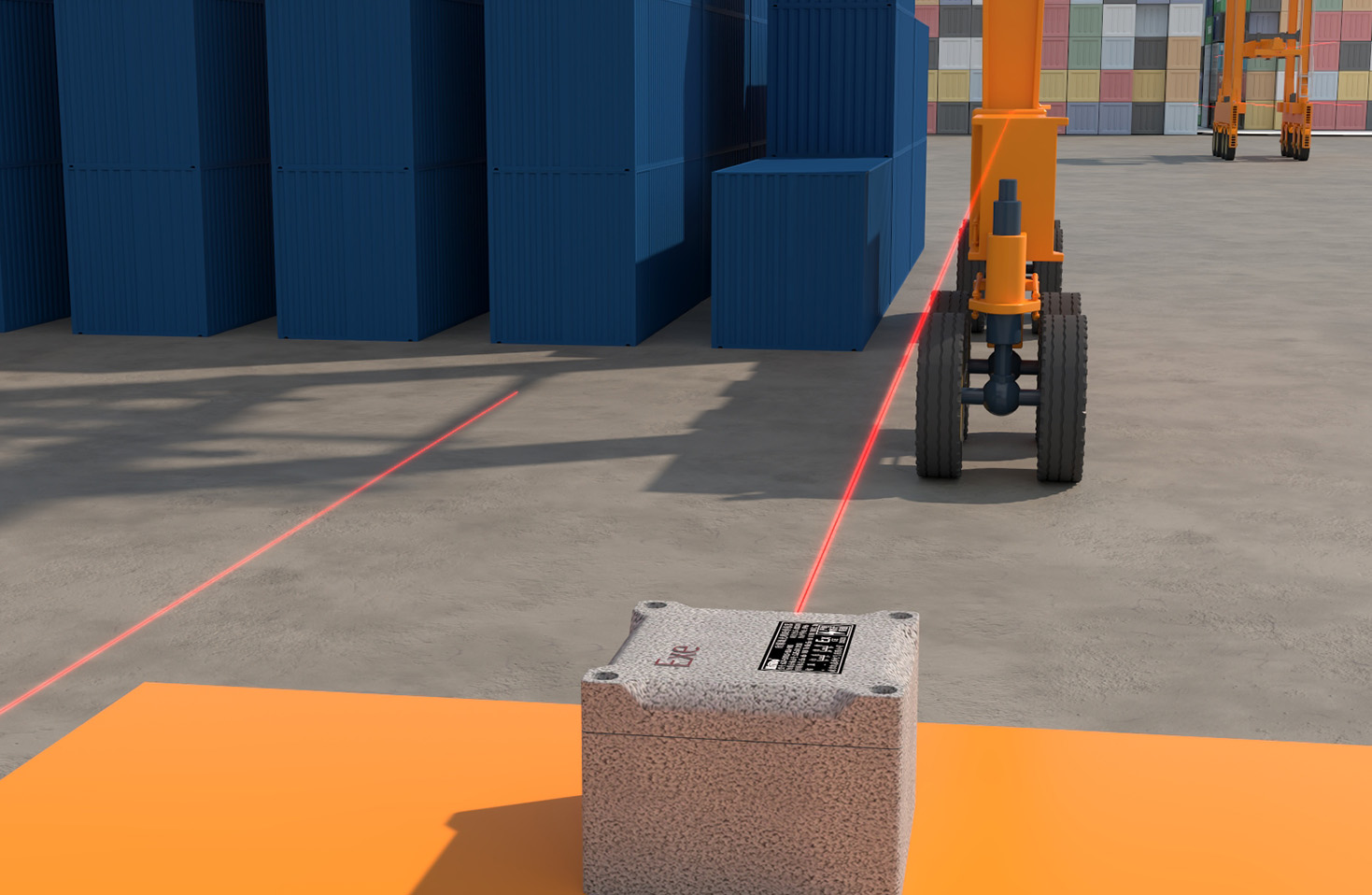
The fundamental principle of vehicle classification using laser sensors revolves around the measurement of distance and the creation of high-resolution spatial profiles. A typical system emits rapid pulses of laser light towards a target vehicle. The time taken for the light to reflect back to the sensor is precisely measured, calculating the distance to various points on the vehicle's surface. By scanning the laser beam across multiple axes, a dense cloud of data points, known as a point cloud, is generated. This point cloud forms a highly accurate 3D contour map of the vehicle. Advanced signal processing algorithms and machine learning models then analyze this spatial data. Key classification features extracted include the vehicle's length, height, width, profile shape (e.g., boxy for trucks, streamlined for cars), and even the number of axles. The distinct 3D signature of a motorcycle differs vastly from that of a sedan, a bus, or a multi-trailer truck, enabling precise categorization.
The applications of laser sensor-based vehicle classification are extensive and transformative. In tolling systems, it enables non-stop electronic toll collection (ETC) by accurately classifying vehicles for appropriate fee calculation, improving traffic flow and reducing congestion. For traffic management and planning, permanent or temporary installations at key points provide invaluable data on traffic composition, volume by vehicle type, and patterns. This data informs infrastructure development, congestion pricing models, and regulatory policies. In the realm of security and access control, laser systems can monitor and restrict access to sensitive areas based on vehicle type. Perhaps most critically, for autonomous driving systems, onboard LiDAR is indispensable for real-time perception. Classifying surrounding vehicles—distinguishing a vulnerable motorcycle from a sturdy SUV—allows the autonomous system to make safer and more nuanced driving decisions, predicting behaviors based on vehicle type.
Compared to alternative technologies like inductive loops, video cameras, or radar, laser sensors offer unique advantages. They provide superior accuracy in dimensional measurement, are largely unaffected by lighting conditions (functioning equally well day and night), and offer excellent spatial resolution. However, challenges remain. Performance can degrade in adverse weather conditions such as heavy fog, rain, or snow, as particles scatter the laser beam. The high cost of high-resolution LiDAR units, though decreasing, remains a barrier for widespread deployment. Furthermore, processing the vast amounts of point cloud data requires significant computational power and sophisticated algorithms.

The future of laser-based vehicle classification is intertwined with advancements in sensor fusion and artificial intelligence. The trend is moving towards integrating LiDAR data with inputs from cameras, radar, and ultrasonic sensors. This sensor fusion creates a redundant, robust, and comprehensive perception system, mitigating the weaknesses of any single technology. Concurrently, the evolution of deep learning, particularly convolutional neural networks (CNNs) and 3D point cloud processing networks like PointNet, is dramatically enhancing classification accuracy and speed. These AI models can learn intricate features from raw point cloud data, identifying vehicle makes or models with increasing precision. Another promising direction is the development of solid-state LiDAR, which promises smaller size, lower cost, and higher reliability, paving the way for ubiquitous deployment in both infrastructure and vehicles.
In conclusion, laser sensors provide an unparalleled technological foundation for accurate, all-weather vehicle classification. As a key enabler for smarter tolling, efficient traffic management, and the safe operation of autonomous vehicles, their role is only set to expand. Ongoing research into overcoming environmental limitations, reducing costs, and harnessing the power of AI will further solidify laser sensing as an indispensable tool in shaping the future of transportation, making our roads safer and more efficient for all vehicle types.