Proximity sensors are ubiquitous in modern industrial automation, robotics, and consumer electronics, silently performing critical detection tasks without physical contact. But what is the underlying principle that allows them to "sense" the presence or absence of an object? This article delves into the core operating principles of the most common types, supplemented with explanatory diagrams to visualize the invisible processes.
At its heart, a proximity sensor is a device that detects the presence or absence of a nearby object within a specified range, known as the sensing distance. It does this by emitting a field or beam of electromagnetic radiation or energy and then looking for changes in the field or return signal. The key advantage is non-contact operation, which eliminates mechanical wear and allows for high-speed, reliable detection.
The most prevalent types are inductive, capacitive, and photoelectric sensors, each based on a distinct physical principle.
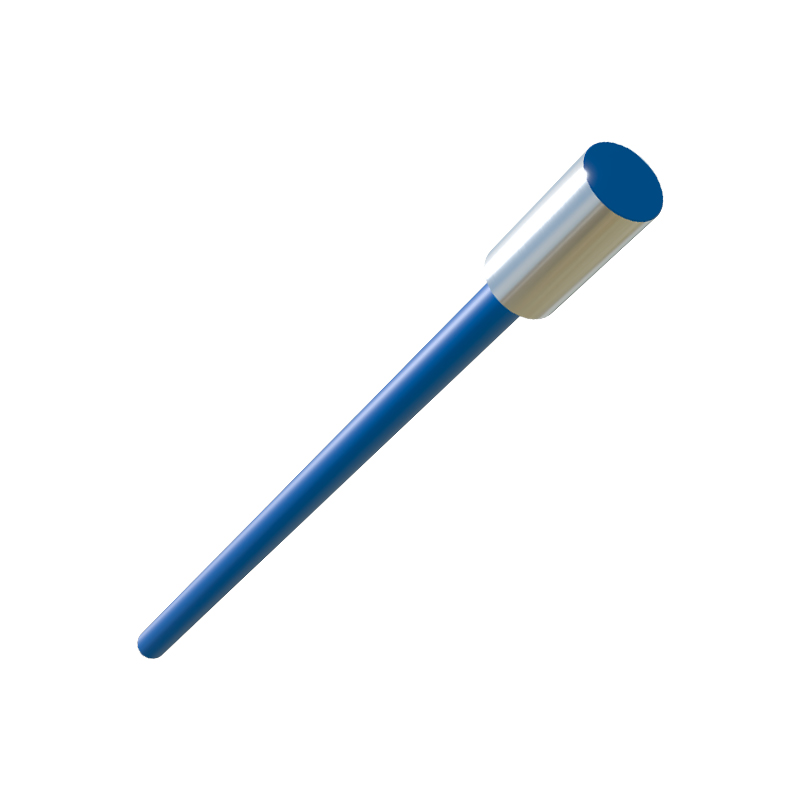
Inductive Proximity Sensors: Detecting Metals
An inductive proximity sensor is designed to detect ferrous and non-ferrous metal objects. Its core principle is electromagnetic induction. Inside the sensor's active face is a coil wound around a ferrite core, which forms part of an oscillator circuit. When powered, this coil generates a high-frequency oscillating electromagnetic field. (Diagram 1: Shows the internal coil, oscillator, and the radiating electromagnetic field lines).
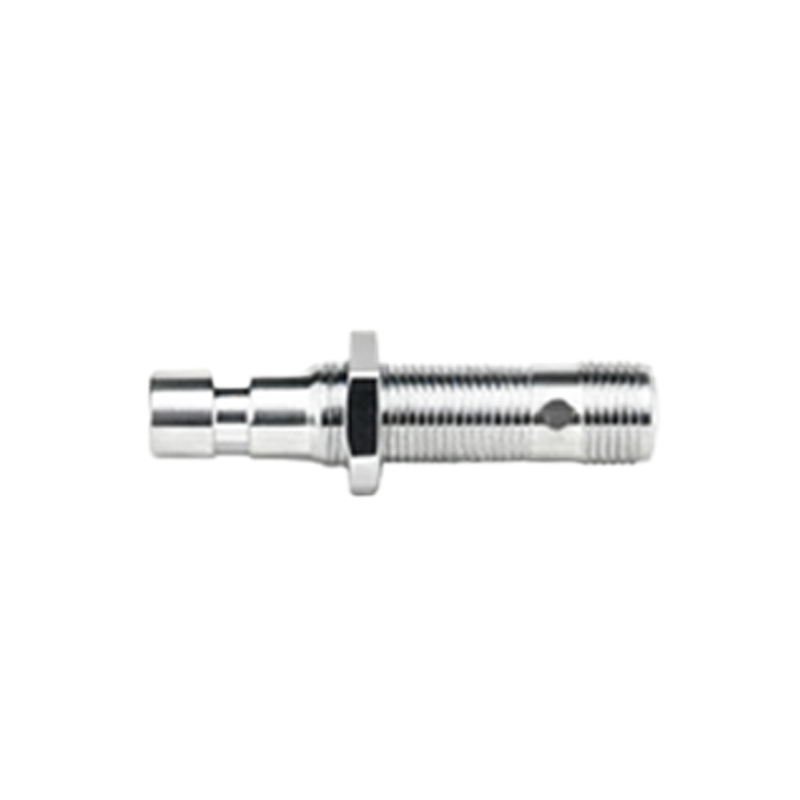
When a metal object enters this alternating magnetic field, eddy currents are induced on the surface of the metal. These eddy currents draw energy from the oscillator, causing a reduction in the oscillation amplitude. A monitoring circuit within the sensor detects this amplitude drop. Once the decrease passes a predefined threshold, the sensor's output state switches (e.g., from OFF to ON), signaling the detection of an object. (Diagram 2: Illustrates eddy currents forming on a metal target, with a graph showing the corresponding drop in oscillation amplitude).
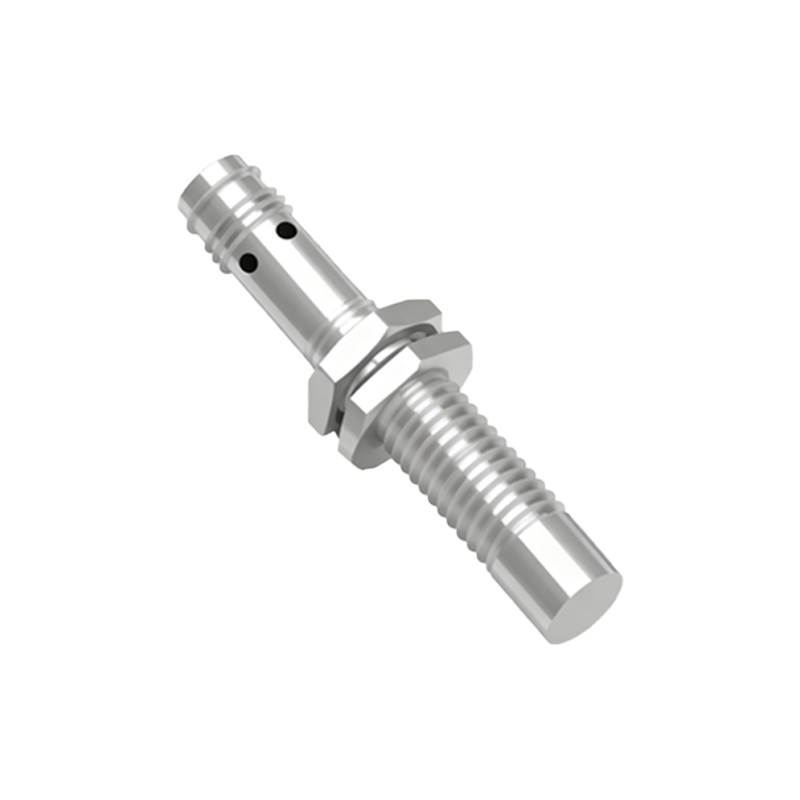
Capacitive Proximity Sensors: Detecting Almost Anything
Capacitive sensors operate on the principle of capacitance change. The sensor's active face acts as one plate of a capacitor, with the ground potential or a separate internal electrode acting as the other plate. This setup creates an electrostatic field. (Diagram 3: Depicts the sensor's electrode and the electrostatic field lines projecting forward).
When any object—metal, plastic, wood, liquid, or granular material—approaches the sensing face, it enters this electrostatic field. The object acts as a dielectric, changing the capacitance of the system. The sensor's internal circuit is tuned to oscillate only when this capacitance reaches a certain level. The presence of the object increases the capacitance, triggering the oscillation. This change is detected, leading to an output switch. Their ability to detect non-metals makes them ideal for level detection of liquids or powders. (Diagram 4: Shows a plastic container entering the field, with a graph plotting the rise in capacitance against distance).
Photoelectric Sensors: The Beam of Light
Photoelectric sensors use light to detect objects. They consist of a light emitter (usually an LED) and a receiver. The fundamental principle is the modulation, reflection, or interruption of a light beam. There are three main configurations, visualized in diagrams:
Through-beam (Diagram 5): The emitter and receiver are separate units facing each other. An object is detected when it interrupts the light beam traveling from emitter to receiver. This offers the longest sensing range and high reliability.
Retro-reflective (Diagram 6): The emitter and receiver are housed in the same unit. They face a special reflector. The object is detected when it breaks the beam traveling to and from the reflector.
Diffuse (Proximity-mode) (Diagram 7): The emitter and receiver are in the same unit. The sensor detects light reflected directly off the target object itself. The sensing distance depends on the object's color, texture, and reflectivity.
The receiver converts the received light intensity into an electrical signal. An object is registered when this signal changes significantly (e.g., beam broken or reflection received).
Ultrasonic Proximity Sensors: Using Sound Waves
Though less common in simple proximity roles, ultrasonic sensors work on a sonar principle. They emit high-frequency sound pulses and listen for the echo. By measuring the time between emission and reception of the reflected echo, they can calculate the distance to an object. (Diagram 8: Shows sound waves propagating and reflecting off an object, with a timing diagram).
Output and Application
Regardless of the sensing principle, the final stage is an output switch. This is typically a solid-state transistor (PNP/NPN) or a relay contact that changes state to control another device like a PLC input, a valve, or a warning light. (Diagram 9: A generic block diagram showing Sensing Element -> Signal Conditioner/Evaluator ->