In the realm of industrial automation, proximity switches play a critical role in detecting the presence or absence of objects without physical contact. Among these, NPN proximity switches stand out as a widely adopted solution due to their specific electrical characteristics and compatibility with various control systems. This article delves into the fundamentals, operation, and practical considerations of NPN proximity switches, tailored for engineers and technical professionals in the electrical and automation sectors.
NPN proximity switches are solid-state sensors that utilize an NPN transistor configuration in their output stage. The term "NPN" refers to the type of bipolar junction transistor used, where the output switches to ground (common negative) when an object is detected. Essentially, in an NPN switch, the load is connected between the positive supply voltage and the output terminal. When the sensor is activated, it sinks current to ground, completing the circuit and allowing current to flow through the load. This configuration is often described as "sinking" output, making it suitable for interfacing with programmable logic controllers (PLCs) and other devices that require a ground-switched input.
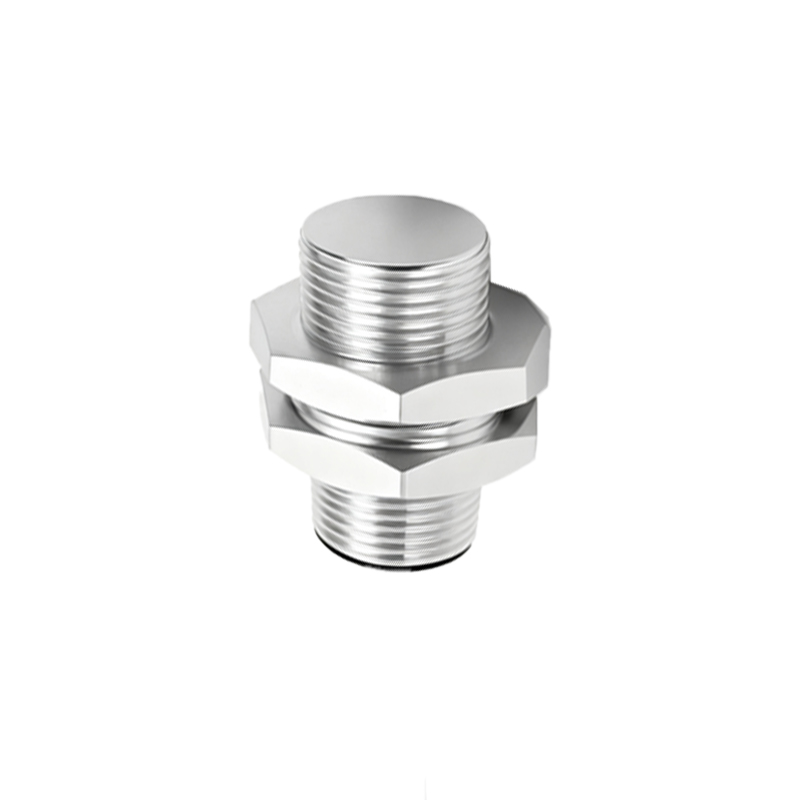
The operation of an NPN proximity switch relies on electromagnetic or capacitive sensing principles, depending on the type. Inductive NPN switches, commonly used for metal detection, generate an oscillating electromagnetic field. When a metallic object enters this field, it induces eddy currents, causing a change in oscillation amplitude that triggers the switch. Capacitive versions, capable of detecting both metallic and non-metallic materials, measure changes in capacitance caused by the target object. In both cases, the internal circuitry processes the signal and controls the NPN transistor to switch the output accordingly.
Key advantages of NPN proximity switches include their compatibility with many industrial control systems, particularly in regions like Europe and Asia where NPN configurations are prevalent. They offer reliable performance in harsh environments, with typical features such as high switching frequencies, resistance to vibration, and robust housing materials (e.g., stainless steel or nickel-plated brass). Additionally, NPN switches often exhibit low leakage current, reducing the risk of false triggering in sensitive applications.
When integrating NPN proximity switches into a system, several factors must be considered. First, ensure proper wiring: the brown wire usually connects to the positive supply voltage (e.g., +24V DC), the blue wire to ground, and the black wire to the load. The load, such as a PLC input or relay, is then connected between the black wire and the positive supply. It is crucial to verify voltage and current ratings to prevent damage. Second, environmental conditions like temperature extremes, humidity, and exposure to chemicals may influence sensor selection—opt for models with appropriate ingress protection (IP) ratings. Third, mounting and alignment are vital for consistent detection; maintaining the correct sensing distance and avoiding metal interference can optimize performance.
Common applications span diverse industries, including automotive manufacturing, packaging machinery, material handling, and robotics. For instance, in conveyor systems, NPN proximity switches can detect product positions for sorting or counting. In robotic arms, they ensure precise end-effector positioning. Their versatility also extends to safety systems, where they monitor door closures or guard positions.
Despite their benefits, NPN proximity switches have limitations. They are inherently designed for DC circuits and may not be directly compatible with PNP-based systems without additional interfacing. Moreover, in complex installations, mixed wiring with PNP sensors can lead to confusion, emphasizing the need for clear documentation and labeling. Regular maintenance, such as checking for debris accumulation or electrical noise, helps sustain longevity.
In summary, NPN proximity switches are indispensable components in modern industrial sensing, offering reliable, non-contact detection with a sinking output configuration. By understanding their operation, advantages, and integration nuances, engineers can effectively leverage these sensors to enhance automation efficiency and reliability. As technology evolves, advancements in miniaturization and smart sensing may further expand their capabilities, but the core principles of NPN design will remain foundational in electrical engineering practices.