In the realm of industrial automation and control systems, proximity sensors stand as fundamental components, enabling machines to perceive their environment without physical contact. These devices are engineered to detect the presence or absence of an object within a specified range, triggering an electrical signal that can be used for counting, positioning, inspection, or safety interlocking. Their operation hinges on various physical principles, primarily electromagnetic fields, capacitance, or ultrasonic waves, each suited to different materials and environmental conditions.
Inductive proximity sensors are the most prevalent in manufacturing settings, particularly for detecting metallic objects. They generate an oscillating electromagnetic field. When a conductive metal enters this field, it induces eddy currents, causing a change in the oscillation amplitude. This change is detected by the sensor's circuitry, which then switches its output state. These sensors are highly reliable, resistant to environmental contaminants like dust, oil, and coolant, and are ideal for harsh industrial environments. Common applications include detecting the position of a metal part on a conveyor, monitoring rotational speed by sensing gear teeth, or ensuring a robotic gripper has correctly picked up a metallic component.
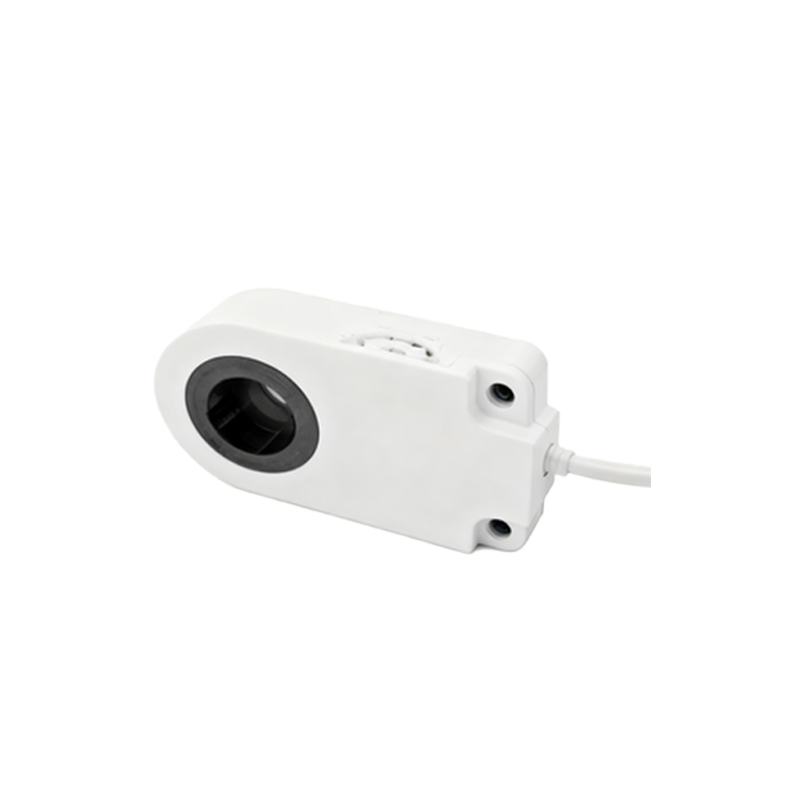
For non-metallic objects—such as wood, plastic, glass, or liquids—capacitive proximity sensors are the tool of choice. They function by generating an electrostatic field. Any object that enters this field alters its capacitance, prompting the sensor to activate. This makes them versatile for level detection in tanks (e.g., monitoring liquid or granular materials), detecting filled bottles on a packaging line, or even sensing the presence of a human hand, which finds use in touch-sensitive control panels.
Ultrasonic sensors represent another critical category, using sound waves beyond human hearing. They emit high-frequency pulses and measure the time taken for the echo to return. This time-of-flight principle allows for precise distance measurement and detection of objects regardless of their material composition, color, or transparency. They excel in challenging applications like detecting clear glass bottles, measuring the fill level of bulk solids in silos, or providing collision avoidance for automated guided vehicles (AGVs).
The selection of a proximity sensor is a critical engineering decision, influenced by factors such as the target material, required sensing distance (rated operating distance), environmental conditions (temperature, pressure, presence of chemicals), required output type (PNP/NPN, analog, IO-Link), and response frequency. For instance, a high-speed bottling line demands a sensor with a very fast response time and high switching frequency to keep pace.

The integration of these sensors into modern Industrial Internet of Things (IIoT) and Industry 4.0 frameworks has further amplified their value. Smart sensors with IO-Link communication provide not just a simple on/off signal but a wealth of diagnostic data—such as operating temperature, signal strength, and device health—enabling predictive maintenance and reducing unplanned downtime. This data-driven approach allows engineers to optimize processes, improve quality control, and enhance overall equipment effectiveness (OEE).
In safety systems, proximity sensors play a non-negotiable role. They are integral to safety light curtains and interlock guards on machinery, ensuring that dangerous motions cease before a human operator can access a hazardous area. Their fail-safe design is paramount for protecting personnel.
From the precise assembly of microelectronics to the rugged environment of a steel mill, proximity sensors provide the essential "sense of touch" for automated systems. Their ability to operate reliably, quickly, and without wear (due to non-contact operation) makes them indispensable. As automation complexity grows and demands for flexibility and data increase, the evolution of proximity sensor technology—towards miniaturization, enhanced intelligence, and greater robustness—will continue to be a cornerstone of efficient and innovative industrial operations.