In the realm of industrial automation, security systems, and large-scale monitoring, the ability to detect objects or personnel at a significant distance is paramount. This is where the 30-meter proximity sensor emerges as a critical technological solution. Unlike standard short-range sensors, these devices are engineered to provide reliable, non-contact detection over extended distances, bridging the gap between close-range sensing and long-range radar or LiDAR systems. Their operation hinges on sophisticated principles that allow for precise measurement and object presence confirmation from up to 30 meters away.
The core technology enabling this long-range capability varies, with different types catering to specific environmental and application needs. One of the most common technologies employed is ultrasonic sensing. These sensors emit high-frequency sound waves and calculate distance by measuring the time it takes for the echo to return. For a 30-meter range, ultrasonic sensors must be highly sensitive and capable of distinguishing the return signal from ambient noise. They are particularly effective in environments where optical methods might struggle, such as in the presence of dust, fog, or varying light conditions. However, their accuracy can be influenced by temperature and air turbulence.
Another prevalent technology is time-of-flight (ToF) infrared sensors. These devices emit a modulated infrared light pulse and use a sensitive receiver to detect the reflected light. A high-speed clock measures the time difference between emission and reception, which is directly proportional to the distance. Advanced ToF sensors designed for 30-meter ranges incorporate powerful emitters and highly sensitive photodiodes or arrays. They offer excellent precision and faster response times compared to ultrasonic sensors but may face challenges with highly reflective or absorbent surfaces and direct sunlight interference.
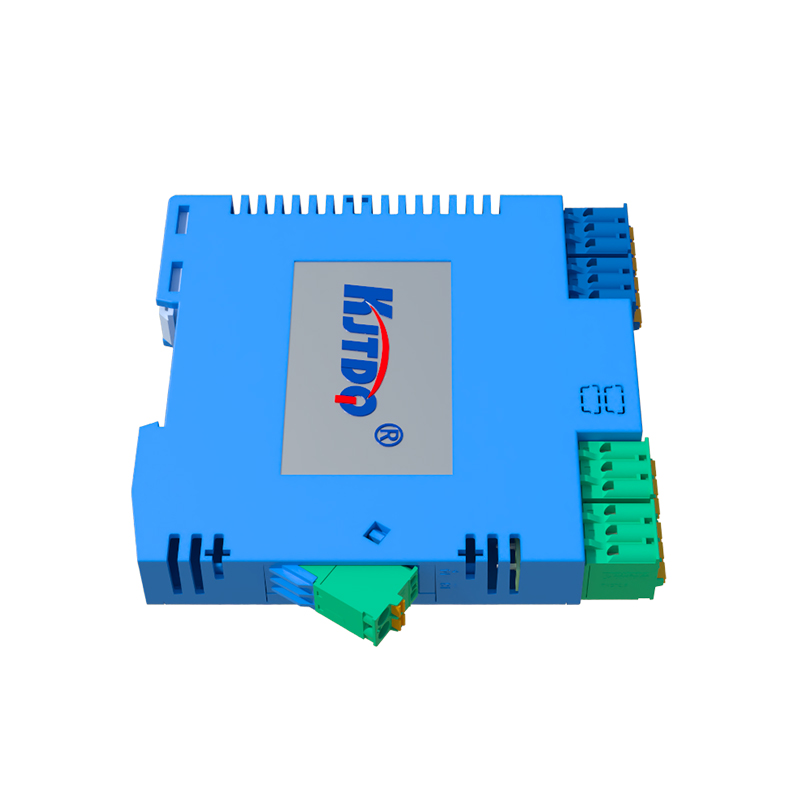
For applications requiring extreme precision and the ability to detect smaller objects at 30 meters, laser-based sensors, often a form of LiDAR (Light Detection and Ranging), are deployed. These sensors use focused laser beams to achieve highly accurate distance measurements. They are less affected by environmental factors like light and can provide detailed point-cloud data, but they typically come at a higher cost and with more complex integration requirements. The choice between ultrasonic, infrared ToF, and laser technologies depends on factors such as required precision, target material, environmental conditions, and budget.
The applications for 30-meter proximity sensors are vast and impactful. In industrial automation, they are used for vehicle detection in large warehouses, monitoring the position of gantry cranes, and ensuring safety perimeters around heavy machinery. In the agricultural sector, they can assist in monitoring grain levels in large silos or guiding autonomous farming equipment. Security and perimeter protection represent another major application area, where these sensors form an invisible fence, detecting intrusions across long boundaries without the need for physical contact or extensive camera coverage. Furthermore, they are integral to smart traffic management systems for vehicle counting at intersections or detecting queues.
Selecting and implementing a 30-meter sensor requires careful consideration. Key specifications include not just the sensing range, but also the resolution, repeat accuracy, response time, and beam angle or pattern. The environmental rating (IP code) is crucial for outdoor or harsh industrial use. Installation is also critical; sensors must be mounted securely to minimize vibration, and the alignment must be precise to ensure the detection zone covers the intended area. Regular maintenance, such as cleaning the lens or emitter surface, is necessary to sustain optimal performance over time.
In conclusion, the 30-meter proximity sensor is a versatile and powerful tool that extends the reach of automated sensing systems. By understanding the underlying technologies—ultrasonic, infrared ToF, and laser—engineers and system integrators can select the optimal device for demanding long-range detection tasks. From safeguarding perimeters to optimizing logistics, these sensors provide the essential data needed for efficiency, safety, and automation at scale, proving that sometimes, the most critical detection happens from a distance.