Laser distance sensors, also known as laser rangefinders or LiDAR (Light Detection and Ranging) sensors in certain configurations, are pivotal instruments in contemporary industrial automation, robotics, and quality control. Their operation is fundamentally rooted in the principles of optics and precise time measurement. At its core, a laser distance sensor emits a focused, coherent beam of light—typically from a laser diode—towards a target object. The sensor then detects the light reflected back from the object's surface. The critical measurement is the time interval between the emission and the reception of the light pulse, known as the time-of-flight (ToF).
Given the constant speed of light (approximately 299,792 kilometers per second in a vacuum, slightly slower in air), the distance to the target can be calculated with high accuracy using the simple formula: Distance = (Speed of Light × Time-of-Flight) / 2. The division by two accounts for the round-trip journey of the light pulse. This ToF method is the most common principle for long-range and high-precision industrial sensors. Alternative principles exist for specific applications. The phase-shift method, for instance, modulates the amplitude of the laser beam with a high-frequency signal. By comparing the phase difference between the emitted and received modulated light, the sensor can determine distance, often achieving even higher resolution at shorter ranges. Another technique, triangulation, is employed for very short distances and high precision. Here, the laser spot on the target is viewed from a known angle by a position-sensitive detector (like a CCD or CMOS array). The position of the spot on the detector changes linearly with the target distance, allowing for sub-micron resolution in controlled environments.
The advantages of laser distance sensors are manifold. They offer non-contact measurement, which is essential for delicate, hot, moving, or otherwise inaccessible surfaces. They provide exceptionally high accuracy and repeatability, often down to micrometer levels in triangulation sensors or millimeter levels in long-range ToF sensors. Their response time is extremely fast, enabling real-time measurement in dynamic processes such as conveyor belt sorting or robotic guidance. Furthermore, laser sensors are largely immune to the material properties of the target, although extremely dark or transparent materials may require specific calibrations or specialized sensors as they absorb or transmit most of the laser light, reducing the signal strength.
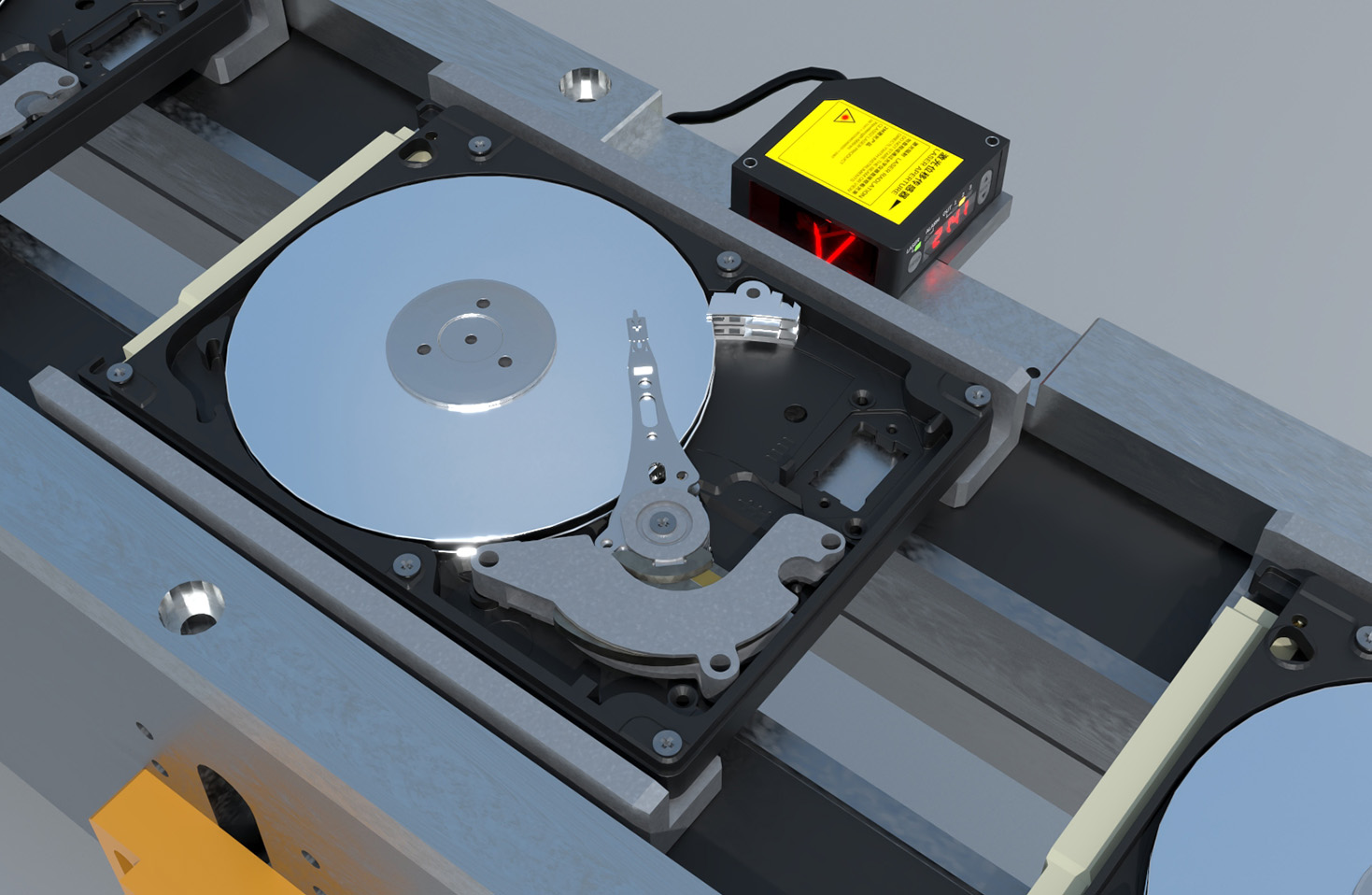
Industrial applications are vast and growing. In automated manufacturing, they are used for precise positioning of robotic arms, measuring part dimensions for quality assurance, and controlling fill levels in containers. In logistics, they measure parcel dimensions for automated sorting and storage. In construction and civil engineering, long-range laser scanners create detailed 3D point clouds of structures and terrains for planning and monitoring. Autonomous vehicles rely heavily on LiDAR, a sophisticated array of laser distance sensors, to perceive their environment in three dimensions. Even in consumer electronics, miniature laser sensors enable features like autofocus in smartphones and gesture recognition.

When selecting a laser distance sensor, engineers must consider key parameters: measuring range, accuracy, resolution, response time, laser class (for safety), environmental robustness (IP rating, resistance to vibration and temperature), and the required output interface (analog, digital, fieldbus). Proper installation is also crucial; factors like ambient light, dust, steam, and the target's surface characteristics must be evaluated to ensure optimal performance. Regular calibration against known standards maintains long-term accuracy.
In conclusion, laser distance sensors are a cornerstone of modern industrial measurement technology. Their ability to deliver fast, precise, and reliable non-contact distance data drives efficiency, quality, and innovation across countless sectors. As laser and detector technologies continue to advance, these sensors will become even more compact, accurate, and integral to the intelligent systems of the future.