In industrial automation and control systems, proximity sensors play a critical role in detecting the presence or absence of objects without physical contact. Among various types, proximity sensors with separate amplifiers—often referred to as "separate amplifier type" or "remote amplifier type"—offer distinct advantages that cater to demanding applications. This article delves into the key features of these sensors, highlighting their design, functionality, and benefits in modern engineering contexts.
The primary characteristic of separation-type proximity sensors is their modular design, which splits the sensing element and the amplifier into two separate units. The sensor head, typically compact and robust, is installed directly at the detection point, while the amplifier unit is housed remotely in a control panel or a less harsh environment. This separation allows for greater flexibility in installation, especially in space-constrained or high-temperature areas where the amplifier might be vulnerable. For instance, in automotive manufacturing lines, sensor heads can be placed near moving parts or in dusty conditions, while amplifiers are kept in protected enclosures to ensure longevity and reliable signal processing.
One of the standout features is enhanced durability and resistance to environmental factors. Since the sensor head contains no electronic circuitry, it can withstand extreme temperatures, vibrations, and corrosive substances. Many models are rated for IP67 or higher ingress protection, making them suitable for use in washdown environments like food processing or outdoor applications. The amplifier, on the other hand, benefits from being shielded from physical stress, allowing for more complex electronic components that enable advanced functions such as adjustable sensing ranges, time delays, and output configurations (e.g., NPN, PNP, or analog outputs). This division of labor between the sensor and amplifier leads to improved overall system reliability and reduced maintenance needs.
Another key advantage is the ease of maintenance and replacement. If a sensor head becomes damaged due to mechanical impact or wear, it can be swapped out without disturbing the amplifier wiring or settings. This modularity minimizes downtime in production facilities, as technicians only need to replace the smaller, cost-effective sensor head rather than the entire unit. Additionally, amplifiers can be standardized across multiple sensor heads, simplifying inventory management and reducing costs. In large-scale industrial setups, this feature translates to significant operational efficiency and lower total cost of ownership.
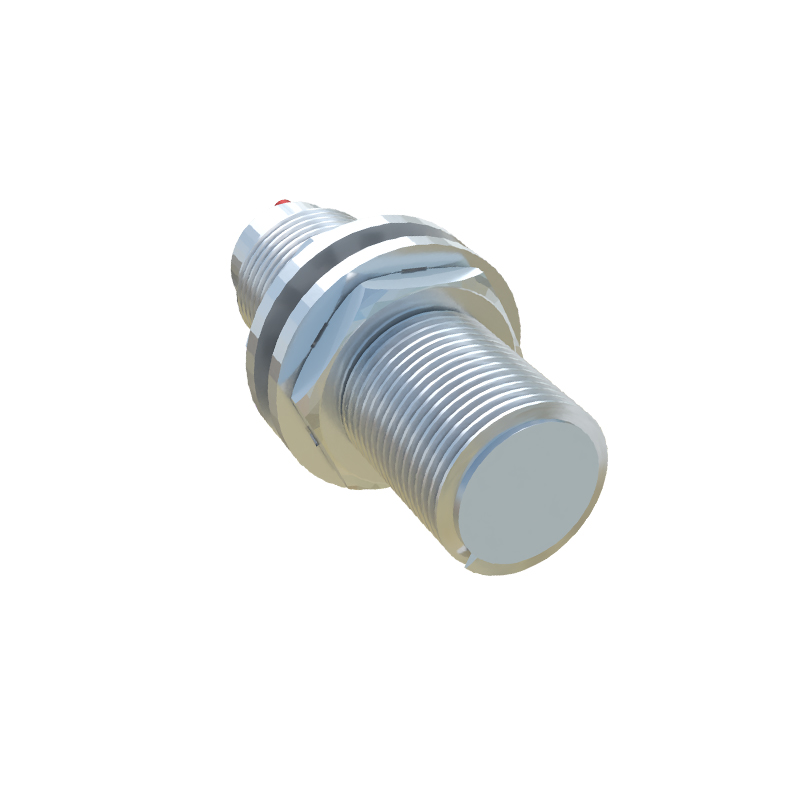
Separation-type proximity sensors also excel in terms of signal integrity and noise immunity. By locating the amplifier away from electromagnetic interference sources—common in environments with motors, transformers, or high-frequency equipment—the system can maintain stable and accurate detection. Shielded cables connect the sensor head to the amplifier, further reducing signal degradation over long distances. This makes them ideal for applications requiring precise positioning or counting, such as in packaging machinery or conveyor systems, where false triggers could lead to production errors.
Furthermore, these sensors offer versatility in sensing technologies, including inductive, capacitive, and magnetic types. Inductive sensors, for example, are widely used for metal detection, while capacitive variants can handle non-metallic materials like plastics or liquids. The separate amplifier design allows users to select the most appropriate sensor head for their material and environment, paired with an amplifier that matches their control system requirements. This adaptability supports diverse industries, from semiconductor manufacturing to agricultural automation.
In summary, proximity sensors with separate amplifiers provide a robust solution for challenging industrial environments. Their modular architecture enhances durability, simplifies maintenance, and improves signal reliability, making them a preferred choice for engineers seeking high-performance detection systems. As automation continues to evolve, the flexibility and resilience of these sensors will likely drive their adoption in emerging applications, from smart factories to renewable energy installations. For professionals in the electrical and automation fields, understanding these features is essential for optimizing system design and ensuring long-term operational success.