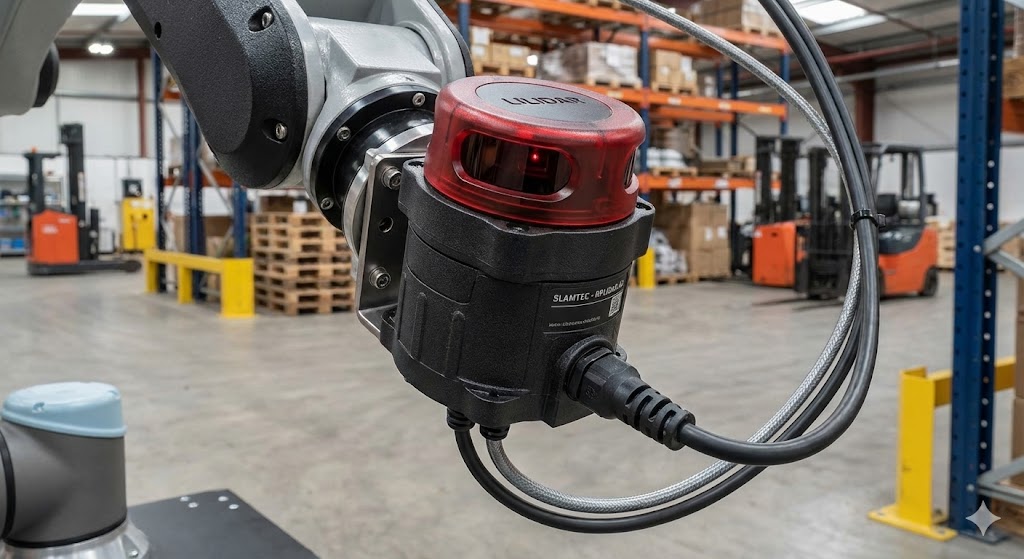
In the world of industrial automation and precision measurement, reflective laser sensors stand out as a cornerstone technology. These devices offer a non-contact method of detection, measurement, and positioning, bringing unparalleled speed, accuracy, and reliability to countless applications. Unlike through-beam sensors that require a separate emitter and receiver, a reflective laser sensor integrates both components into a single unit. It works by emitting a focused beam of laser light and then detecting the light that is reflected back from a target object. This fundamental principle enables a wide array of functionalities, from simple presence detection to precise distance measurement.
The core operation hinges on the triangulation method for measuring distance. The sensor's laser diode projects a visible or infrared spot onto the target. The reflected light travels back and strikes a position-sensitive detector (PSD) or a CMOS/CCD array inside the sensor. The angle at which the reflected light returns changes based on the distance to the target. The internal processor analyzes this positional shift on the detector to calculate the exact distance with high resolution. For simpler on/off detection, the sensor is set to trigger when the intensity of the reflected light exceeds or falls below a predefined threshold.
One of the primary advantages of reflective laser sensors is their exceptional precision. They can detect minute displacements, often in the micron range, making them ideal for quality control tasks like checking component height, thickness, or warp. Their focused laser beam allows for the detection of very small objects and provides excellent background suppression. This means the sensor can be tuned to ignore objects beyond a certain set distance, even if they are reflective, preventing false triggers. Furthermore, the visible red laser beam simplifies installation and alignment, saving valuable setup time.

The applications for reflective laser sensors are vast and span numerous industries. In electronics manufacturing, they verify the presence and precise placement of surface-mount components on PCBs. In automotive assembly lines, they ensure proper gap and flushness between body panels. Packaging machinery relies on them for precise label registration, fill-level control, and counting. They are indispensable in robotics for part positioning and guidance. Even in logistics, they facilitate dimensioning systems for parcels. Their ability to work on various surfaces, including shiny, dark, or transparent materials (often with special models or settings), adds to their versatility.
When selecting a reflective laser sensor for a specific task, several critical factors must be considered. First is the sensing distance and range. Manufacturers specify a standard sensing distance, but performance can vary with the target's color, texture, and reflectivity. A highly reflective white target will return a stronger signal than a matte black one. Therefore, understanding the application's target conditions is crucial. The required resolution or repeatability is another key parameter, especially for measurement tasks. The response time, or how quickly the sensor can detect a change and output a signal, is vital for high-speed production lines.

Environmental robustness is non-negotiable in industrial settings. Look for sensors with high Ingress Protection (IP) ratings to withstand dust, moisture, and coolant sprays. Resistance to vibration and electrical noise is also important. The output type—whether digital (PNP/NPN), analog (4-20mA, 0-10V), or IO-Link for digital communication—must be compatible with the host controller. Finally, form factor matters; compact sensors are needed for space-constrained installations.
Modern advancements continue to push the boundaries of this technology. Sensors with integrated background suppression (BGS) or foreground suppression (FGS) logic provide even more reliable operation in complex scenarios. The adoption of blue laser technology offers advantages for detecting certain materials, like copper, that poorly reflect traditional red lasers. Smart sensors with advanced diagnostics and parameterization via software are becoming the norm, enabling predictive maintenance and easier integration into Industry 4.0 frameworks.
In conclusion, reflective laser sensors are a powerful and flexible solution for modern automation challenges. Their principle of operation is elegantly simple, yet the technology delivers sophisticated performance. By carefully considering the application requirements—target properties, required precision, environmental conditions, and needed features—engineers can select the optimal sensor to enhance system efficiency, ensure product quality, and drive operational reliability. As automation evolves towards greater intelligence and connectivity, the reflective laser sensor will undoubtedly remain an essential tool in the engineer's arsenal.