Proximity sensors are critical components in modern automation, robotics, and consumer electronics, enabling devices to detect the presence or absence of an object within a specified range without physical contact. The reliability of these systems hinges fundamentally on sensor accuracy. Accuracy testing is not a single measurement but a comprehensive evaluation process that validates a sensor's performance against its specified parameters under controlled and real-world conditions. This process ensures consistent operation, safety, and quality in applications ranging from smartphone screens to industrial assembly lines.
The core of accuracy testing involves measuring and verifying key performance indicators. The primary metric is the Detection Distance. This test determines the exact point at which the sensor reliably triggers as a target approaches (actuation point) and releases as it moves away (release point). The difference between these two points is the hysteresis, a crucial factor for stable switching and preventing chatter. Testing is performed using precision linear stages or gauges to move a standard test target toward and away from the sensor face, recording distances with micron-level precision.
Equally important is testing for Repeatability. This assesses the sensor's consistency in reporting the same detection distance across multiple cycles under identical conditions. High repeatability indicates a stable and reliable sensor. A related but distinct concept is Reproducibility, which evaluates consistency when conditions change, such as different operators, test setups, or environmental factors. Together, repeatability and reproducibility define the sensor's precision.
Linearity is a critical test for analog-output proximity sensors. It measures how precisely the sensor's continuous output signal (e.g., 4-20 mA, 0-10V) corresponds to the actual distance of the target. Deviation from a perfect straight-line response is quantified as non-linearity. Good linearity is essential for applications where distance must be measured precisely, not just detected.
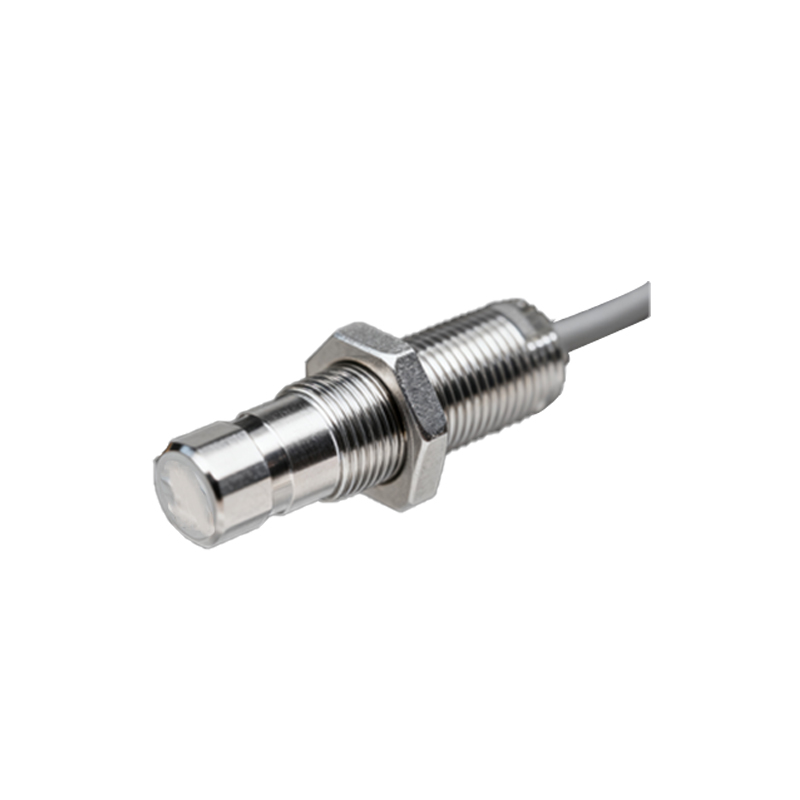
Environmental robustness testing is mandatory to ensure accuracy is maintained in real-world scenarios. Temperature Drift tests evaluate how the sensor's detection characteristics shift across its specified operating temperature range. Components inside the sensor expand and contract, and semiconductor properties change, potentially altering the sensing distance. Voltage Variation tests check performance stability across the allowable power supply range, as fluctuations can affect internal circuitry. Furthermore, testing for immunity to Ambient Light (for optical sensors) and External Electromagnetic Fields (for inductive sensors) is vital to prevent false triggers or missed detections.
The choice of Test Target is a fundamental variable. The sensor's specified target material, size, and shape must be used. An inductive sensor calibrated for steel will behave differently with aluminum or copper. The standard target size is typically equal to the sensor's rated sensing face diameter. Using an incorrect target invalidates the test. Target approach angle is also specified, usually perpendicular to the sensor face.
Best practices for establishing a reliable test setup include investing in a Calibrated Measurement System. This consists of a high-precision linear positioning system, a stable sensor mounting fixture, a regulated power supply, and accurate data acquisition hardware. All measurement equipment should have a known calibration traceable to national standards, with an accuracy at least three to four times better than the tolerance of the sensor parameter being tested.
A systematic test procedure is essential. Begin by stabilizing the sensor and test equipment in the controlled test environment for at least the manufacturer's recommended warm-up time. Execute tests methodically: first, baseline accuracy at room temperature with nominal voltage; then, repeatability over hundreds of cycles; followed by linearity scans for analog sensors; and finally, environmental stress tests. Data should be logged automatically to eliminate human error and allow for statistical analysis, such as calculating mean, standard deviation, and process capability indices (e.g., Cpk).
Ultimately, accuracy testing is about risk mitigation. A thoroughly tested proximity sensor performs predictably, reducing downtime in factories, enhancing user experience in devices, and preventing safety incidents. Manufacturers conduct these tests during design validation and production quality control. System integrators and end-users should also perform acceptance testing on incoming sensors and periodic recalibration checks in critical applications. By adhering to rigorous, standardized testing methodologies, engineers can ensure that the invisible detection provided by proximity sensors forms a foundation of trust for automated systems.