In the realm of precision measurement and automation, the synergy between parallel lasers and sensors has become a cornerstone technology. This combination enables non-contact, high-accuracy detection and alignment across a vast array of industrial and scientific applications. Understanding the fundamental principles behind these systems is key to appreciating their transformative impact.
A parallel laser, often generated by passing a laser beam through specialized collimating optics, produces a beam with minimal divergence over long distances. Unlike a focused point laser, this creates a straight, consistent line or plane of light. This characteristic is crucial. When this stable laser line or plane is projected onto a target surface, any deviation—a height variation, a surface defect, or a positional shift—manifests as a distortion or displacement in the projected light pattern.
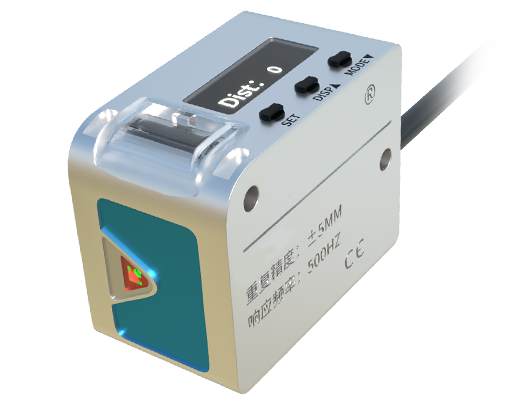
This is where the sensor enters the equation. Typically, a high-resolution digital camera or a position-sensitive photodetector is positioned at an angle to the laser source. Its role is to capture the image or position of the laser line on the target. Sophisticated image processing algorithms or triangulation calculations then analyze the captured data. By comparing the actual position or shape of the laser line against a known reference, the system can calculate precise measurements such as distance, thickness, profile, or presence of an object with micron-level accuracy.

The applications of this technology are remarkably diverse. In manufacturing, parallel laser and sensor systems are the eyes of robotic arms, guiding them for precise pick-and-place operations, welding, and assembly. They perform real-time quality control on production lines, scanning for defects in electronics, measuring the thickness of coatings or materials, and verifying the dimensions of machined parts. In the logistics and warehousing sector, these systems enable high-speed barcode reading and package dimensioning, even on moving conveyor belts, optimizing storage and shipping processes.
Beyond industrial settings, parallel lasers paired with sensors play vital roles in autonomous vehicles. LiDAR (Light Detection and Ranging) systems, a more complex iteration, use multiple parallel laser beams to scan the environment and create detailed 3D maps for navigation and obstacle avoidance. In construction and civil engineering, they are used for alignment, leveling, and monitoring structural deformations with exceptional precision. Even in healthcare, similar principles are applied in certain non-invasive diagnostic imaging and surgical guidance tools.
The advantages of using parallel laser and sensor systems are compelling. They offer non-contact measurement, eliminating wear and tear and allowing inspection of delicate or hazardous materials. Speed is another significant benefit, as these systems can perform thousands of measurements per second, far surpassing manual or contact-based methods. Furthermore, they deliver consistent, objective, and repeatable data, which is essential for statistical process control and quality assurance in modern industry.
Looking ahead, the future of parallel laser and sensor technology is geared towards greater integration, intelligence, and miniaturization. The development of more compact, energy-efficient laser diodes and advanced CMOS sensors will lead to smaller, more affordable systems. The integration of artificial intelligence and machine learning directly into the sensor's processing unit will enable smarter, adaptive systems that can not only detect anomalies but also classify defects and predict maintenance needs. Furthermore, the exploration of new wavelengths and the combination of multiple sensing modalities (e.g., combining laser profiling with thermal imaging) will open doors to even more sophisticated applications in fields like material science and environmental monitoring.
In conclusion, the partnership of parallel lasers and sensors represents a powerful paradigm for precision sensing. By converting stable light patterns into rich, actionable data, these systems have become indispensable tools for enhancing efficiency, quality, and automation. As the underlying components continue to evolve, their role in shaping smarter factories, safer vehicles, and more advanced research methodologies is set to expand significantly, driving innovation across the technological landscape.