Laser sensor technology represents a cornerstone of modern industrial automation and precision measurement. At its core, a laser sensor operates by emitting a focused beam of coherent light—typically from a laser diode—towards a target. The sensor then detects the interaction of this beam with the target, such as reflection, scattering, or interruption, and converts this optical information into an electrical signal for processing. The fundamental principle hinges on the properties of laser light: monochromaticity, coherence, and low divergence, which enable unparalleled accuracy and stability over long distances compared to conventional optical sensors.
The primary working modes include triangulation, time-of-flight (ToF), and confocal measurement. Triangulation sensors are renowned for high-resolution distance and displacement measurement. A laser spot is projected onto the target, and its reflection is focused onto a position-sensitive detector (PSD or CMOS). The change in the reflected spot's position on the detector, geometrically calculated, yields precise distance data. This method excels in applications requiring micron-level resolution, such as wafer inspection and thickness gauging. Time-of-flight sensors, conversely, measure the round-trip time for a laser pulse to travel to the target and back. Suitable for longer ranges, they are pivotal in applications like bulk level monitoring, vehicle LiDAR, and robotic navigation. Confocal chromatic sensors utilize white light, where a spectrometer analyzes the wavelength of the reflected light from the target surface, providing exceptional resolution for transparent or multi-layered materials.
Diverse laser sensor types cater to specific industrial needs. Diffuse-reflective sensors detect the presence or distance of an object by analyzing the light scattered back from its surface. They are versatile and easy to install but can be influenced by the target's color and surface texture. Through-beam sensors, consisting of separate transmitter and receiver units, offer the highest reliability and longest sensing range, as they detect the interruption of the beam. They are ideal for precise object detection in packaging or assembly lines. Retro-reflective sensors use a reflector to bounce the beam back to a co-located receiver, providing a good compromise between range and installation simplicity, though they may be fooled by shiny objects. Specialized variants include laser distance sensors for continuous level measurement and laser profile scanners for capturing complex 2D/3D contours.
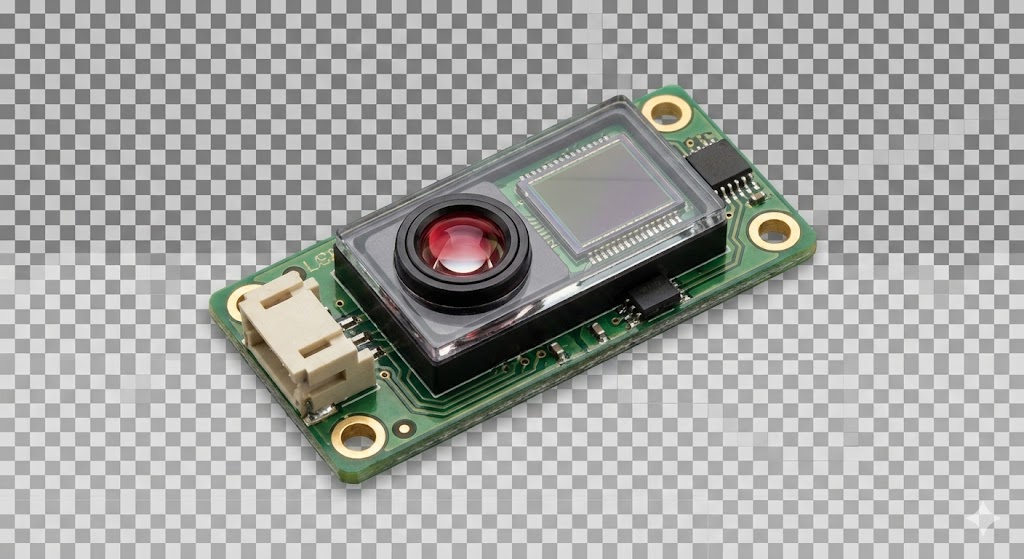
The advantages of laser sensors are manifold. They provide non-contact measurement, eliminating mechanical wear and allowing inspection of delicate or hot surfaces. High speed, precision, and resolution are inherent, enabling real-time process control. Their small, focused spot size allows for the detection of minute features. However, challenges persist. Environmental factors like ambient light, dust, fog, or steam can interfere with the laser beam. The performance can also vary with the target's optical properties—highly reflective, transparent, or absorbent surfaces may require sensor tuning or specialized models. Safety is paramount; Class 2 or higher lasers necessitate proper labeling and user training to prevent eye exposure.
Industrial applications are vast and critical. In manufacturing, laser sensors perform precise dimensional control, part presence verification, and robotic guidance for welding or picking. The automotive industry relies on them for body-in-white gap measurement, paint thickness inspection, and autonomous vehicle perception systems. Electronics assembly utilizes them for solder paste inspection, component placement, and PCB warpage detection. In logistics, they enable parcel dimensioning, warehouse automation, and AGV navigation. Pharmaceutical and food processing benefit from laser-based fill-level monitoring and packaging integrity checks. Emerging trends include the integration of AI for smarter data interpretation, the miniaturization of sensor packages, and the development of multi-spectral laser sensors capable of providing material composition data alongside dimensional metrics.

In conclusion, laser sensor technology is an indispensable, dynamic field driving innovation across industries. Its evolution continues to push the boundaries of what is measurable and automatable, offering solutions that enhance quality, efficiency, and safety. Engineers must carefully select the appropriate sensor type and configuration based on the specific application requirements, environmental conditions, and desired performance metrics to fully harness its potential. As Industry 4.0 advances, the role of sophisticated laser sensing as the "eyes" of automated systems will only become more profound.