In the rapidly evolving landscape of industrial automation, 360-degree laser scanning sensors have emerged as a cornerstone technology for safety, navigation, and precise measurement. Unlike traditional single-point or fixed-line sensors, these devices emit a rotating laser plane to create a continuous, two-dimensional protective field or detailed environmental map in a full circle around their mounting point. This capability makes them indispensable for a wide array of applications, from safeguarding personnel around hazardous machinery to enabling autonomous guided vehicles (AGVs) to navigate complex warehouse floors with unprecedented accuracy.
The core principle of a 360 laser scanner involves time-of-flight (ToF) or phase-shift measurement. The sensor's internal laser diode emits pulsed or modulated light. As this light strikes an object within its range, it is reflected back to the scanner's receiver. By precisely calculating the time difference or phase shift between the emitted and received signal, the sensor determines the distance to the object with millimeter-level precision. As the emission head rotates at high speed (typically thousands of revolutions per minute), it collects millions of distance measurements per second, constructing a real-time, 360-degree "point cloud" of its surroundings.
Key technical specifications define a scanner's performance and suitability for a task. The scanning range is paramount, with models available from short-range (a few meters) for internal AGV use to long-range (over 50 meters) for large-area monitoring. Angular resolution, often as fine as 0.1°, determines how finely the environment is sampled, impacting the detection of small or thin objects. Scanning frequency, measured in Hertz, dictates how quickly a full 360-degree scan is completed, which is critical for high-speed applications. Furthermore, protection class ratings like IP67 are essential for ensuring reliable operation in harsh industrial environments with dust, moisture, and vibration.
Applications are diverse and transformative. In machine safety, these sensors create invisible, configurable warning and stop zones around robots, presses, and other dangerous equipment, offering far more flexibility than physical barriers. For AGV and AMR navigation, they serve as the primary "eyes," performing simultaneous localization and mapping (SLAM). The scanner detects fixed reference points like walls, columns, and reflectors while simultaneously identifying dynamic obstacles like people or pallets, allowing the vehicle to calculate a safe path in real time. Beyond safety and navigation, they are used in volume measurement within silos or on conveyor belts and for contour profiling in logistics and manufacturing.

Selecting the right 360 laser scanner requires careful consideration of the operational environment and the specific task. For indoor AGVs, a scanner with a range of 5-10 meters and high angular resolution is typical. Outdoor or large-scale logistics yards demand models with longer ranges and robust housings to withstand weather and temperature fluctuations. The choice of interface—Ethernet/IP, PROFINET, EtherCAT, or simple TCP/IP—must align with the existing control system architecture. Additionally, software configurability is a major differentiator; advanced units allow users to define multiple, complex protective fields with different response protocols directly via intuitive PC software.
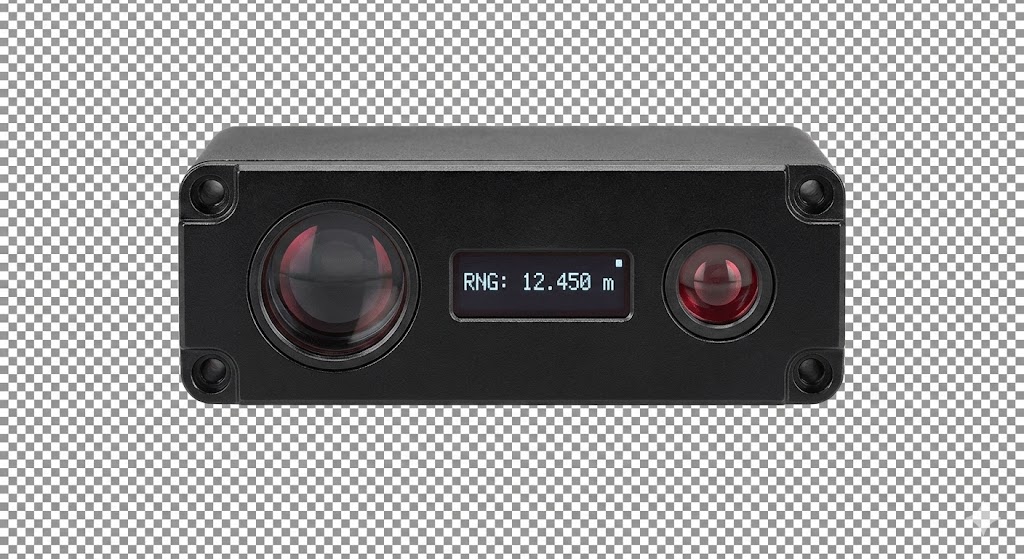
Looking ahead, the integration of artificial intelligence (AI) and multi-sensor fusion is set to push the boundaries further. AI algorithms can be deployed directly on the sensor's processor to classify detected objects—distinguishing between a human, a cardboard box, and a metal rack—enabling more intelligent and context-aware reactions. Furthermore, combining 3D laser scan data with inputs from cameras, radar, or inertial measurement units (IMUs) creates a richer, more reliable perception system, which is vital for the next generation of fully autonomous mobile robots operating in unstructured, shared human spaces.
In conclusion, the 360-degree laser scanning sensor is far more than a simple safety device; it is a sophisticated perception engine driving automation forward. Its ability to provide reliable, high-precision, real-time environmental data in a full circle makes it a critical enabler for smarter, safer, and more efficient industrial operations. As technology advances towards greater intelligence and integration, its role will only become more central in the factories and warehouses of the future.