Laser distance sensors, also known as laser rangefinders or LiDAR sensors in specific contexts, are pivotal components in modern industrial automation, robotics, and quality control systems. Their primary function is to measure the distance between the sensor and a target object with high precision, non-contact, and often at high speeds. Classification of these sensors is essential for engineers and system integrators to select the appropriate technology for a given application. This article delineates the major classification criteria for laser distance sensors prevalent in the electrical and industrial engineering sectors.
The most fundamental classification is based on the underlying measurement principle. The two dominant methodologies are Time-of-Flight (ToF) and Triangulation. Time-of-Flight sensors calculate distance by measuring the time interval between the emission of a laser pulse and the detection of its reflection from the target. This principle is ideal for long-range measurements, often extending from several meters to hundreds of meters, and is commonly used in applications like aerial surveying, warehouse logistics (e.g., AGV navigation), and large-scale industrial metrology. Their accuracy is typically in the millimeter to centimeter range, influenced by the speed of light and the precision of timing circuitry.
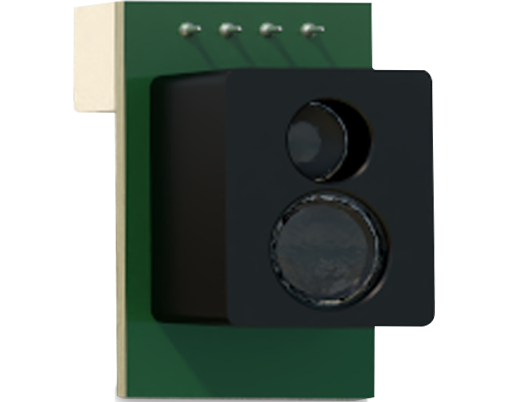
Conversely, Triangulation-based laser sensors operate on a geometric principle. The sensor emits a laser spot onto the target. The reflected light is focused onto a position-sensitive detector (PSD or CMOS/CCD array) at an angle relative to the emission axis. The position of the light spot on the detector shifts proportionally to the distance of the target. By calculating this shift, the exact distance is determined. Triangulation sensors excel in short to medium-range measurements (from a few millimeters up to several meters) with exceptionally high resolution, often in the micrometer range. They are the workhorses of precision manufacturing, assembly line inspection, and profile scanning where minute dimensional variations are critical.
A further critical classification is by the type of laser beam and its modulation. Sensors can utilize a point laser, a line laser, or a structured light pattern. Point lasers measure a single spot and are used for distance measurement to a specific point. Line lasers project a laser line onto a surface, enabling profile or contour measurement when combined with a camera or detector array, widely used in 3D scanning and weld seam tracking. Modulated or continuous-wave (CW) lasers, often used in phase-shift ToF systems, offer improved accuracy over simple pulse ToF for medium ranges by modulating the laser intensity and measuring the phase difference of the returned signal.
Output type and interface form another practical classification layer. Analog output sensors (e.g., 0-10V, 4-20mA) provide a continuous signal proportional to the measured distance, easily integrated into PLCs and analog control systems. Digital output sensors offer serial communication (RS-232, RS-485), industrial Ethernet (Profinet, EtherNet/IP), or fieldbus protocols (PROFIBUS, IO-Link). These facilitate direct integration into networked industrial systems, allowing for configuration, multi-sensor networks, and advanced data handling. Some sensors also provide switching outputs (PNP/NPN) for simple threshold detection tasks, such as part presence/absence verification.
Application environment dictates another classification: standard industrial, hygienic, or ruggedized. Standard IP67-rated sensors are suitable for most factory floors with dust and moisture. Hygienic or washdown sensors (with IP69K ratings and specific material coatings like stainless steel) are designed for food & beverage or pharmaceutical industries where frequent cleaning with high-pressure fluids is required. Ruggedized sensors are built to withstand extreme conditions, including heavy vibration, significant temperature fluctuations, or exposure to corrosive chemicals, common in mining, metalworking, or outdoor applications.
Finally, classification by performance specifications is crucial. Key parameters include measuring range, accuracy (linearity), resolution, response time (measurement frequency), and spot size. A sensor's datasheet will detail these, and the selection process involves balancing these specs against application needs and cost constraints. For instance, a high-speed bottling line requires a very fast response time, while a coordinate measuring machine demands ultimate accuracy and resolution.
In conclusion, the systematic classification of laser distance sensors—by measurement principle (ToF vs. Triangulation), beam type, output interface, environmental robustness, and performance parameters—provides a structured framework for engineering decision-making. Understanding these categories enables professionals to navigate the vast market of laser sensing technology and deploy the most effective, reliable, and cost-efficient solution for tasks ranging from bulk material level monitoring to micron-level component inspection, thereby optimizing automation processes and enhancing overall system intelligence.