In the realm of industrial automation and smart systems, proximity sensors stand as silent sentinels, enabling machines to perceive their environment without physical contact. These sophisticated devices detect the presence or absence of an object within a defined sensing range, triggering a corresponding electrical signal. Their role is foundational, from ensuring robotic arm precision to safeguarding personnel in hazardous zones. This article delves into the world of top-tier proximity sensors, exploring their core technologies, selection criteria, and transformative applications.
The principle of operation is elegantly simple: a sensor emits a field or beam and monitors for changes caused by a target object. The absence of mechanical contact is their cardinal advantage, leading to exceptional reliability, long operational life, and high-speed response. Wear and tear are virtually eliminated, making them ideal for demanding, high-cycle environments.
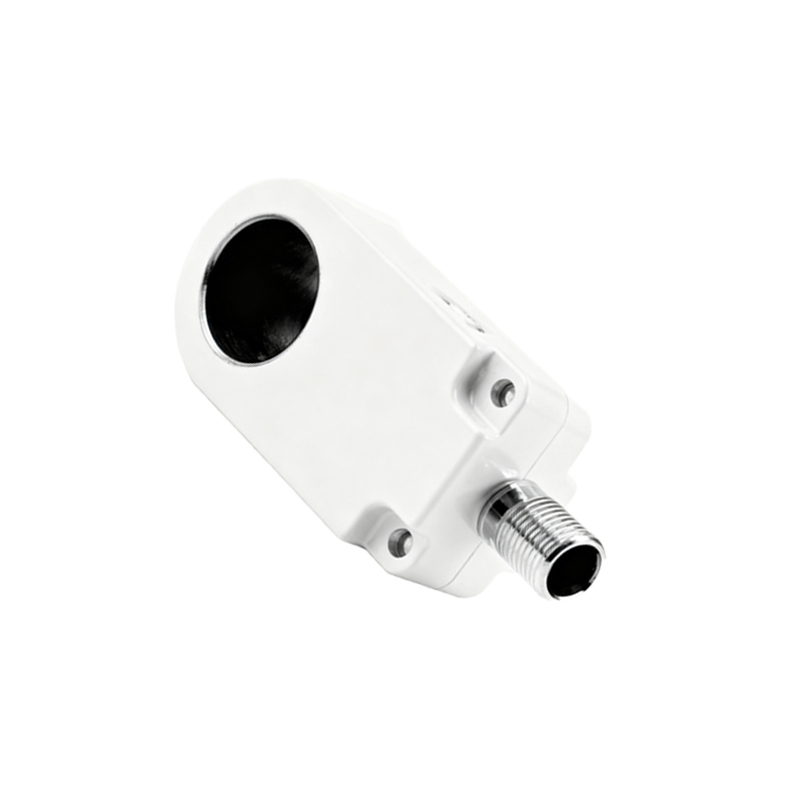
Several core technologies define the landscape of premium proximity sensors:
1. Inductive Sensors: The workhorses of metal detection. They generate an electromagnetic field. When a metallic target enters this field, it induces eddy currents, causing a change in the field's oscillation amplitude. This change is detected and converted into a switch signal. Top models offer exceptional sensing distances, immunity to environmental contaminants like oil and dust, and sub-millisecond response times. They are indispensable in metalworking, automotive assembly, and machine tooling.
2. Capacitive Sensors: These versatile detectors can sense both metallic and non-metallic materials—plastic, wood, glass, liquids, and granular substances. They function by generating an electrostatic field. Any object with a dielectric constant different from air alters the capacitance of the sensing circuit. Advanced capacitive sensors feature sensitivity adjustments to ignore certain materials (like a container wall) and detect the target material behind it, perfect for level detection in tanks or packaging lines.
3. Ultrasonic Sensors: Utilizing sound waves beyond human hearing, these sensors measure distance and detect objects regardless of color, transparency, or material (provided the surface reflects sound). They emit ultrasonic pulses and calculate the time for the echo to return. High-performance ultrasonic sensors provide excellent range (up to several meters), are effective in challenging environments with dust or fog, and are used for precise positioning, loop control, and palletizing.
4. Photoelectric Sensors: Offering the longest sensing ranges, they operate on light beam principles. An emitter sends a light beam (often infrared, laser, or visible red) to a receiver. Detection occurs when the target interrupts (through-beam) or reflects (retro-reflective, diffuse) this beam. Leading photoelectric sensors boast powerful optics for long-range detection, precise background suppression to ignore distant objects, and the ability to detect tiny or transparent items, crucial in electronics manufacturing and logistics.
Selecting a top proximity sensor requires careful analysis of several parameters:
Sensing Range: The nominal operating distance. A safety factor is typically applied.
Target Material: Dictates the sensor type (inductive for metals, capacitive for diverse materials).
Output Type: Digital (PNP/NPN) or analog (4-20mA, 0-10V) signals.
Environmental Rating: IP (Ingress Protection) and NEMA ratings for resistance to dust, water, and chemicals. Ruggedized housings (often stainless steel) are critical for harsh settings.
Response Frequency: How quickly the sensor can detect objects in rapid succession.
Installation and Connectivity: Form factor (cylindrical, rectangular) and connection methods (pre-wired cables, quick-disconnect).
The applications of high-end proximity sensors are vast and critical. In automotive manufacturing, they ensure robots weld at exact points. In food and beverage, capacitive sensors monitor liquid levels in sterile tanks. Ultrasonic sensors guide AGVs (Automated Guided Vehicles) in warehouses. Inductive sensors count gears on a high-speed production line. They are the backbone of predictive maintenance, providing data on machine vibration and component alignment to prevent unplanned downtime.
In conclusion, the evolution of proximity sensors mirrors the advancement of industry itself. Modern top-tier sensors integrate IoT capabilities, enabling remote diagnostics and integration into Industry 4.0 networks. Their precision, robustness, and versatility make them not merely components but essential enablers of efficiency, safety, and innovation. Choosing the right sensor technology for a specific application is a strategic decision that directly impacts system performance, reliability, and ultimately, operational success.