In the realm of industrial automation and precision measurement, the 90-degree laser sensor stands as a pivotal component, enabling high-accuracy detection and positioning in complex spatial arrangements. This specialized sensor emits a laser beam perpendicular (at a 90-degree angle) to its mounting surface, allowing for unique installation configurations and measurement scenarios that are impractical with traditional inline sensors.
The fundamental operating principle of a 90-degree laser sensor involves the emission of a focused laser beam, typically from a Class 1 or Class 2 laser diode, which is redirected through an internal prism or mirror system to achieve the orthogonal output. When this beam strikes a target object, the reflected light is captured by a receiver within the sensor housing. By analyzing the properties of the returned light—such as intensity, time-of-flight, or triangulation displacement—the sensor can determine the presence, distance, position, or even the surface profile of the target with micron-level precision. Common technologies employed include diffuse reflection, retro-reflective, and through-beam methods adapted for the 90-degree form factor.
Key applications are abundant across manufacturing and robotics. In assembly lines, these sensors are mounted horizontally to perform vertical height checks or detect component placement on PCBs. Within confined machinery, the compact 90-degree head facilitates installation where space is severely limited, such as inside robotic grippers for part positioning or on automated guided vehicles (AGVs) for obstacle avoidance at right angles. They are also indispensable in quality control for measuring edge positions, detecting minute gaps, or verifying the alignment of materials in textile, printing, and packaging industries. The ability to orient the beam perpendicularly often eliminates shadowing effects and provides a clear line-of-sight to features that are parallel to the machine frame.
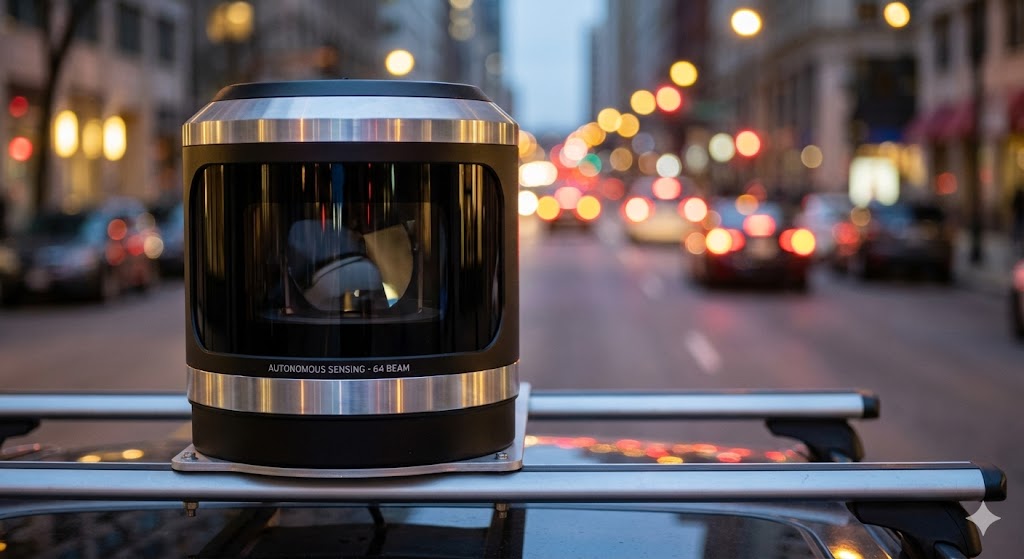
Selecting an appropriate 90-degree laser sensor requires careful consideration of several parameters. Sensing range, spot size, response time, and environmental ratings (like IP67 for dust and water resistance) are critical. For instance, in high-speed bottling plants, a sensor with a sub-millisecond response and a small, precise spot can reliably detect label presence on curved surfaces. Output options (digital IO, analog, or fieldbus protocols like IO-Link) must align with the control system. Furthermore, mounting brackets and alignment aids are essential for stable, vibration-resistant installation to maintain calibration.

Despite their advantages, challenges exist. Ambient light interference, particularly from strong industrial lighting, can affect performance, necessitating models with modulated laser light or specialized filters. Highly reflective or absorbent surfaces may require sensitivity adjustments. Regular maintenance, including lens cleaning and verification checks, ensures long-term accuracy. Modern advancements integrate smart features such as teach-in programming via push-button or software, diagnostic capabilities, and temperature compensation to enhance reliability in fluctuating conditions.
In conclusion, the 90-degree laser sensor is a versatile and precise tool that solves specific geometric sensing challenges in automation. Its unique beam orientation expands design possibilities for engineers, contributing to enhanced efficiency, reduced downtime, and improved product quality. As industries evolve toward smarter, more flexible manufacturing, the role of these specialized sensors will only grow in significance, driven by demands for higher precision and adaptability in increasingly compact and complex systems.
