In the realm of industrial automation, particularly within continuous process manufacturing such as printing, converting, textiles, and paper production, maintaining precise alignment of moving webs is paramount. Misalignment, even by fractions of a millimeter, can lead to material waste, production downtime, and compromised product quality. This is where TCP Laser Edge Detection Sensors, a specialized category of web guiding sensors, become indispensable. These sensors provide non-contact, high-accuracy measurement for real-time edge or line position detection, forming the critical feedback component in automated guiding systems.
Unlike traditional mechanical follower arms or ultrasonic sensors, TCP laser sensors utilize a focused laser beam to detect the edge of a material. The core operational principle involves projecting a laser line onto the target web. A receiver, either integrated or separate, captures the laser light. When the web edge intersects the laser line, it creates a sharp contrast shadow. The sensor's internal processor analyzes this optical transition to calculate the exact edge position with micron-level resolution. This digital measurement is continuously transmitted to a guiding controller, which then actuates correction mechanisms like steering rollers or pivoting frames to recenter or align the web.
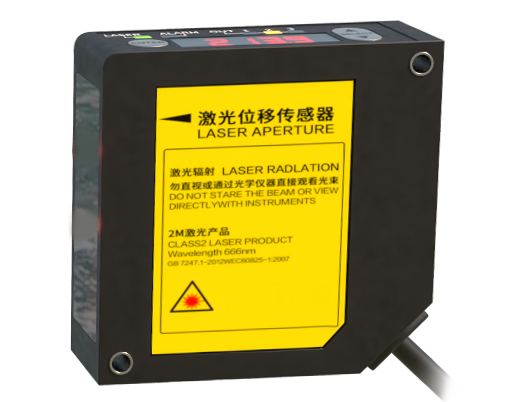
The advantages of TCP laser sensors are numerous. Their non-contact nature eliminates wear and tear on both the sensor and the material, making them ideal for delicate, sensitive, or high-speed webs. They are largely immune to environmental factors that plague other technologies; they are not affected by air turbulence, ambient noise, dust (within specified limits), or variations in material color and texture to a significant degree, especially when compared to vision-based systems. This robustness ensures consistent performance in harsh industrial environments. Furthermore, they offer exceptional response speed and accuracy, capable of tracking rapid lateral movements, which is crucial for modern high-throughput production lines.
Key specifications to consider when selecting a TCP laser sensor include measurement range, resolution, repeatability, and response time. The measurement range defines the maximum width variation the sensor can handle. Resolution, often in micrometers, determines the smallest detectable positional change. Repeatability indicates the sensor's consistency in returning the same measurement for the same edge position. A fast response time, typically in milliseconds, is vital for dynamic guiding applications. Additionally, the choice between a diffuse reflection type (where emitter and receiver are in one housing) and a through-beam type (separate emitter and receiver) depends on material opacity and installation constraints.

Integration of a TCP laser sensor into a web guiding system is straightforward but critical. Proper mounting is essential to avoid vibration and ensure a perpendicular orientation to the web. The sensor must be positioned at a stable reference point, often upstream of the correction point. Calibration involves teaching the sensor the reference edge position for the "center" or "guide" line. Modern sensors feature intuitive setup via push buttons or software, allowing for easy configuration of parameters like response filtering and output signals (e.g., analog voltage, current, or digital bus protocols like Ethernet/IP or PROFINET).
Applications for TCP laser edge sensors are vast. In the printing industry, they ensure precise color registration and prevent edge trim waste. In film and foil converting, they guide materials during slitting, laminating, and coating processes. In the nonwoven and textile sectors, they maintain alignment for bonding and finishing lines. They are also extensively used in the paper, rubber, and metal foil industries. Any process involving the continuous transport of a flexible material can benefit from the precision of laser-based edge detection.

In conclusion, TCP Laser Edge Detection Sensors represent a mature, reliable, and high-performance solution for industrial web guiding. By delivering accurate, non-contact, and real-time positional data, they form the eyes of an automated guiding system, enabling manufacturers to achieve higher speeds, reduce material waste, improve product quality, and enhance overall operational efficiency. As production demands for precision and speed continue to escalate, the role of these sophisticated sensors will only become more central to efficient and profitable manufacturing operations.