In industrial automation and electrical engineering, a fascinating and often misunderstood phenomenon occurs with certain types of proximity sensors: they continue to emit a faint glow or indicate a response even after their primary power source has been disconnected. This behavior, while seemingly counterintuitive, is rooted in fundamental principles of sensor design, residual energy, and environmental interaction. This article delves into the technical reasons behind this glow, exploring the types of sensors involved, the underlying physics, and practical implications for system design and maintenance.
Proximity sensors, particularly inductive and capacitive variants, are staples in modern industrial control systems. They detect the presence or absence of metallic or non-metallic objects without physical contact, relying on electromagnetic fields or capacitance changes. A common observation in the field is that some sensors, especially certain photoelectric or LED-indicator-based models, may exhibit a lingering glow post-power-down. This is not a malfunction but a characteristic tied to their construction.
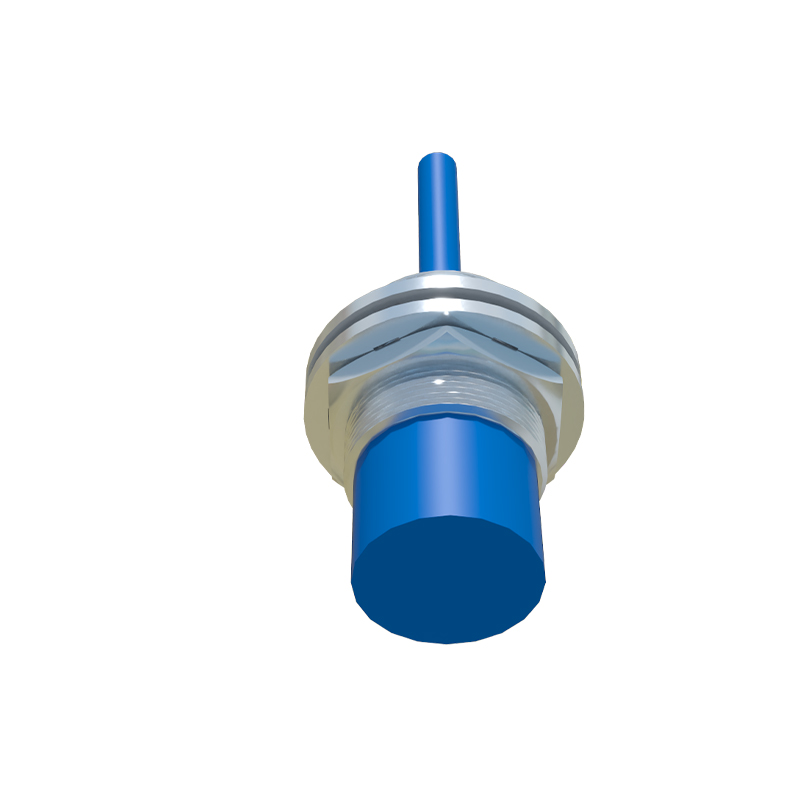
The primary cause of this afterglow lies in residual electrical energy stored within the sensor's internal components. Many proximity sensors incorporate capacitors, inductors, or even small batteries for backup or signal conditioning. When main power is cut, these components can discharge slowly, providing just enough energy to illuminate an LED or cause a faint emission for a brief period. This discharge time depends on the circuit's RC (resistor-capacitor) or LC (inductor-capacitor) time constants, which can range from milliseconds to several seconds. For instance, a sensor with a large smoothing capacitor in its power supply circuit might retain charge, powering the indicator circuit momentarily after disconnection.

Another factor is photoluminescence or electroluminescence in the sensor materials. Some sensors use phosphor-coated LEDs or special semiconductors that continue to emit light after the excitation source (electrical current) is removed. This is similar to the glow-in-the-dark effect, where stored energy is released gradually as photons. In high-quality industrial sensors, this might be minimal, but in cost-effective models, material choices can lead to more noticeable afterglow. Additionally, environmental influences such as ambient light, electromagnetic interference (EMI) from nearby equipment, or static electricity can induce small currents in the sensor's circuitry, mimicking a powered state. For example, in areas with strong RF fields, sensors might pick up enough energy to trigger a faint glow.
From a design perspective, engineers must account for this behavior to avoid false readings in safety-critical systems. In applications like machine guarding or automated assembly lines, a sensor that appears "active" after power loss could lead to operational hazards or diagnostic confusion. Best practices include incorporating bleed-off resistors to dissipate residual charge quickly, using shielded designs to minimize EMI, and selecting sensors with fast decay characteristics. Maintenance protocols should also include verification steps to ensure sensors are fully de-energized during troubleshooting.
In conclusion, the glow of proximity sensors after power disconnection is a multifaceted issue blending electronics, materials science, and environmental factors. It underscores the importance of understanding sensor specifications and application contexts. For engineers and technicians, recognizing this phenomenon as a normal aspect of certain designs—rather than a defect—enhances system reliability and safety. Always refer to manufacturer datasheets for details on discharge times and consider real-world testing under typical operating conditions to mitigate any unintended effects.