In the realm of industrial automation, precision, reliability, and durability are non-negotiable. Among the myriad of components that ensure seamless operation, proximity sensors stand as silent sentinels, detecting the presence or absence of objects without physical contact. The PT08-E02NO inductive proximity sensor exemplifies this critical technology, offering a robust solution for demanding environments. This article delves into the technical specifications, operational principles, application scenarios, and best practices for integrating the PT08-E02NO into modern industrial systems.
The PT08-E02NO is a cylindrical, shielded (flush-mountable), inductive proximity sensor with an 8mm sensing distance. Its designation follows a common industry nomenclature: "PT" likely indicates the series or form factor, "08" specifies the 8mm nominal sensing range, "E" often denotes the housing material or electrical connection type, "02" could refer to output configuration or thread size, and "NO" unequivocally signifies a Normally Open output configuration. This sensor operates on the principle of electromagnetic induction. It generates a high-frequency oscillating electromagnetic field from its active face. When a metallic object (typically ferrous metals like steel and iron offer the best performance, though non-ferrous metals can be detected at reduced ranges) enters this field, eddy currents are induced in the target. This causes a change in the oscillation amplitude within the sensor's internal LC circuit. The sensor's electronics detect this dampening and trigger a solid-state switching output.
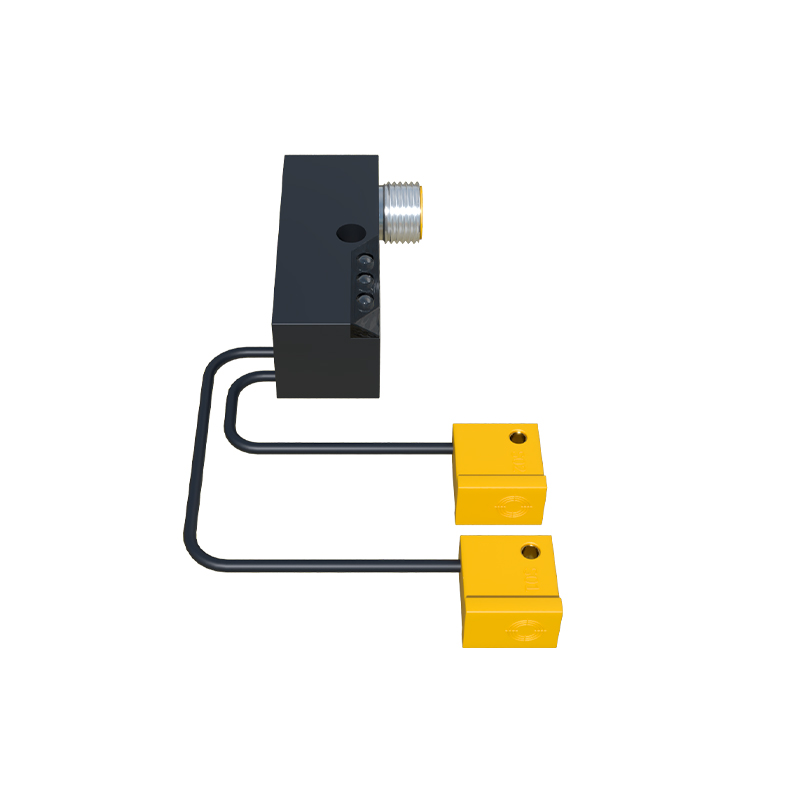
Key technical parameters define its performance envelope. The operating voltage typically spans a common DC range, such as 10-30V DC, ensuring compatibility with standard industrial control voltages. The output is a 3-wire configuration (brown for V+, blue for V-, and black for the switching signal) with an NPN transistor in a normally open state. This means the black wire switches the load (like a PLC input) to the common (blue) when a target is detected. Its housing, usually made of nickel-plated brass or stainless steel, provides an IP67 or higher ingress protection rating, making it resistant to dust and temporary immersion in water. This ruggedness is crucial for applications in machine tools, material handling, and automotive assembly lines where coolant, oil, and metal shavings are prevalent. The flush-mounting capability allows it to be embedded in metal surfaces without loss of sensing range, a significant advantage for space-constrained or protected installations.
The application spectrum for the PT08-E02NO is vast. It is predominantly used for position sensing: verifying the presence of a metal part on a conveyor, confirming the end-of-travel of a pneumatic cylinder with a metal piston, or detecting the passage of gear teeth for speed monitoring. In automated packaging machinery, it can count metal lids or cans. Within robotic cells, it serves as a safety or positional feedback device. Its fast switching speed and high repeatability make it suitable for high-cycle operations. A critical consideration is the "correct sensing object." For an 8mm nominal range sensor, the standard target is a square of mild steel (Fe 360) of a specified thickness (e.g., 1mm) and side length. Using smaller, thinner, or different materials will reduce the effective sensing distance, a factor known as the "reduction factor." Always consult the manufacturer's datasheet for precise data.
Installation and wiring require attention to detail. Ensure the sensor is securely mounted, avoiding excessive torque on the housing. For flush-mounted sensors in metal, maintain the recommended clearance from surrounding metal to prevent false triggering. Electrical wiring must follow the color code: Brown to positive DC supply, Blue to negative DC supply/0V, and Black to the load. Always incorporate a protective fuse or circuit breaker. A critical best practice is to connect a bypass (free-wheeling) diode across the load when driving inductive loads like relays or solenoid valves to suppress voltage spikes that could damage the sensor's output transistor. Environmental factors such as extreme temperatures, strong electromagnetic fields from welding equipment, or direct exposure to certain chemicals should be assessed against the sensor's specifications.
Troubleshooting common issues often involves a systematic approach. If the sensor fails to detect, verify power supply voltage, check for wiring errors or loose connections, ensure the target material and size are appropriate, and confirm the target is within the actual sensing range (accounting for reduction factors). False triggers might be caused by sensor vibration, metallic debris accumulation on the face, or electrical noise interference, which can be mitigated by using shielded cables and proper grounding. Regular maintenance involves simply keeping the sensing face clean from oil, grease, or metal dust buildup.
In conclusion, the PT08-E02NO proximity sensor is a quintessential component in the industrial engineer's toolkit. Its blend of a standardized form factor, robust construction, and reliable inductive sensing technology