Proximity sensors are fundamental components in modern industrial automation, enabling non-contact detection of objects with high precision and reliability. This training article provides a comprehensive overview of proximity sensor technology, covering operational principles, key types, selection criteria, installation practices, and troubleshooting methodologies.
Proximity sensors operate by emitting an electromagnetic field or beam and detecting changes in the field when a target object enters the sensing range. Unlike mechanical switches, they do not require physical contact, which minimizes wear and tear, reduces maintenance needs, and enhances system longevity. Common types include inductive, capacitive, ultrasonic, and photoelectric sensors, each suited to specific applications based on material composition, environmental conditions, and detection requirements.
Inductive sensors are widely used for detecting metallic objects. They generate an oscillating electromagnetic field, and when a conductive metal enters this field, eddy currents are induced, causing a change in oscillation amplitude. This change triggers the sensor output. Inductive sensors are ideal for harsh industrial environments due to their robustness and resistance to dust, moisture, and vibration. Typical applications include position sensing in machinery, part counting on conveyor belts, and end-of-travel detection in automated systems.
Capacitive sensors can detect both metallic and non-metallic materials, including liquids, plastics, and wood. They function by measuring changes in capacitance between the sensor and the target object. When an object approaches, the capacitance increases, activating the sensor output. These sensors are commonly employed in level detection for tanks, material handling, and packaging industries where diverse materials are present.
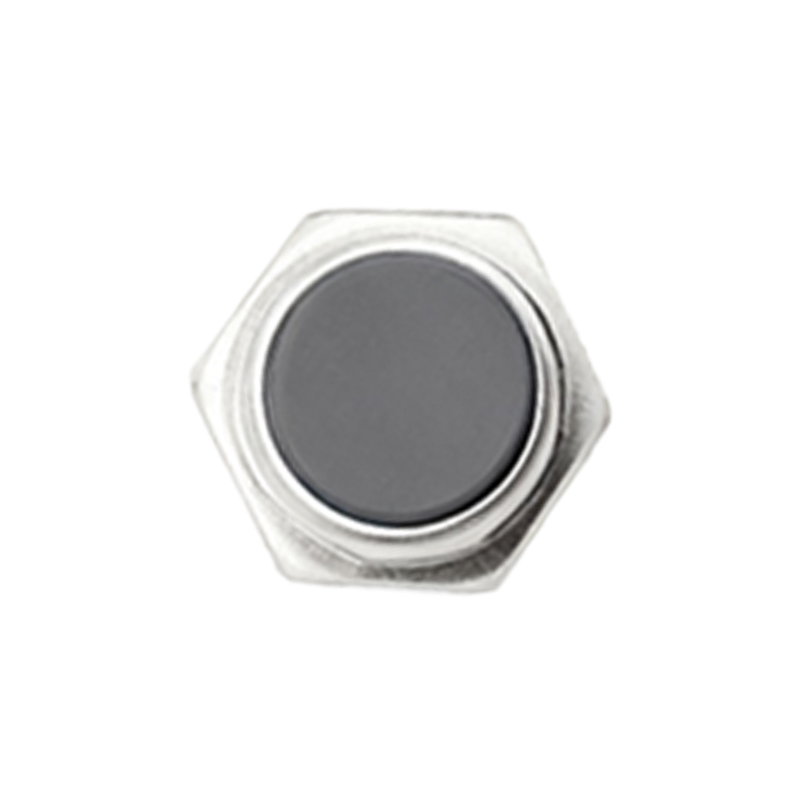
Ultrasonic sensors use sound waves beyond human hearing to detect objects and measure distances. They emit high-frequency pulses and calculate the time taken for the echo to return. This technology is effective for detecting transparent or irregularly shaped objects that may challenge other sensor types. Applications include palletizing, collision avoidance in automated guided vehicles (AGVs), and liquid level monitoring.
Photoelectric sensors utilize light beams, typically infrared or laser, to detect objects. They consist of an emitter and a receiver. When an object interrupts the light beam, the sensor triggers an output. Photoelectric sensors offer long sensing ranges and high speed, making them suitable for conveyor systems, sorting machines, and safety curtains.
Selecting the appropriate proximity sensor involves evaluating several factors: sensing distance, target material, environmental conditions (temperature, humidity, contaminants), output type (PNP/NPN, analog, digital), and electrical requirements. Engineers must also consider mounting configurations, such as flush or non-flush mounting for inductive sensors, to avoid interference from surrounding metals.
Installation best practices include ensuring proper alignment, avoiding sensor collision with targets, and maintaining adequate clearance from other metallic objects to prevent false triggering. Wiring should follow manufacturer guidelines, with attention to shielding in electrically noisy environments. Regular calibration and testing are essential to maintain accuracy.
Troubleshooting common issues involves checking power supply stability, verifying sensor alignment, inspecting for physical damage, and monitoring output signals with diagnostic tools. Environmental factors like excessive dust, oil, or temperature extremes can affect performance, necessitating protective housings or specialized sensor models.
Advancements in proximity sensor technology include miniaturization, enhanced sensing ranges, and integration with Industrial Internet of Things (IIoT) platforms. Smart sensors with diagnostic capabilities can communicate real-time data to control systems, enabling predictive maintenance and optimizing production processes. Training personnel on these innovations ensures efficient implementation and maximizes return on investment.
In conclusion, proximity sensors are critical for automation efficiency and safety. A thorough understanding of their technology, coupled with proper selection, installation, and maintenance, empowers engineers to design robust and reliable industrial systems. Continuous learning and adaptation to emerging trends will further enhance operational excellence in the evolving landscape of industrial automation.