In the realm of industrial automation and control systems, proximity switches are indispensable components for non-contact object detection. Among the various configurations available, the two-wire normally closed (NC) proximity sensor stands out for its simplicity, reliability, and specific safety advantages. This article delves into the operational principles, key characteristics, application scenarios, and critical selection criteria for these widely used sensors.
Fundamentally, a two-wire NC proximity switch operates with just two connection wires. These wires serve the dual purpose of supplying power to the sensor's internal circuitry and carrying the switching signal. This is in contrast to three-wire or four-wire sensors, which have separate wires for power supply and signal output. The "normally closed" designation refers to the state of the switch's output circuit when the sensor is powered but no target is within its sensing range. In this condition, the electrical path between the two wires is closed, allowing current to flow. When a target enters the sensor's detection field, the internal switching element opens this path, interrupting the current flow. This "open on detection" behavior is the hallmark of the NC configuration.
The inherent design of two-wire NC sensors offers several compelling benefits. Their primary advantage is wiring simplicity. With only two wires to connect, installation is faster, reduces potential wiring errors, and lowers overall system cost by minimizing cabling and conduit requirements. This simplicity also contributes to enhanced reliability, as there are fewer connection points that could fail. From a safety perspective, the normally closed configuration is often preferred in critical safety circuits or for monitoring protective guards. In such applications, a wire break or a loss of power in a normally closed loop will cause the circuit to open, which can be designed to trigger a machine shutdown or an alarm. This "fail-safe" characteristic is crucial for personnel and equipment protection. Furthermore, these sensors are generally compatible with a wide range of programmable logic controllers (PLCs) and relay inputs designed to accept a switched current signal.
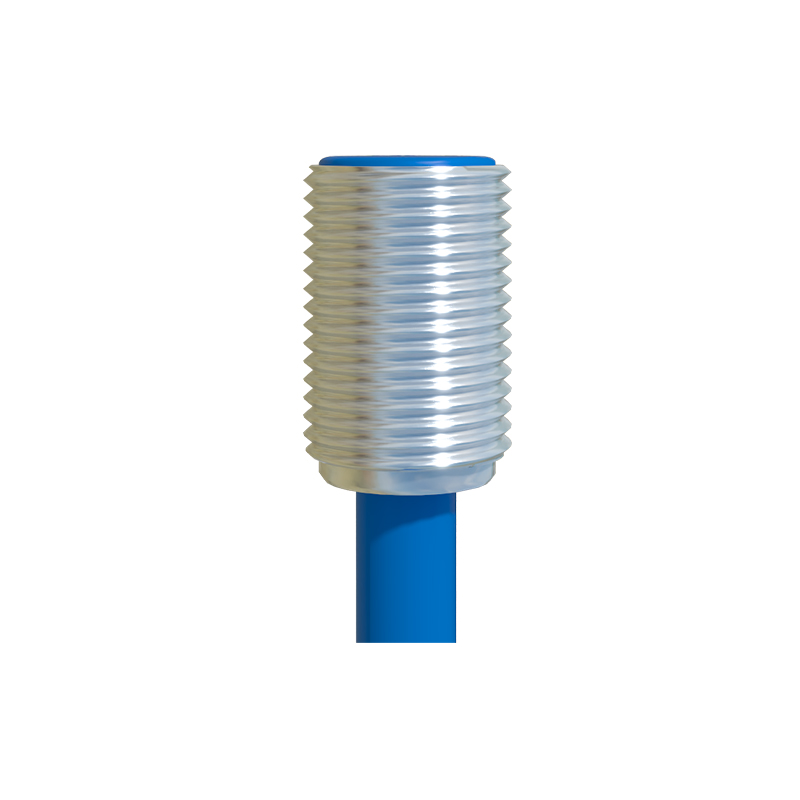
Two-wire NC proximity sensors are not without their considerations. A key parameter is the residual current or leakage current. Even in the "open" state (target detected), a small amount of current continues to flow through the sensor to power its internal electronics. This current must be considered when connecting to sensitive control inputs to ensure it does not inadvertently keep a PLC input in an "ON" state. Voltage drop across the sensor is another factor, as it can affect the voltage available for the load, especially in long wire runs. Proper sizing of the power supply and understanding the sensor's minimum operating voltage are essential.
These sensors find extensive use across diverse industries. Common applications include end-of-travel limit sensing on machinery, where a broken wire or sensor failure should stop motion. They are ideal for door and guard monitoring systems on robotic cells or presses, ensuring safety interlocks are maintained. In material handling, they detect the presence or absence of objects on conveyors. Batch counting and simple object detection in packaging machinery are also typical uses. The choice between inductive (for metals), capacitive (for non-metals, liquids, etc.), or ultrasonic variants depends entirely on the target material and the environmental conditions.
Selecting the correct two-wire NC proximity switch requires careful evaluation of several parameters. First, identify the sensing technology needed based on the target material. Next, determine the required sensing distance, typically specified as the nominal sensing range (Sn). The operating voltage range (e.g., 10-30 VDC or 20-250 VAC) must match the available control system power. The switching capacity, defined by the maximum load current, must not be exceeded. Environmental factors like temperature extremes, presence of oils/coolants, and potential for physical impact dictate the required housing material (often nickel-plated brass or stainless steel) and ingress protection (IP) rating. Finally, consider the electrical connection type, such as pre-wired cables or quick-disconnect connectors, based on installation and maintenance needs.
In conclusion, the two-wire normally closed proximity sensor is a robust, cost-effective solution for countless detection tasks in industrial automation. Its simple wiring, inherent fail-safe potential in safety circuits, and broad compatibility make it a staple in control panels worldwide. By thoroughly understanding its operating principle, advantages, limitations, and selection criteria, engineers and technicians can effectively implement these sensors to create reliable, efficient, and safe automated systems.