In modern industrial automation and robotics, the integration of multi-sensor systems has become paramount for achieving high levels of precision, safety, and operational efficiency. A critical, yet often underexplored, aspect of these systems is the concept of "shared proximity sensing" or a "common sense of proximity." This refers to the synergistic capability where multiple, heterogeneous sensors collectively contribute to and share a unified, real-time understanding of the spatial relationships between a machine, its end-effector, and the surrounding environment, including objects, obstacles, and human operators.
Traditional single-sensor proximity detection, such as a lone inductive or capacitive sensor, provides a binary, localized data point. While useful for specific tasks, it creates a fragmented perception field. A multi-sensor system with shared proximity sensing, however, builds a continuous, high-fidelity "proximity field." This is achieved by fusing data from a diverse array of sensors. For instance, 2D/3D LiDAR (Light Detection and Ranging) units map the broad operational envelope, providing long-range object detection and contour mapping. Ultrasonic sensors offer robust, medium-range detection that is less affected by object color or material transparency, which can challenge optical systems. Stereo vision cameras add rich contextual and depth information, capable of identifying specific parts or human gestures. Finally, short-range, high-precision sensors like time-of-flight (ToF) cameras or specialized proximity sensors deliver millimeter-level accuracy for final approach and delicate operations, such as part insertion or assembly.
The true engineering challenge and value lie not in the individual sensors but in the data fusion and processing architecture that enables this shared sense. Advanced sensor fusion algorithms—including Kalman filters, Bayesian networks, and increasingly, lightweight machine learning models—are deployed to correlate, filter, and interpret the disparate data streams. This process resolves conflicts (e.g., a vision system seeing a clear path while LiDAR detects a transparent acrylic barrier), compensates for the weaknesses of individual modalities, and creates a single, reliable proximity model. This model is then shared across the system's control units, whether it's a Programmable Logic Controller (PLC), a robotic motion controller, or a higher-level supervisory system.
The industrial applications and benefits are substantial. In collaborative robotics (cobots), a shared proximity model is foundational for dynamic speed and separation monitoring (SDS). The system doesn't just rely on one safety laser scanner; it integrates force-torque sensing, skin-like capacitive sensors on the arm, and vision to understand the human's position and intent holistically, allowing for fluid, safe, and efficient collaboration. In automated guided vehicles (AGVs) and autonomous mobile robots (AMRs), shared proximity sensing from LiDAR, cameras, and ultrasonic sensors enables sophisticated navigation in dynamic warehouses, accurately discerning between permanent structures, temporary obstacles, and human workers to optimize path planning and ensure safety.
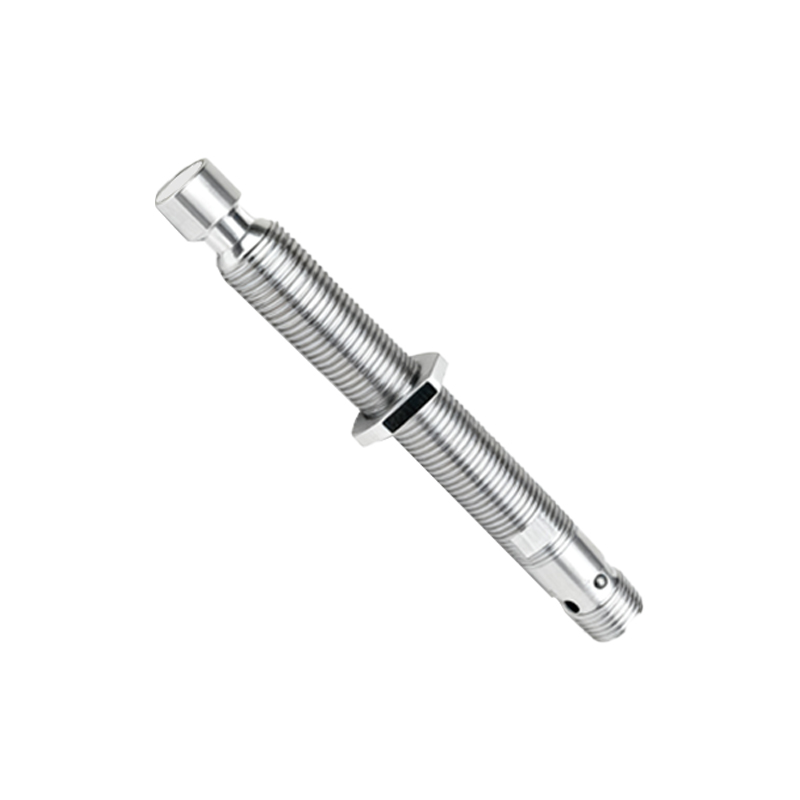
Furthermore, in complex assembly and machining cells, this approach prevents collisions in tightly packed workstations. A robot arm equipped with multiple proximity sensing modalities can "feel" its way around a fixture, adapting its trajectory in real-time to avoid costly crashes, even if a part is slightly out of its nominal position. This enhances flexibility and reduces the need for expensive, rigid fixturing. Predictive maintenance also benefits, as trends in proximity data (e.g., a gradual increase in the sensed distance to a target due to mechanical wear) can signal the need for calibration or component replacement before a failure occurs.
Implementing an effective shared proximity sensing system requires careful engineering consideration. Sensor selection must account for the environmental conditions: dust, oil, vibration, and lighting can severely impact optical and acoustic sensors. The placement and field-of-view overlap of sensors are crucial to eliminate blind spots and ensure redundant coverage. The communication network must support low-latency, deterministic data transmission, often necessitating industrial Ethernet protocols like EtherCAT or PROFINET. Finally, the computational load of real-time data fusion must be matched with sufficiently powerful edge-processing hardware.
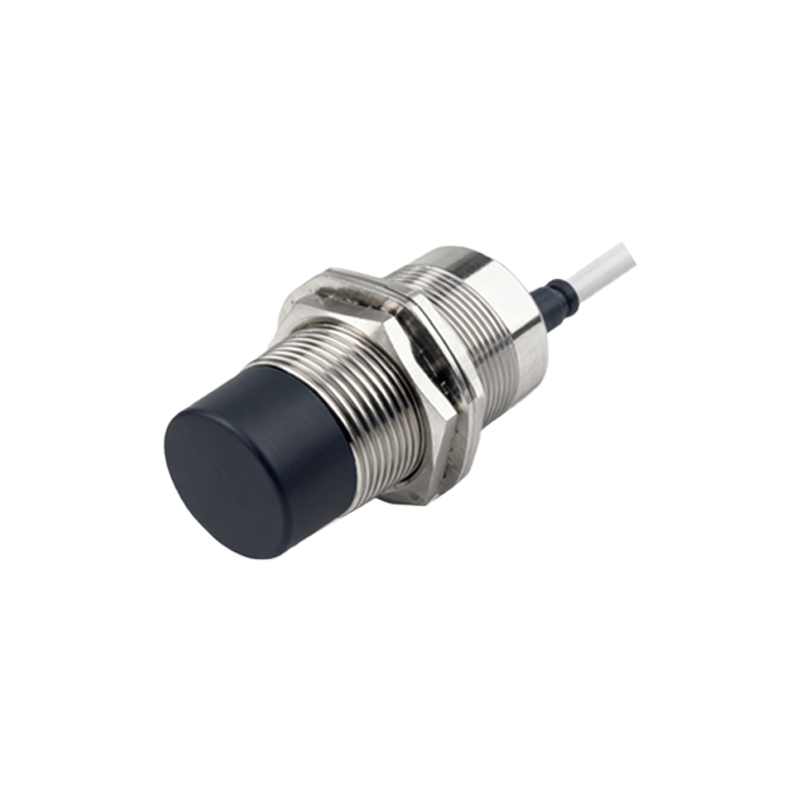
In conclusion, shared proximity sensing represents an evolutionary leap in industrial sensing philosophy. It moves beyond isolated detection points to create an intelligent, collaborative sensory skin for machinery. By enabling a unified, accurate, and real-time awareness of the immediate environment, it unlocks new levels of autonomy, safety, and efficiency in industrial applications, paving the way for more adaptive and resilient manufacturing and logistics systems. The future will see further integration of AI-driven perception, making these systems even more context-aware and capable of operating in increasingly unstructured and unpredictable environments.