In the realm of industrial automation and control systems, proximity sensors are indispensable components for non-contact object detection. Among the various configurations available, the two-wire proximity sensor stands out for its simplicity, reliability, and cost-effectiveness. This article delves into the operational principles, key advantages, common applications, and critical selection criteria for these widely used devices.
At its core, a two-wire proximity sensor functions as a switch that opens or closes an electrical circuit based on the presence or absence of a target object within its sensing range. Unlike three-wire or four-wire sensors that require separate power and signal lines, the two-wire variant integrates directly into the load circuit. It operates in series with the load (such as a PLC input, relay, or indicator lamp) and the power supply. When no target is detected, the sensor presents a high impedance (leakage current is minimal, typically below 1.5 mA), keeping the circuit effectively open. Upon detecting a metallic or other suitable target, the internal electronic switch closes, allowing sufficient current to flow to activate the connected load. This design eliminates the need for a dedicated output wire, simplifying wiring and reducing installation time and material costs.
The primary advantages of two-wire sensors are rooted in their straightforward design. First, installation is remarkably simple. Electricians only need to connect two wires, significantly reducing wiring errors and complexity in control panels with dozens or hundreds of sensors. This leads to lower labor costs and faster commissioning. Second, they offer enhanced compatibility. Since they act as a simple switch, they can often interface directly with a wide range of AC or DC control devices without requiring additional interfaces or power supplies for the sensor itself. Third, their robust construction, with fewer connection points, often translates to higher reliability and longer service life in harsh industrial environments characterized by vibration, moisture, and temperature fluctuations.
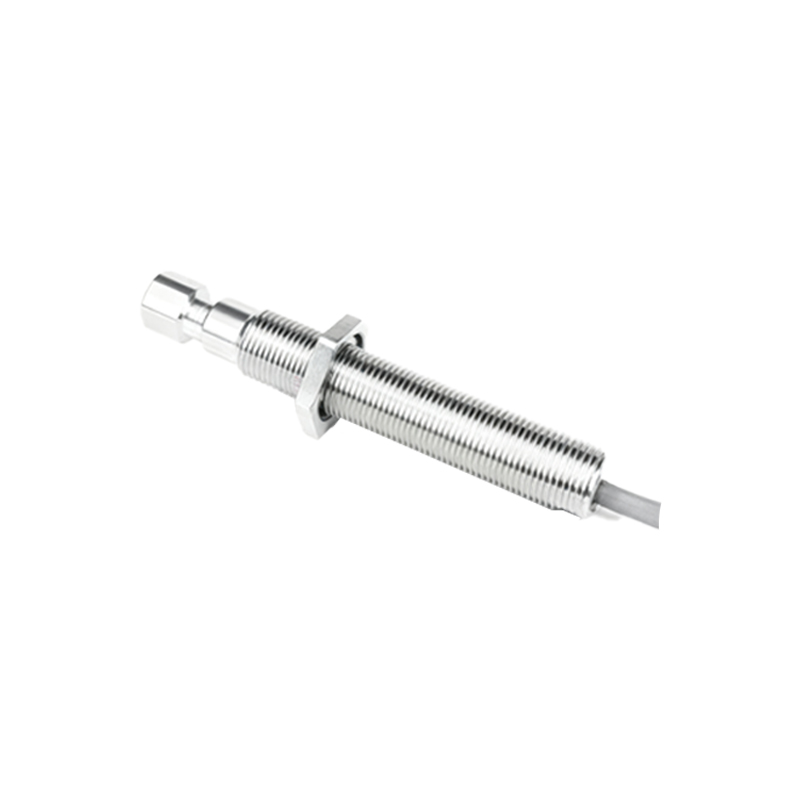
Two-wire proximity sensors are predominantly available in two operating modes: Normally Open (NO) and Normally Closed (NC). The NO type is more common; it closes the circuit (allows current to flow) when a target is present. The NC type opens the circuit when a target is present. Selection depends on the safety and logic requirements of the application. Furthermore, they are classified by the type of target they detect. Inductive sensors are the most prevalent two-wire type, designed to detect ferrous and non-ferrous metals. Capacitive two-wire sensors can detect a broader range of materials, including plastics, wood, and liquids, by sensing changes in dielectric constant.
Applications for two-wire proximity sensors are vast across manufacturing and process industries. They are extensively used for basic presence/absence detection: verifying if a part is in place on an assembly line, counting objects on a conveyor belt, or confirming the end position of a cylinder in pneumatic systems. They serve as limit switches for machine tools, provide bin-level detection for bulk materials, and monitor rotational speed by detecting gear teeth or bolts. Their simplicity makes them ideal for retrofitting into existing machinery where control panel space is limited or wiring modifications are complex.
However, selecting the correct two-wire sensor requires careful consideration of several parameters. The operating voltage range (e.g., 20-250V AC or 10-55V DC) must match the control circuit's supply. The load current rating must be sufficient to drive the connected device but also have a minimum holding current to ensure the sensor remains active once triggered. Leakage current in the "off" state is critical; if too high, it may inadvertently activate sensitive PLC inputs. Sensing distance, rated for a standard target, must be chosen with a safety margin (typically 70-80% of the nominal value) to account for mechanical tolerances and environmental factors. Environmental protection, indicated by an IP (Ingress Protection) rating (e.g., IP67), is essential for sensors exposed to dust, coolants, or washdown conditions. Finally, the housing material (often nickel-plated brass or stainless steel) and form factor (cylindrical, rectangular, or ring-shaped) must suit the physical and chemical demands of the installation site.
In conclusion, the two-wire proximity sensor remains a cornerstone of efficient and reliable industrial sensing. Its elegant, two-wire solution offers a perfect balance of performance, durability, and ease of use for a multitude of automation tasks. By understanding their operating principle and meticulously evaluating application requirements against sensor specifications, engineers and technicians can leverage these devices to build robust, maintainable, and cost-effective control systems that form the backbone of modern manufacturing.