M12 proximity sensors are ubiquitous in industrial automation, offering reliable object detection in harsh environments. A critical yet often overlooked aspect of their performance and integration is the thread specification. The M12 thread, standardized by IEC 61076-2-101, is a metric thread with a 12mm diameter and a standard pitch of 1.0mm or 1.5mm. This threading is not merely a mechanical fastener; it is integral to the sensor's sealing, mounting stability, and electrical connectivity in many connectorized designs.
The primary function of the M12 thread is to provide a secure and sealed mounting point. Sensors are typically installed into threaded holes in machine frames, brackets, or mounting nuts. The precision of the thread ensures proper alignment and prevents loosening due to vibration, a common challenge in industrial settings. Most M12 proximity sensors feature a Pg (Protection grade) or NPT thread alternative is less common but exists for specific regional standards. The standard M12×1.0 thread is predominant for 3-wire and 4-wire DC sensors. For certain AC models or sensors requiring a more robust connection, an M12×1.5 thread might be employed. It is crucial to match the sensor thread precisely with the mounting hole to avoid cross-threading, which can damage both the sensor housing and the mounting surface, compromising the IP (Ingress Protection) rating, often IP67 or IP69K.

Beyond mounting, the M12 threaded connector is the heart of the sensor's interface. The threaded coupling mechanism on M12 connectors provides a vibration-resistant, environmentally sealed connection for power and signal wires. The threading ensures a tight seal with an integrated O-ring, typically located on the connector's shoulder, safeguarding the electrical contacts from moisture, dust, and coolants. This threaded connection system allows for quick installation and replacement, supporting modular machine design. When specifying a sensor, engineers must consider the coding of the M12 connector (e.g., A-coded for sensors and actuators, B-coded for fieldbus, D-coded for Ethernet). While the thread size remains M12, the coding key prevents mismating of incompatible systems.
Selection criteria for M12 threaded sensors extend beyond the thread size. Material compatibility is paramount. Brass nickel-plated housings with stainless steel sensing faces are common, but in highly corrosive environments, all-stainless-steel threaded bodies are essential. The thread's quality—its finish and tolerance—directly impacts the ease of installation and the longevity of the seal. Poorly cut threads can shred the O-ring during tightening, leading to immediate failure. Furthermore, the thread length must be considered. Standard thread lengths are usually sufficient, but applications with thick mounting panels may require sensors with extended threaded barrels to ensure the sensing face is positioned correctly.
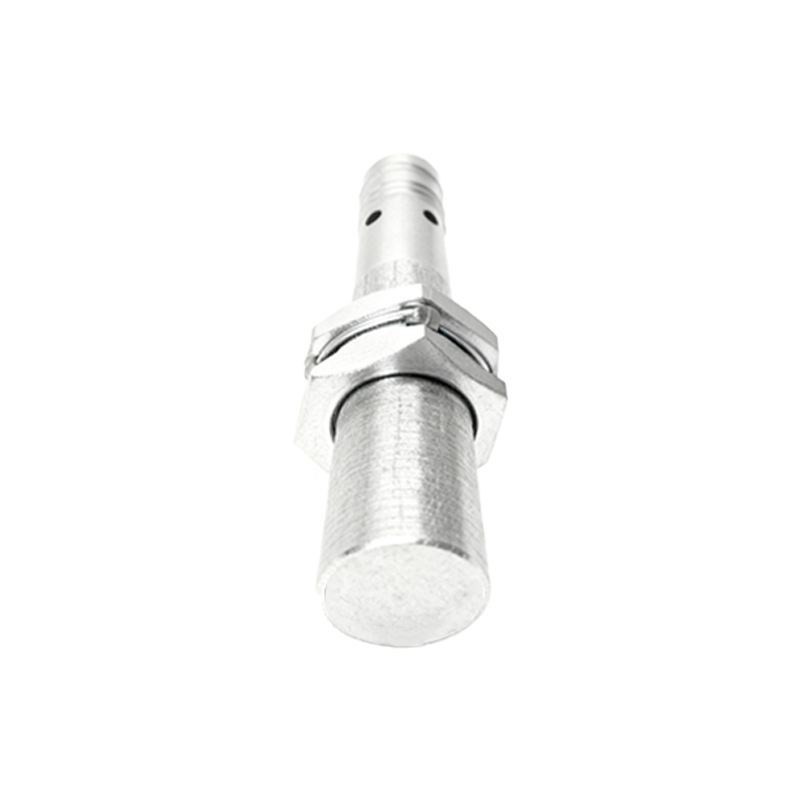
Installation best practices dictate using a calibrated torque wrench. Over-tightening is a frequent error. Excessive force can distort the sensor housing, crack the PBT or metal casing, crush the O-ring, or strip the threads. Under-tightening, conversely, fails to compress the O-ring adequately, breaking the environmental seal. Manufacturers specify a precise tightening torque, typically in the range of 0.5 N·m to 1.5 N·m. Using thread sealant tape is generally discouraged as it can interfere with the electrical grounding path in metal-housed sensors and may compromise the seal by preventing proper O-ring compression. For grounding, a proper locknut or a dedicated grounding terminal on the sensor should be used.
In summary, the M12 thread on a proximity sensor is a deceptively simple feature with significant engineering depth. Its standardization enables global interoperability, while its precise execution ensures mechanical integrity, environmental sealing, and reliable electrical performance. Proper understanding and handling of M12 threads—from specification and material selection to torque-controlled installation—are fundamental to maximizing sensor lifespan and maintaining system uptime in demanding automation applications. Ignoring these details can lead to premature failure, costly downtime, and compromised safety, making thread knowledge a key component of effective sensor integration.