Two-wire proximity sensors are widely used in industrial automation for detecting the presence or absence of objects without physical contact. These sensors operate on a simple yet effective principle, making them a popular choice in various applications such as conveyor systems, machine safety, and assembly lines. Unlike three-wire or four-wire sensors, two-wire models integrate both power supply and signal output into a single pair of wires, simplifying installation and reducing wiring complexity.
The core working principle of a two-wire proximity sensor involves electromagnetic induction or capacitive sensing, depending on the type. Inductive sensors, commonly used for metal detection, consist of a coil, an oscillator, a demodulator, and an output circuit. When power is applied, the oscillator generates a high-frequency electromagnetic field around the sensor's active surface. As a metal object enters this field, eddy currents are induced in the object, causing a change in the oscillator's amplitude. This change is detected by the demodulator, which triggers the output circuit to switch states—either opening or closing the circuit to indicate object presence.
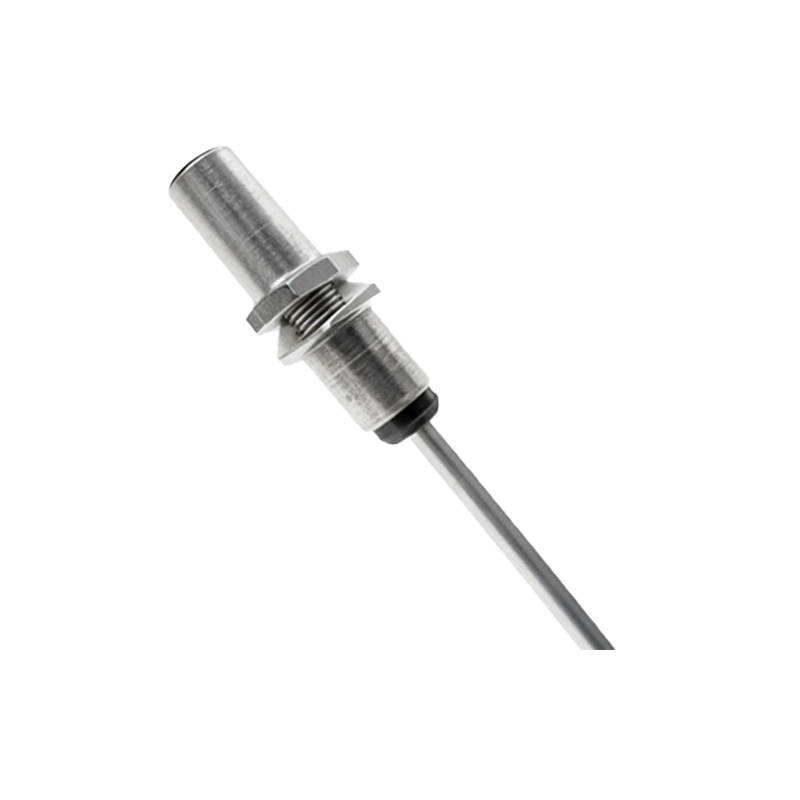
In capacitive two-wire proximity sensors, the principle relies on changes in capacitance. The sensor includes a capacitive plate that forms an electric field. When an object (metal or non-metal) approaches, it alters the dielectric constant of the field, increasing capacitance. This change is measured by an internal circuit, leading to a switching action. Both types are designed to operate with a two-wire setup, where the same wires carry the supply voltage (typically 10-30V DC or AC) and transmit the output signal. The sensor acts as a variable resistor or switch in series with the load, modulating current flow to indicate detection.
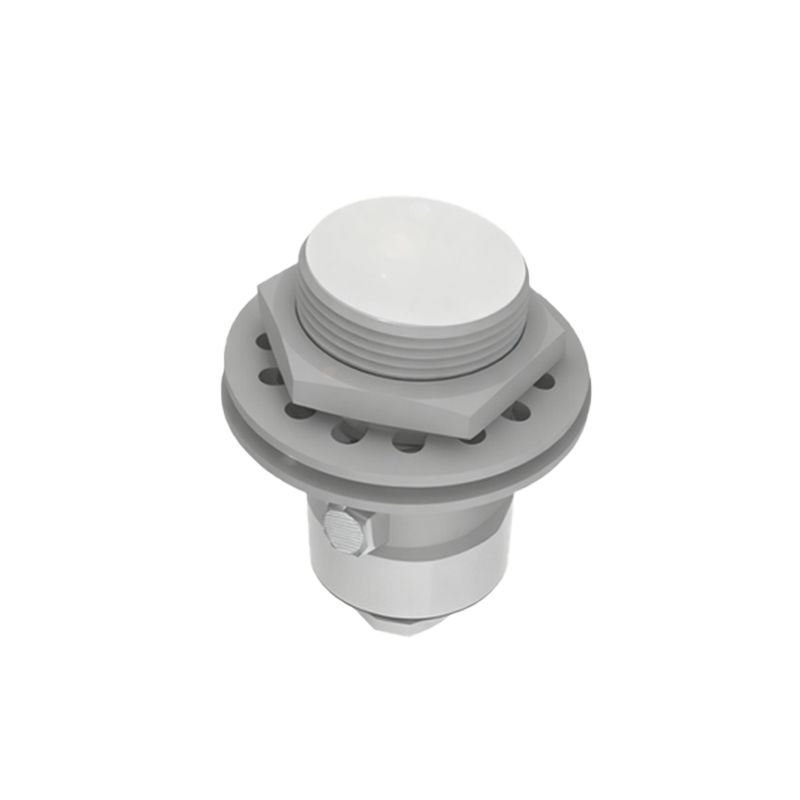
A key aspect of two-wire proximity sensors is their wiring diagram, which illustrates how they connect to control systems. In a standard setup, the two wires are linked to a power source and a load (e.g., a PLC input or relay). One wire connects to the positive terminal, and the other to the load, with the load then returning to the negative terminal. When no object is detected, a small leakage current flows, keeping the sensor in an "off" state. Upon detection, the sensor reduces its internal resistance, allowing sufficient current to activate the load. This design eliminates the need for separate power and signal cables, but it requires careful consideration of voltage drop and load compatibility to ensure reliable operation.
Advantages of two-wire proximity sensors include reduced installation costs, compact size, and ease of maintenance. However, they may have limitations in switching speed and current capacity compared to multi-wire versions. To optimize performance, users should select sensors based on factors like sensing range, material type, and environmental conditions. Diagrams often accompany datasheets to aid in proper wiring and integration, showing connections for both sourcing and sinking configurations.
In summary, two-wire proximity sensors offer a streamlined solution for object detection in industrial settings. By understanding their working principle through diagrams, engineers can effectively implement them for efficient automation. Their simplicity and reliability continue to drive adoption across sectors, from manufacturing to robotics.