In the rapidly evolving landscape of industrial automation and control systems, the role of precision sensing technology is paramount. Among the key components driving efficiency and safety, proximity sensors stand out for their ability to detect the presence or absence of objects without physical contact. AANDD, a recognized name in measurement and instrumentation, offers a range of proximity sensors that cater to diverse and demanding industrial applications. This article delves into the operational principles, key features, and significant advantages of AANDD proximity sensors, highlighting their contribution to modern manufacturing and process control.
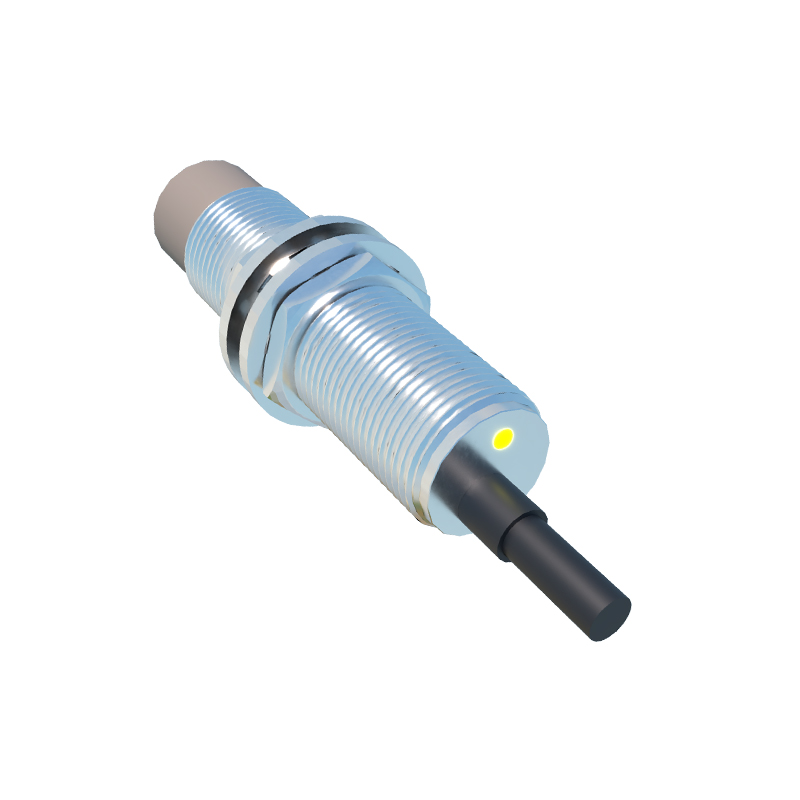
At their core, AANDD proximity sensors are non-contact devices that utilize electromagnetic fields, light, or sound to detect the presence of metallic or non-metallic targets. The most common types include inductive sensors, designed for detecting metallic objects, and capacitive sensors, capable of sensing both metallic and non-metallic materials, including liquids and powders. These sensors operate by generating a sensing field. When a target object enters this field, it causes a change in the oscillator's amplitude or frequency. This change is then processed by the sensor's circuitry, triggering a solid-state output signal that can interface directly with programmable logic controllers (PLCs), relays, or other control systems. This non-contact nature eliminates mechanical wear and tear, ensuring exceptional longevity and reliability in high-cycle operations.
The design and engineering of AANDD proximity sensors incorporate several features that make them suitable for harsh industrial environments. They are typically housed in robust, sealed casings with high Ingress Protection (IP) ratings, such as IP67 or IP68, making them resistant to dust, water, oil, and coolant ingress. This durability is crucial for applications in machine tools, automotive assembly lines, and food processing plants. Furthermore, AANDD sensors are known for their high switching frequency and repeat accuracy. This means they can detect objects at very high speeds with minimal variance between detection cycles, a critical requirement for high-speed packaging, sorting, and robotic positioning tasks. Many models also offer short-circuit and reverse polarity protection, safeguarding both the sensor and the connected control system from wiring errors or electrical faults.
The application spectrum for AANDD proximity sensors is remarkably broad. In automotive manufacturing, they are indispensable for part presence verification on conveyor belts, robotic arm end-effector positioning, and checking door or hood closures. Within the packaging industry, these sensors count bottles, detect label positions, and control filling levels. In material handling, they provide position feedback for automated guided vehicles (AGVs) and ensure pallets are correctly aligned for stacking. A more specialized application lies in machine safety, where they can be part of systems designed to ensure machine guards are in place before operation commences, thereby protecting personnel.
One of the standout advantages of integrating AANDD proximity sensors into an industrial setup is the significant reduction in maintenance costs and downtime. Since there is no physical contact with the target, there are no moving parts to wear out, leading to a virtually maintenance-free operation. Their solid-state design also contributes to high resistance to vibration and shock. From an operational perspective, these sensors enable faster machine cycles due to their quick response times, directly translating to higher throughput and productivity. The precision they offer improves overall product quality by ensuring processes are executed consistently and accurately, reducing waste and rework.
When selecting an AANDD proximity sensor for a specific task, engineers must consider several parameters. The sensing distance, or nominal range, must be appropriate for the application, with a safety margin to account for potential mechanical tolerances. The target material (steel, aluminum, plastic, liquid) dictates whether an inductive or capacitive sensor is required. Environmental conditions, such as temperature extremes or exposure to chemicals, will influence the choice of housing material and sealing rating. Finally, the electrical output type (NPN or PNP, normally open or normally closed) must be compatible with the existing control system's input card specifications. Proper installation is equally critical; sensors should be mounted securely and positioned to avoid interference from surrounding metal (for inductive types) or other environmental factors that could cause false triggering.
In conclusion, AANDD proximity sensors represent a fusion of reliability, precision, and ruggedness essential for contemporary industrial automation. Their ability to provide accurate, non-contact detection under challenging conditions makes them a foundational component in building smarter, safer, and more efficient production systems. As industries continue to advance towards the ideals of Industry 4.0, the data provided by these sensors will increasingly feed into larger networks for predictive maintenance and process optimization. For engineers and system integrators aiming to enhance operational performance, a thorough understanding and strategic deployment of AANDD proximity sensors is a decisive step toward achieving greater automation excellence and operational resilience.