In the realm of industrial automation and precision control, proximity sensors stand as fundamental components for non-contact detection. Among the diverse types available, the minimum hole size proximity sensor represents a specialized category designed to address unique spatial constraints and detection challenges. This article delves into the operational principles, key characteristics, and critical application considerations of these compact yet powerful devices.
At its core, a proximity sensor detects the presence or absence of an object within its sensing range without physical contact. Common technologies include inductive, capacitive, and photoelectric sensing. The term "minimum hole size" specifically refers to the smallest diameter of a mounting hole into which the sensor's sensing face can be effectively installed. This parameter is crucial for applications where space is at a premium, such as in compact machinery, robotic end-effectors, or densely packed control panels. A sensor with a small minimum hole size, often ranging from M3, M4, M5, or even smaller metric or imperial threads, allows for installation in extremely limited spaces where standard sensors would be impractical.
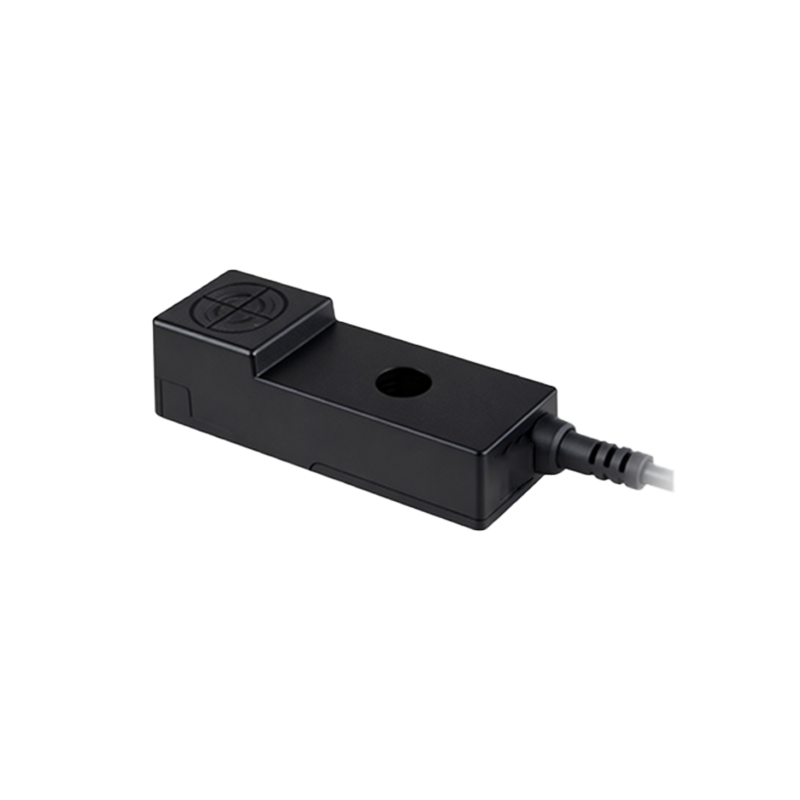
Inductive proximity sensors are the most common type associated with minimum hole size specifications. They generate an electromagnetic field from a coil in the sensing face. When a metallic target enters this field, it induces eddy currents, causing a change in the oscillation amplitude. This change is detected by the sensor's circuitry, triggering an output signal. The miniaturization of the coil and electronic components directly enables a smaller sensor housing and, consequently, a smaller required mounting hole. However, this miniaturization impacts the sensor's performance. Generally, the sensing distance (the maximum range at which the sensor can reliably detect a standard target) decreases as the sensor size and hole size decrease. For instance, an M5 threaded sensor might have a nominal sensing distance of 1mm, while an M3 version might only offer 0.5mm. Engineers must carefully balance the need for a small form factor with the required detection range.
Key specifications for selecting a minimum hole size proximity sensor extend beyond just the hole diameter. The sensing distance, as mentioned, is paramount. The target material is another critical factor; standard inductive sensors detect ferrous metals (like steel) at their rated distance, but for non-ferrous metals (like aluminum or copper), the effective sensing distance is reduced, often by a factor of 30-50%. The sensor's housing material, typically nickel-plated brass or stainless steel, must be chosen based on the environmental conditions, including exposure to coolants, oils, or corrosive chemicals. Electrical output types are also varied, including DC 3-wire (NPN or PNP transistor outputs), 2-wire AC/DC, or analog outputs. The choice depends on the control system's input requirements (sinking vs. sourcing). Additionally, factors like switching frequency (how fast the sensor can turn on/off), temperature range, and protection class (e.g., IP67 for dust and temporary immersion) must align with the application's demands.
The application landscape for these sensors is vast. A primary use is in precision positioning and end-position detection within compact linear actuators or miniature cylinders. They provide reliable feedback confirming whether a piston has fully retracted or extended. In automated assembly lines, they are used to verify the presence of tiny screws, nuts, or other small metallic components before a process step proceeds. In the electronics manufacturing industry, they detect the presence of circuit boards or metallic shields on high-speed conveyor systems. Machine tools utilize them for tool breakage detection on small-diameter drill bits or for monitoring the position of tool changers in confined spaces. Their small size minimizes mechanical interference and allows for clean, integrated machine design.
Installation and alignment are critical for reliable operation. Even slight misalignment can significantly reduce the effective sensing distance. The sensor must be mounted securely to prevent vibration from altering its position relative to the target. The target itself should be of a recommended size—usually equal to or larger than the sensor's sensing face diameter—and approach the sensor axially for optimal performance. Engineers must also consider electrical noise in the environment; proper shielding and grounding of the sensor and its cabling are essential, especially when the sensor wires run alongside motor power cables. Using shielded cables and separating signal lines from power lines are standard best practices.
In conclusion, the minimum hole size proximity sensor is an indispensable tool for modern, space-constrained industrial automation. Its selection requires a nuanced understanding of the trade-offs between physical size, sensing performance, and environmental robustness. By carefully evaluating parameters such as mounting hole size, required sensing distance, target material, and environmental conditions, engineers can leverage these sophisticated devices to enhance machine reliability, enable miniaturization, and ensure precise control in the most demanding applications. As machinery continues to evolve towards greater compactness and higher precision, the role of these specialized sensors will only become more prominent.