In the world of industrial automation and smart devices, proximity switch sensors are the silent sentinels that enable machines to "see" and interact with their environment without physical contact. These non-contact sensors detect the presence or absence of an object within a specified range, triggering an electrical signal. Their ability to operate reliably in harsh conditions, provide high-speed response, and eliminate mechanical wear makes them indispensable across countless sectors.
The core principle behind a proximity sensor is simple: it emits an electromagnetic field or a beam of radiation and looks for changes in the field or return signal. The object being detected is often referred to as the sensor's "target." The specific technology employed defines the sensor's characteristics and ideal use cases. The most prevalent types are inductive, capacitive, and photoelectric proximity sensors.
Inductive proximity sensors are the workhorses of metal detection. They generate an oscillating electromagnetic field from a coil at the sensing face. When a metallic target enters this field, it induces eddy currents within the metal, which dampens the oscillation of the sensor's own field. The sensor's circuitry detects this amplitude change and switches its output state. These sensors are exceptionally robust, ideal for detecting metals like steel, aluminum, and copper in environments filled with dirt, oil, or coolant. Common applications include position sensing of machine parts, limit switching in automated machinery, and detecting metal objects on conveyor lines.
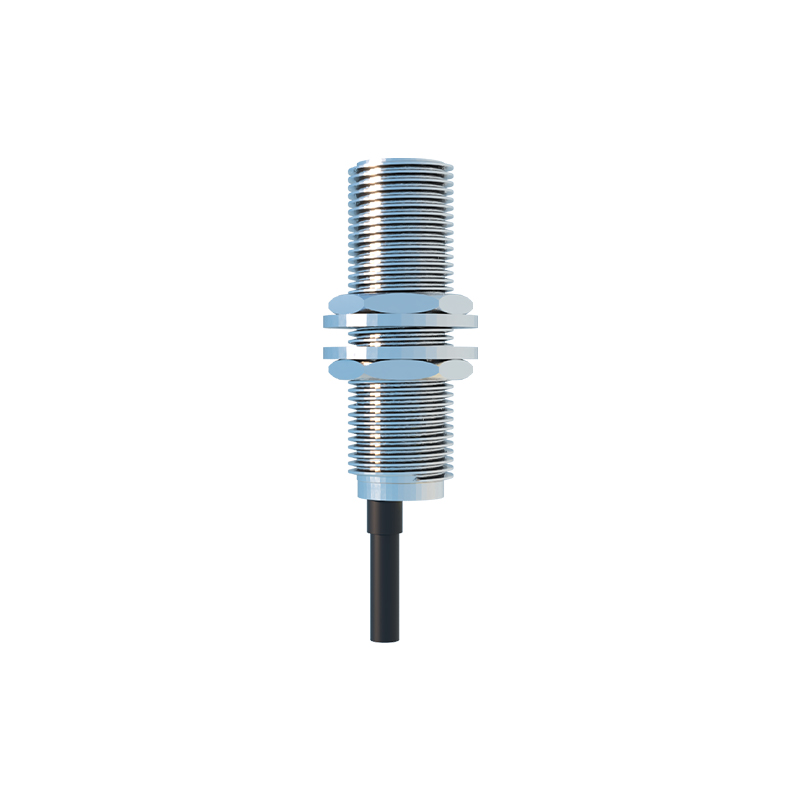
Capacitive proximity sensors, on the other hand, can detect both metallic and non-metallic materials—liquids, plastics, wood, glass, and granular substances. They function by generating an electrostatic field. When any object with a dielectric constant different from air enters this field, it alters the capacitance of the sensor's circuit, triggering the output. This makes them perfect for tasks like monitoring fill levels in tanks or silos (detecting liquids or powders through a non-metallic container wall), detecting presence of plastic or glass bottles on a production line, or controlling material handling systems.
Photoelectric sensors use light, typically infrared or laser, to detect objects. They consist of an emitter (light source) and a receiver. There are three main operational modes. The through-beam type has separate emitter and receiver units; detection occurs when the target interrupts the light beam. The retro-reflective type uses a single unit and a reflector; the target breaks the beam reflected back. The diffuse reflective (or proximity) type has the emitter and receiver in one housing and detects light reflected directly off the target itself. Photoelectric sensors offer very long sensing ranges and are excellent for detecting small objects or objects of any material, provided they are not transparent to the sensor's wavelength. They are ubiquitous in packaging, material handling, and safety systems.
When selecting a proximity switch sensor, several key parameters must be considered. Sensing range, or the maximum distance at which the sensor can reliably detect a standard target, is fundamental. The difference between the sensor's normal state and its switched state is defined by its output configuration, typically as PNP (sourcing) or NPN (sinking) for DC models, or relay outputs. The housing material, such as nickel-plated brass or stainless steel, determines environmental resilience. Factors like switching frequency, temperature tolerance, and protection ratings (like IP67 for dust and water immersion) are also critical for ensuring reliable operation in the intended application.
The applications of proximity sensors are vast and growing. In automotive manufacturing, they ensure robotic arms weld at precise locations. In consumer electronics, they deactivate touchscreens when a phone is held to the ear. In the food and beverage industry, capacitive sensors monitor liquid levels, while inductive sensors count metal cans. They form the backbone of security systems, automatic doors, and anti-collision systems on vehicles. As Industry 4.0 and the Internet of Things (IoT) advance, smart proximity sensors with integrated IO-Link communication are becoming standard, providing not just a switch signal but detailed diagnostic data, parameterization capabilities, and seamless integration into networked control systems.
In conclusion, proximity switch sensors are fundamental components that bridge the physical and digital worlds. By understanding the distinct advantages of inductive, capacitive, and photoelectric technologies, engineers and technicians can select the optimal sensor to enhance efficiency, ensure safety, and enable sophisticated automation. Their continued evolution towards smarter, more connected devices promises to further revolutionize how machines perceive and interact with their surroundings.