In modern industrial processes, the accurate measurement of materials like white lime (calcium oxide, CaO) is critical for quality control, efficiency, and safety. Traditional measurement methods, often involving manual sampling or contact-based gauges, can be slow, intrusive, and prone to human error. The advent of non-contact laser sensor technology has revolutionized this domain, offering a precise, reliable, and efficient solution for monitoring white lime in various stages of production, handling, and storage.
White lime, a key material in industries such as steel manufacturing, water treatment, construction, and chemical production, presents specific challenges for measurement. Its fine, powdery nature can create dust clouds, while its highly reflective white surface can interfere with some optical systems. Furthermore, conditions in silos, hoppers, or on conveyor belts can involve high temperatures or aggressive environments. Laser sensors, particularly those based on time-of-flight (ToF) or phase-shift measurement principles, are uniquely suited to overcome these hurdles. These devices emit a focused laser beam towards the target material. The sensor precisely calculates the distance by measuring the time it takes for the light pulse to reflect back to the detector. This allows for continuous, real-time measurement of level, volume, or even surface profile without any physical contact with the lime.
The benefits of employing laser sensors for white lime measurement are substantial. First and foremost is precision. High-quality industrial laser sensors can achieve sub-millimeter accuracy, ensuring consistent data for inventory management and process automation. This level of accuracy helps prevent overfilling of silos, which can lead to waste and spillage, or underfilling, which disrupts downstream processes. Secondly, the non-contact nature eliminates issues of material buildup on the sensor itself, a common problem with mechanical probes that leads to drift and failure. Maintenance requirements are significantly reduced, leading to lower operational costs and less downtime.
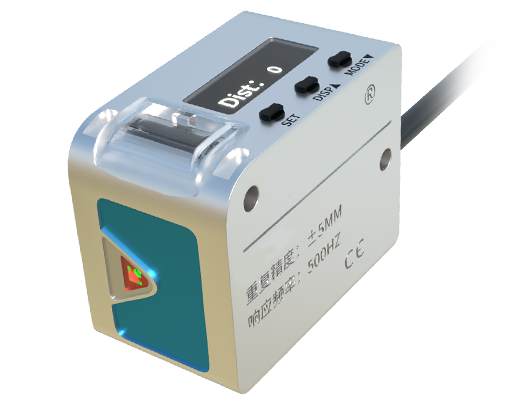
Robustness is another key advantage. Modern laser sensors are housed in enclosures with high Ingress Protection (IP) ratings, making them resistant to the pervasive dust generated by white lime. They are also designed to function reliably across a wide temperature range, suitable for both ambient storage and processes involving heat. For highly reflective surfaces like white lime, advanced sensors incorporate algorithms and optical filters to manage the strong return signal, preventing saturation and ensuring stable readings. Some models offer a "teaching" function where the sensor can be calibrated to the specific reflectivity of the material on-site, optimizing performance.
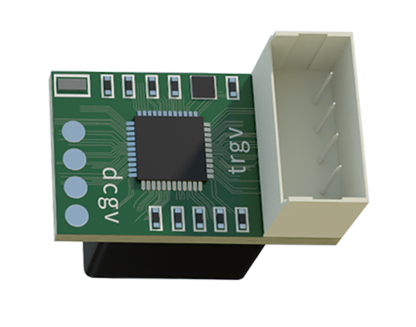
Application scenarios are diverse. In silo and hopper level monitoring, a laser sensor mounted at the top measures the distance to the material surface, continuously calculating the remaining volume. This data can be integrated into plant control systems to trigger automatic refill orders. On conveyor belts, laser sensors can profile the cross-section of the lime stream, enabling precise control of feed rates for consistent quality in subsequent mixing or reaction stages. They can also be used to monitor the thickness of lime layers in certain manufacturing processes.
When implementing a laser measurement system for white lime, several practical considerations are essential. Sensor mounting must be secure and positioned to avoid obstructions in the laser's path. The choice of mounting location should also consider potential "dead zones" or areas where material might not be detected due to the sensor's minimum measuring distance. Environmental factors like extreme ambient light or heavy vibration should be assessed, though many sensors are equipped with features to compensate for these interferences. Integration with existing control networks via standard industrial communication protocols (e.g., 4-20 mA analog, PROFIBUS, Ethernet/IP) is typically straightforward, allowing for seamless data acquisition and process adjustment.
In conclusion, laser sensor technology provides a superior alternative to conventional methods for measuring white lime in industrial settings. By delivering non-contact, high-precision, and reliable data on level, volume, and profile, these systems enhance operational efficiency, ensure product quality, and promote safer working conditions. As industries continue to pursue automation and data-driven optimization, the role of advanced laser measurement in handling key materials like white lime will only become more integral, solidifying its status as a cornerstone of modern industrial instrumentation.