Proper installation location is a critical factor determining the performance, reliability, and longevity of a proximity sensor. Selecting the optimal spot is not merely about finding space; it involves a systematic consideration of the sensor's operating principle, the target object's characteristics, and the specific environmental conditions of the application. Ignoring these factors can lead to false triggers, reduced sensing range, premature failure, or complete operational failure.
The primary rule is to ensure the sensor is positioned within its specified nominal sensing distance (Sn). This distance is defined for a standard target and under ideal conditions. Real-world installation often requires a safety margin. A best practice is to install the sensor at approximately 70-80% of its nominal sensing range. This margin compensates for factors like target material variations, temperature fluctuations, mechanical tolerances, and potential buildup of dirt or debris on the sensor face. For example, an 8mm range sensor should ideally be positioned about 5-6mm from the target during operation.
The sensor must be aligned correctly relative to the target. For inductive and capacitive sensors, the sensing face should be parallel to the target surface to achieve maximum range and stability. Angled installations can drastically reduce the effective sensing distance. For photoelectric sensors, precise alignment between the emitter and receiver (for through-beam types) or the reflector (for retro-reflective types) is paramount. Even slight misalignment can cause the signal to be lost. Background suppression sensors are less sensitive to background objects but still require the target to pass through their defined sensing field.
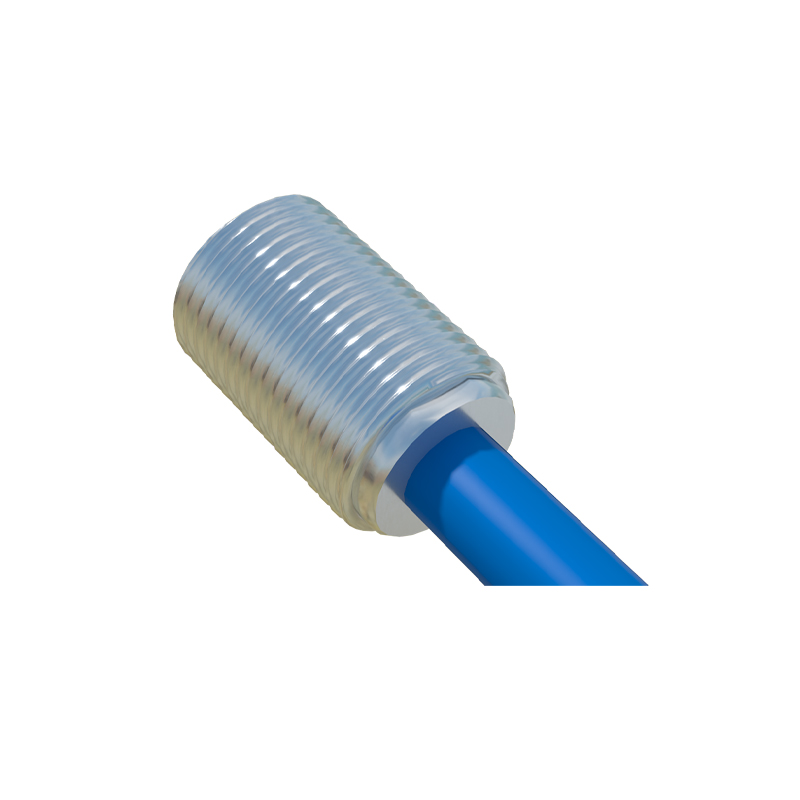
Environmental interference is a major concern. For inductive sensors, installing the sensor too close to other metal objects—including the mounting bracket, machine frame, or other sensors—can cause shielding effects or false triggering. A general guideline is to maintain a clearance of at least one to two times the sensor's diameter from surrounding metals. Capacitive sensors are susceptible to moisture, dust, and other non-target materials. They should not be installed where conductive contaminants like coolant or metal chips can accumulate on the sensing face. Photoelectric sensors can be blinded by ambient light (sunlight, welding arcs) or obscured by fog, steam, or heavy dust. Using sensors with modulated infrared light and proper housings (IP67 or higher) mitigates these issues.
The dynamics of the target and the machine must be considered. For detecting small or fast-moving objects, the sensor's response time and the size of its sensing field become crucial. The sensor should be located where the target will be present within the sensing field for a duration longer than the sensor's response time. Vibration is a common enemy. Sensors should be mounted on stable, rigid structures. If vibration is unavoidable, choose sensors specifically designed for high-vibration environments and use secure mounting methods, possibly with anti-vibration pads.
Accessibility for maintenance and adjustment is often overlooked. Sensors should be installed in locations where they can be easily inspected, cleaned, and replaced without requiring major disassembly of the machine. Leaving enough space around the sensor for tools and for visual inspection of the indicator LED (if present) saves significant time during troubleshooting.
In summary, successful proximity sensor installation requires a holistic approach. Start by consulting the sensor's datasheet for specific mounting instructions and environmental limits. Then, analyze the application: define the target material, size, and motion path. Assess the environment for potential sources of interference like other metals, liquids, light, or contaminants. Finally, perform rigorous testing under all possible operating conditions—including power-up, normal cycle, and worst-case scenarios—to verify consistent and reliable detection. Taking the time to optimize the installation location prevents costly downtime and ensures the sensing system performs as intended for years to come.