Proximity sensors have become ubiquitous components in the modern technological landscape, silently enabling functionality in devices we interact with daily. Their core feature is the ability to detect the presence or absence of a nearby object without any physical contact. This non-contact detection is achieved by emitting an electromagnetic field, beam, or radiation and looking for changes in the field or return signal. The defining characteristics of these sensors determine their suitability for various demanding applications.
One of the most critical features is the sensing range or distance. This specifies the maximum distance at which the sensor can reliably detect a target object. Ranges vary dramatically, from a few millimeters in precision assembly robots to several meters in vehicle detection systems. Closely related is the repeatability, which refers to the sensor's ability to consistently detect an object at the same point under identical conditions, a vital parameter for industrial automation.
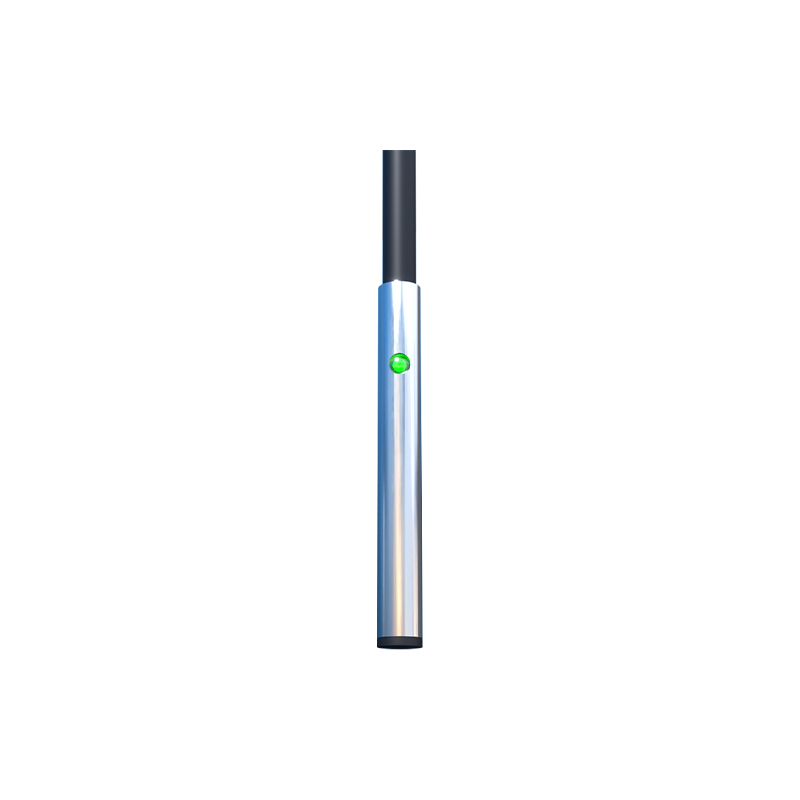
The type of sensing technology employed is a fundamental differentiator. Inductive proximity sensors are among the most common, generating an oscillating electromagnetic field to detect metallic objects. They are highly robust, resistant to environmental factors like dust and oil, and are staples in manufacturing for tasks like counting metal parts or determining piston position. Capacitive sensors, on the other hand, can detect both metallic and non-metallic materials—liquids, plastics, wood, or granules—by measuring changes in capacitance. This makes them ideal for level detection in tanks or presence detection of packaged goods.
Photoelectric sensors use light, typically infrared, to detect objects. They offer the longest sensing ranges and come in various operational modes: through-beam (with separate emitter and receiver), retro-reflective (using a reflector), and diffuse-reflective (where the target itself reflects the light back). Their versatility allows them to handle complex detection tasks on packaging lines or in automated warehousing. Ultrasonic sensors measure the time taken for a sound wave to reflect back from an object, excelling in harsh environments where dirt, dust, or moisture might interfere with optical sensors. They are commonly used for liquid level control, distance measurement, and object profiling.
Output configuration is another key feature. Sensors provide either a digital (discrete) on/off signal, often through a transistor (PNP or NNP sourcing/sinking) or relay, or an analog signal (e.g., 4-20 mA, 0-10V) that varies proportionally with the distance to the target. Analog outputs are essential for applications requiring continuous measurement, such as monitoring roll diameter or tension control.
Environmental robustness is non-negotiable for industrial use. Key ratings include the Ingress Protection (IP) code, which defines resistance to solids and liquids, and the NEMA rating in some regions. Sensors designed for washdown areas in food processing or for outdoor use require high IP ratings like IP67 or IP69K. Furthermore, many models feature robust housings in stainless steel or nickel-plated brass to withstand mechanical impact, chemical exposure, and extreme temperatures.
Response time, the speed at which the sensor reacts to a target's appearance or disappearance, is crucial in high-speed applications. Fast-responding sensors are mandatory on fast-moving production lines for accurate counting or positioning. Additionally, features like built-in timers, logic functions, or teach-in capabilities (allowing easy adjustment of the sensing range via a button) add significant intelligence and ease of use.
The application of these features is vast. In consumer electronics, a smartphone uses an IR-based proximity sensor to turn off the display during a call to save power and prevent accidental touches. In automotive systems, ultrasonic sensors enable parking assistance and blind-spot detection. Industrial automation relies on them for precise positioning of robotic arms, jam detection on conveyor belts, and ensuring worker safety by creating non-contact guard zones around hazardous machinery. The healthcare sector utilizes them in infusion pumps and automated dispensers for reliable non-contact detection.
Understanding the interplay of these features—sensing technology, range, output, and durability—is essential for selecting the right sensor. The correct choice ensures reliability, enhances safety, improves efficiency, and enables the sophisticated automated processes that define contemporary industry and product design. As technology advances, these sensors continue to evolve, offering greater precision, miniaturization, and integration with IoT systems for smarter monitoring and control.