In the realm of industrial safety, particularly within sectors like mining, oil and gas, and chemical processing, the accurate and reliable detection of methane gas is paramount. Traditional catalytic bead and electrochemical sensors, while historically effective, present limitations in response time, selectivity, and longevity in harsh environments. The advent of laser diode-based gas sensors, specifically Tunable Diode Laser Absorption Spectroscopy (TDLAS) sensors, represents a transformative leap in gas detection technology, offering unparalleled precision and robustness for methane monitoring.
The core principle of TDLAS technology is direct absorption spectroscopy. A laser diode emits a narrow-bandwidth infrared light beam tuned to a specific absorption line of the target gas molecule—in this case, methane (CH₄). As this laser light passes through the measurement area, methane molecules absorb light at their characteristic wavelength. A photodetector on the opposite side measures the intensity of the transmitted light. The degree of attenuation (absorption) is directly proportional to the concentration of methane gas present along the optical path, following the Beer-Lambert law. This method is inherently highly selective because each gas has a unique absorption "fingerprint" in the infrared spectrum. By precisely tuning the laser to methane's absorption line, the sensor is virtually immune to interference from other gases, a significant advantage over cross-sensitive older technologies.
Modern laser methane probes are engineered for demanding field applications. They typically employ a distributed or open-path configuration. In a distributed setup, the sensor head, containing the laser and detector, is housed in a rugged, often explosion-proof enclosure. It can measure methane concentrations at a point or, using a retro-reflector placed some distance away, over an open path, providing an average concentration measurement across a wide area—ideal for monitoring fence lines or large indoor spaces. The laser components are thermoelectrically cooled to maintain wavelength stability despite ambient temperature fluctuations, ensuring consistent calibration.
The operational benefits of laser diode methane sensors are substantial. Firstly, they offer exceptional speed, with response times in the range of seconds, enabling rapid detection of gas leaks. Their selectivity eliminates false alarms caused by other volatile organic compounds. Perhaps most notably, they have a significantly longer operational life, often exceeding 5-10 years, because the sensing mechanism is optical and does not rely on consumable elements or catalysts that can be poisoned by silicones, lead, or other contaminants. This translates to lower total cost of ownership despite a higher initial investment. Furthermore, they require minimal calibration—only an annual zero-check is typical—reducing maintenance downtime.
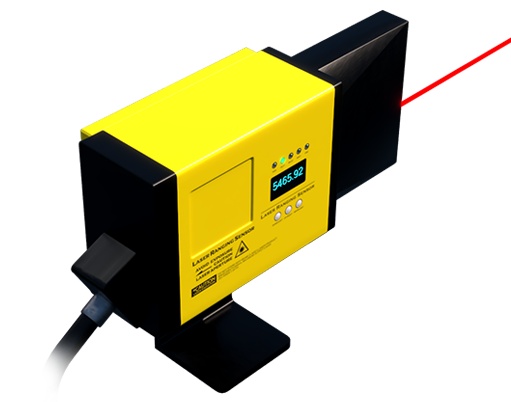
In practical industrial scenarios, these sensors are deployed for a variety of critical tasks. In coal mines, they provide continuous monitoring of methane levels in return airways and at the mining face, crucial for preventing explosive accumulations. In natural gas processing plants and compressor stations, they are used for fugitive emission monitoring and leak detection around flanges, valves, and pumps. Their ability to perform remote sensing allows for safe monitoring of hazardous or inaccessible areas. Integration with modern Industrial Internet of Things (IIoT) platforms is straightforward, enabling real-time data transmission, historical trend analysis, and immediate alarm triggering to central control rooms.
Despite their advantages, challenges remain. The upfront cost is higher than that of conventional sensors. Performance can be affected by extreme obscuration of the optical path, such as heavy dust or fog, though many models incorporate algorithms to compensate for signal loss. Proper alignment in open-path systems is also critical. However, ongoing advancements in laser diode design, photonic integration, and signal processing algorithms are continuously mitigating these issues, driving costs down and enhancing reliability.
In conclusion, laser diode-based methane sensors, leveraging TDLAS technology, have redefined the standards for gas detection in industrial safety. Their superior selectivity, speed, stability, and longevity make them an indispensable tool for proactive hazard mitigation. As industries worldwide intensify their focus on safety regulations and environmental monitoring, the adoption of this advanced optical sensing technology is set to become the benchmark, ensuring safer workplaces and more efficient operations through precise, dependable methane quantification.