LiDAR (Light Detection and Ranging) and laser sensors represent pivotal advancements in electrical engineering, driving innovation across autonomous systems, industrial automation, and environmental monitoring. These technologies utilize laser beams to measure distances, detect objects, and map environments with exceptional precision. Unlike traditional sensors, LiDAR systems emit rapid laser pulses and calculate the time taken for reflections to return, generating detailed 3D point clouds. This capability is fundamental for applications such as self-driving vehicles, where real-time spatial awareness is critical for navigation and obstacle avoidance.
The operational principle of LiDAR hinges on photodetectors and high-speed signal processing circuits. When a laser pulse strikes a surface, the reflected light is captured by a receiver. Electrical engineers design these systems to handle nanosecond-scale timing, requiring sophisticated analog-to-digital converters and microcontrollers. Key components include laser diodes (often operating in near-infrared spectra), optical lenses, and rotating or solid-state scanning mechanisms. Solid-state LiDAR, in particular, eliminates moving parts, enhancing durability and reducing costs—a focus area for modern R&D.
In industrial settings, laser sensors provide non-contact measurement solutions for quality control, alignment, and safety. For instance, in manufacturing lines, they monitor object dimensions or detect minute defects with micron-level accuracy. Electrical integration involves pairing sensors with PLCs (Programmable Logic Controllers) and IoT networks, enabling data-driven automation. Challenges such as ambient light interference or material reflectivity are addressed through modulated laser signals and filtering algorithms.
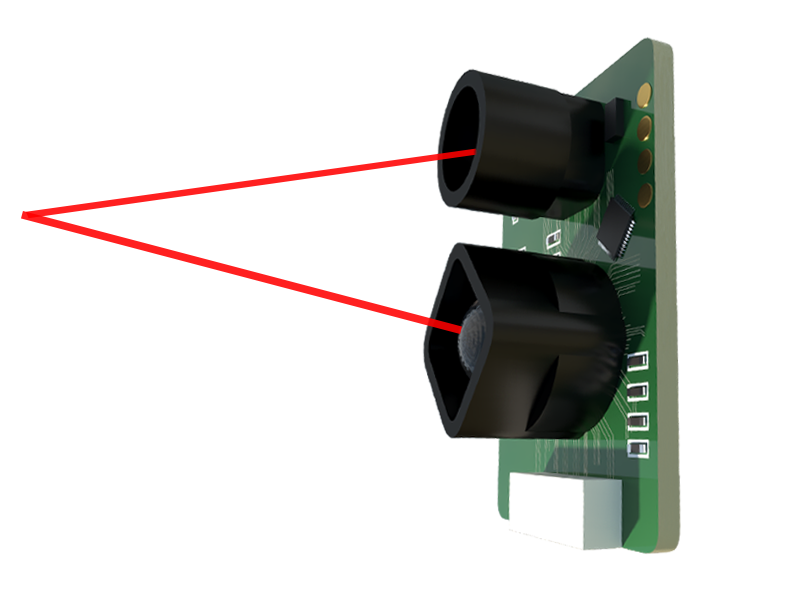
Environmental applications leverage LiDAR for topographic surveying, forestry management, and climate research. Airborne systems map terrain by emitting thousands of pulses per second, with data processed using GPU-accelerated software. Engineers optimize power efficiency and thermal management to ensure reliability in field deployments. Additionally, advancements in MEMS (Micro-Electro-Mechanical Systems) have miniaturized LiDAR units, expanding their use in drones and portable devices.
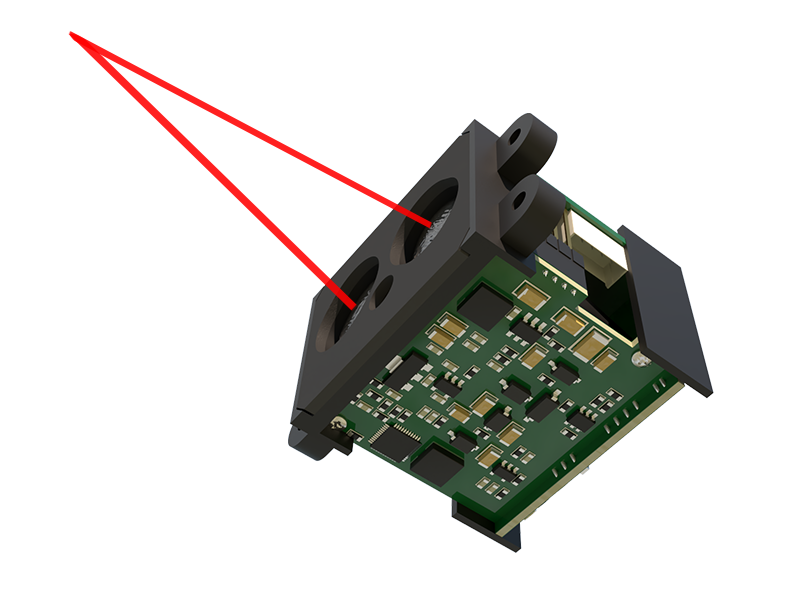
The future trajectory of laser sensing technology intersects with AI and edge computing. Machine learning algorithms now interpret LiDAR data for object classification (e.g., distinguishing pedestrians from vehicles), while edge devices enable low-latency decision-making. Electrical engineers continue to refine semiconductor materials, like gallium arsenide for laser efficiency, and develop hybrid systems combining LiDAR with radar or cameras. As costs decline and performance scales, these technologies will further permeate smart infrastructure, robotics, and beyond, underscoring their role as cornerstones of electrical innovation.