Laser displacement sensors are pivotal components in modern industrial automation, offering non-contact, high-precision measurement capabilities. These devices operate by emitting a laser beam toward a target surface and analyzing the reflected light to determine distance or position changes. The core principle often involves triangulation or time-of-flight methods, with triangulation being prevalent for short to medium ranges due to its exceptional accuracy, often down to the micrometer level. In contrast, time-of-flight sensors suit longer distances, though with slightly reduced precision.
In manufacturing environments, laser displacement sensors are extensively utilized for quality control, such as verifying component dimensions, detecting surface defects, or monitoring thickness in real-time. For instance, in automotive assembly lines, they ensure precise gap measurements between body panels, while in electronics, they verify the coplanarity of semiconductor packages. Their non-contact nature eliminates mechanical wear and prevents damage to delicate objects, making them ideal for high-speed production systems.
Key specifications to consider when selecting a sensor include measuring range, resolution, sampling speed, and environmental robustness. Industrial-grade sensors often feature rugged housings with IP67 ratings to withstand dust, moisture, and vibrations. Additionally, advanced models incorporate features like background suppression to ignore irrelevant surfaces and analog or digital outputs for seamless integration with PLCs (Programmable Logic Controllers) or data acquisition systems.
Despite their advantages, challenges such as interference from ambient light, surface reflectivity variations, and material transparency can affect performance. To mitigate these, engineers may employ sensors with adjustable sensitivity, use filters, or apply coatings to targets. Regular calibration against known standards is also crucial to maintain accuracy over time.
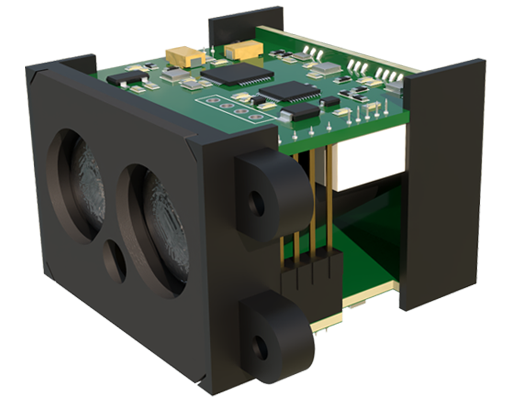
Emerging trends include the integration of laser sensors with IoT (Internet of Things) platforms, enabling predictive maintenance and data analytics. For example, continuous monitoring of machinery alignment can preempt failures, reducing downtime. Furthermore, miniaturization and cost reductions are expanding applications into fields like robotics, where sensors aid in navigation and object manipulation.
In summary, laser displacement sensors are indispensable tools for precision measurement in industries ranging from aerospace to pharmaceuticals. Their ability to deliver fast, reliable data supports automation goals, enhancing efficiency and product quality. As technology evolves, these sensors will likely become even more versatile, driving innovation in smart manufacturing and beyond.