In the demanding landscape of modern industrial processes, particularly within sectors like cryogenics, superconductivity, pharmaceuticals, and advanced materials research, the precise measurement of low temperatures presents a significant engineering challenge. Traditional contact-based sensors, such as thermocouples or Resistance Temperature Detectors (RTDs), while reliable in many contexts, can introduce errors through thermal conduction, require physical contact that may contaminate or interfere with the sample, and often struggle with rapid response times or spatial resolution at very low temperature ranges. This is where Low-Temperature Laser Temperature Sensors, a sophisticated subset of non-contact thermometry, have emerged as a critical technological solution. This article delves into the operating principles, key applications, and recent technological advancements of these sensors.
At its core, a low-temperature laser temperature sensor operates on the fundamental principle of optical pyrometry and laser spectroscopy, adapted for cryogenic environments. The most prevalent technique is Laser-Induced Fluorescence (LIF) Thermometry and variations of Raman spectroscopy. In LIF, a carefully tuned laser beam is directed at the target surface or a phosphor coating applied to it. The target material absorbs the laser photons and re-emits light (fluoresces) at a different wavelength. The characteristics of this emitted fluorescence—such as its intensity, lifetime, or spectral shift—are intrinsically dependent on the temperature of the target material. By precisely analyzing this emitted signal with a high-sensitivity photodetector and sophisticated algorithms, the sensor can determine the temperature with remarkable accuracy, often within fractions of a Kelvin, even below 77 K (the boiling point of liquid nitrogen) and into the millikelvin regime.
Another prominent method is based on the temperature-dependent shift of Raman spectral peaks. When monochromatic laser light interacts with molecular bonds in a material, the inelastically scattered Raman light provides a "fingerprint" of molecular vibrations. The frequency and shape of these Raman peaks are sensitive to temperature changes. By monitoring these shifts, the sensor can provide a highly localized temperature reading without any physical contact. These optical methods offer distinct advantages: they are completely non-invasive, eliminating heat transfer errors and contamination risks; they provide exceptional spatial resolution, allowing temperature mapping of microscopic features or small components; and they boast extremely fast response times, limited only by the laser pulse duration and detector speed, enabling the study of transient thermal phenomena.
The applications for low-temperature laser thermometers are vast and growing. In superconductivity research, where materials must be cooled to critical temperatures often below 100 K, these sensors are indispensable for mapping temperature gradients across superconducting coils or films without disturbing the delicate quantum states. Within the aerospace industry, they are used to monitor the temperature of cryogenic fuel tanks (liquid hydrogen or oxygen) and associated components in rockets and satellites. In semiconductor manufacturing, particularly in processes like cryogenic etching or testing, they enable precise temperature control of silicon wafers. Pharmaceutical companies utilize them in lyophilization (freeze-drying) processes to ensure precise temperature profiles during the sublimation of ice, critical for preserving the efficacy of vaccines and biologics. Furthermore, in fundamental physics experiments, such as those involving quantum computing components or dark matter detectors operating near absolute zero, laser thermometry is often the only viable measurement technique.
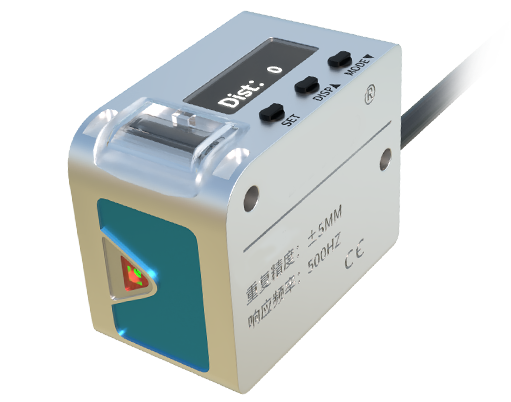
Recent advancements are pushing the boundaries of what these sensors can achieve. The integration of fiber-optic delivery systems allows the laser source and detector to be located remotely from the harsh measurement environment (e.g., inside a high-vacuum cryostat or a high-magnetic-field zone), enhancing reliability and flexibility. The development of novel phosphor materials with stronger and more predictable fluorescence at very low temperatures has improved signal-to-noise ratios and extended the lower measurement limit. Advances in computational power and machine learning algorithms have revolutionized data analysis, enabling real-time, high-precision temperature extraction from complex spectral data, even in the presence of background noise. Additionally, the miniaturization of laser diodes and detectors is leading to more compact and cost-effective sensor systems, opening doors for broader industrial adoption.
Despite their advantages, engineers must consider certain limitations. The accuracy of the measurement can be influenced by the emissivity or surface properties of the target; a consistent and known surface condition or a calibrated phosphor coating is often required. The initial cost of a high-performance laser thermometry system can be higher than that of conventional sensors, though the total cost of ownership may be lower when considering reduced maintenance, elimination of sensor wear-out, and prevention of product contamination. Furthermore, the optical path must be clear of obstructions, and in some environments, windows or viewports are necessary, which can become frosted at cryogenic temperatures—a challenge addressed by specialized window designs and purge systems.
In conclusion, low-temperature laser temperature sensors represent a pinnacle of precision measurement technology, bridging the gap between the need for accurate thermal data and the constraints of extreme cryogenic environments. By leveraging the interaction of laser light with matter, they provide a non-contact, high-resolution, and rapid solution that is transforming research, development, and quality control across multiple high-tech industries. As laser and photodetector technologies continue to advance, these sensors will undoubtedly become even more sensitive, robust, and integral to the next generation of low-temperature engineering and scientific discovery.