In the rapidly evolving landscape of industrial automation and precision measurement, the 150-meter laser sensor stands as a pivotal technology, enabling accurate, non-contact detection and ranging over significant distances. This class of sensor, typically operating on the principle of time-of-flight (ToF) or phase-shift measurement, emits a focused laser beam and calculates distance by analyzing the reflected signal. The capability to reliably measure up to 150 meters opens a vast array of applications previously challenging for shorter-range devices.
The core operating principle for most long-range laser sensors is Time-of-Flight. A laser diode emits a short, intense pulse of light. A high-speed timer starts simultaneously. The pulse travels to the target, reflects, and returns to a receiver within the sensor. The timer stops upon receiving the reflection. Since the speed of light is a known constant, the distance is calculated precisely using the formula: Distance = (Speed of Light × Time of Flight) / 2. Advanced signal processing algorithms filter out ambient light noise and handle varying surface reflectivities, ensuring stable readings even on low-reflectivity targets at maximum range. For 150-meter sensors, components like high-power laser diodes, sensitive avalanche photodiodes (APDs) for reception, and robust housing to maintain optical alignment are critical.
Key performance parameters define a 150-meter laser sensor's suitability. The stated measuring range of 0.1m to 150m is primary. Accuracy and repeatability are paramount; high-end models offer accuracy within ±10mm or better over the entire range. Laser class (typically Class 1 or Class 2, eye-safe) determines safety requirements. The response time or measurement frequency, often up to 250Hz or more, dictates how fast dynamic processes can be monitored. Environmental ratings like IP67 or IP69K are essential for durability against dust, water, and mechanical shock in harsh industrial settings. The output interface (e.g., analog 4-20mA, 0-10V, digital RS-232/485, Ethernet/IP, PROFINET) allows seamless integration into control systems.
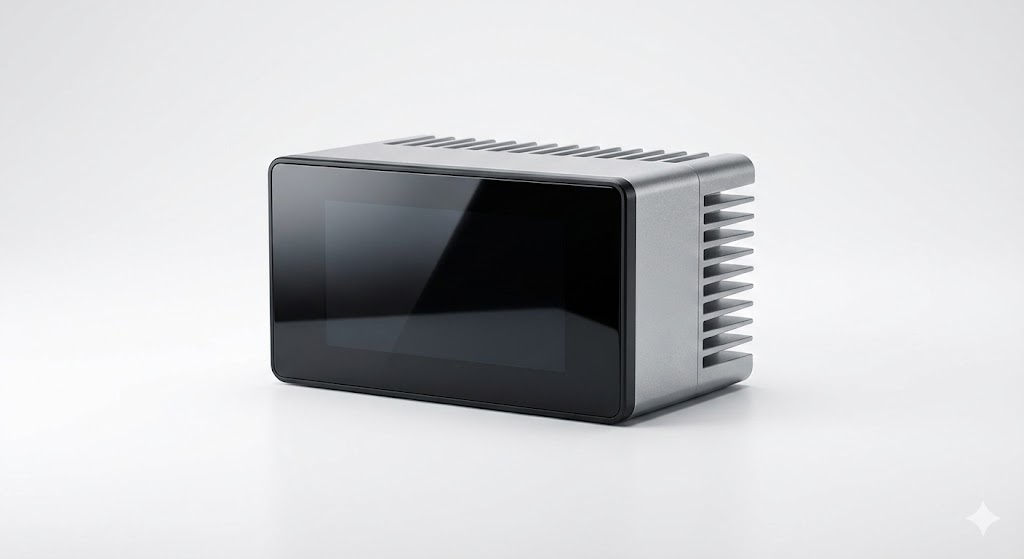
The applications for 150-meter laser sensors are extensive and transformative. In warehousing and logistics, they enable high-precision inventory profiling, automated crane positioning, and pallet dimensioning in large storage facilities. The construction and mining sector utilizes them for vehicle collision avoidance on large equipment, level monitoring of bulk material in stockpiles, and excavation volume calculation. For port automation, these sensors guide container handling cranes, monitor ship loading, and ensure safe gantry movement. In agriculture, they facilitate autonomous vehicle guidance and large-scale terrain mapping. Security and perimeter protection systems employ them for long-distance intrusion detection over fences and open areas. Furthermore, they are instrumental in industrial process control, such as monitoring the sag of overhead power lines or the position of ladles in steel plants.
Selecting the right 150-meter laser sensor requires careful consideration of the application specifics. First, define the target characteristics: its color, surface texture (matte, glossy), and material. Dark, matte, or absorbent surfaces reduce reflectivity, potentially shortening the effective range, while retro-reflective targets can extend it. Second, assess the environmental conditions: temperature extremes, humidity, dust, fog, or direct sunlight can all impact performance. Sensors with built-in environmental compensation are preferable for outdoor use. Third, determine the necessary performance specs: the required accuracy, response speed, and measurement stability under variable conditions. Fourth, consider the mechanical integration: the sensor's size, mounting options, and alignment aids (like built-in visible red pilot laser). Finally, evaluate the communication protocol needed to interface with your PLC, SCADA, or data acquisition system.
Installation and maintenance are crucial for optimal performance. Ensure stable mounting to minimize vibration. The sensor should be aligned perpendicular to the target surface for most accurate results, though some models offer correction for known angles. Keep the lens clean from dust, oil, or condensation; using an optional air purge accessory can be beneficial in very dirty environments. Regular verification against a known distance benchmark is recommended as part of a preventive maintenance schedule. Most modern sensors feature diagnostic outputs to indicate signal strength or warning conditions, aiding in troubleshooting.
The future of long-range laser sensing points towards increased integration, intelligence, and miniaturization. We are seeing trends like multi-echo detection, which allows a single sensor to measure through partial obstructions (like foliage or mesh), and the fusion of laser data with other sensor types (e.g., IMUs, cameras) for enhanced perception. Connectivity via Industrial IoT (IIoT) platforms enables predictive maintenance and centralized monitoring of vast sensor networks. Furthermore, advancements in laser and detector technology continue to push the boundaries, offering longer ranges, higher accuracy, and lower power consumption in more compact form factors.
In conclusion, the 150-meter laser sensor is a versatile and powerful tool that has become indispensable in modern industrial automation. By providing precise, long-distance, and non-contact measurement, it solves complex challenges in material handling, logistics, outdoor industrial processes, and safety systems. A thorough understanding of its principles, a careful analysis of application requirements, and proper selection and installation are the keys to leveraging its full potential, driving efficiency, safety, and automation to new heights.