In the realm of industrial automation and process control, the reliable and accurate counting of objects, parts, or events is a fundamental requirement. This critical task is often entrusted to counter sensors, whose performance is intrinsically linked to the quality and suitability of their primary sensing element: the proximity switch. As an electrical engineer, understanding the synergy between counters and proximity switches is essential for designing robust and efficient systems.
A proximity switch, fundamentally, is a non-contact sensor that detects the presence or absence of a target object within its sensing range without physical contact. This key characteristic eliminates mechanical wear, ensures high operational speed, and provides exceptional longevity—attributes paramount for counting applications. When integrated into a counter sensor system, the proximity switch acts as the "eye," generating a discrete electrical signal (typically a switching DC voltage or a pulse) each time a target passes by. This signal is then processed by the counter's electronic circuitry to increment or decrement a tally.
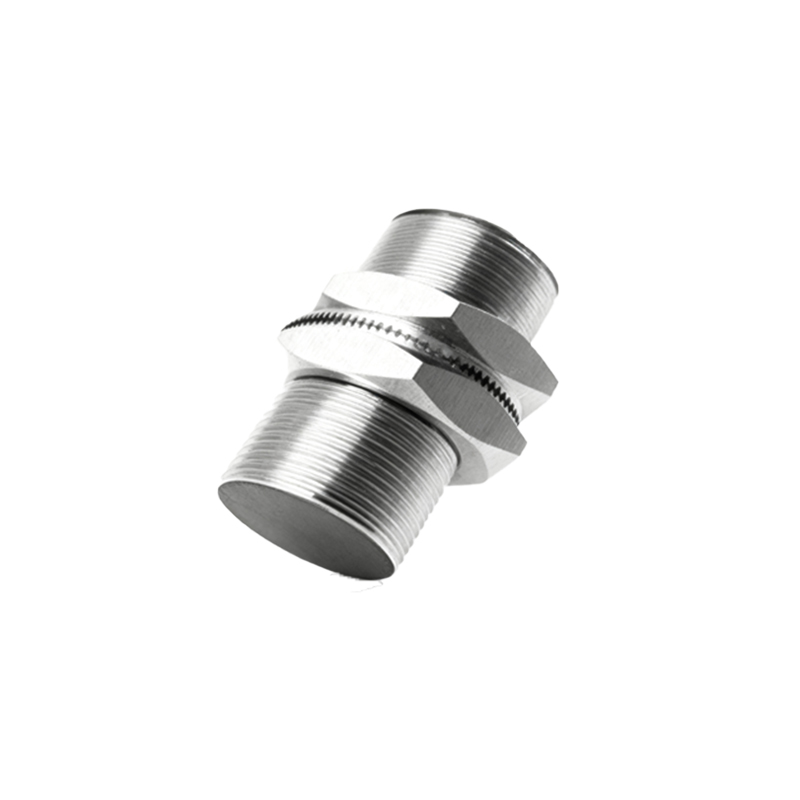
Several types of proximity switches are prevalent in counter sensor applications, each with distinct operating principles and ideal use cases. Inductive proximity switches are the workhorses for detecting metallic objects. They generate an electromagnetic field; when a metal target enters this field, it induces eddy currents, causing a change in oscillation amplitude that triggers the switch. They are ideal for counting metal parts on conveyor belts, machine tool components, or automotive assemblies. Capacitive proximity switches, on the other hand, can detect both metallic and non-metallic materials (plastics, wood, liquids, etc.) by sensing changes in capacitance. This makes them suitable for diverse counting tasks, such as bottles on a filling line, cardboard boxes, or lumber.
For applications requiring longer sensing distances or detection of any opaque material, photoelectric sensors are frequently employed. These operate by emitting a beam of light (visible, infrared, or laser) and detecting its reflection or interruption. Through-beam, retro-reflective, and diffuse reflection modes offer flexibility for different counting setups, commonly used in packaging, material handling, and logistics. Ultrasonic proximity switches use sound waves and are excellent for detecting objects with varied surface properties or in challenging environments with dust or vapor, though their response time is generally slower than inductive or photoelectric types.
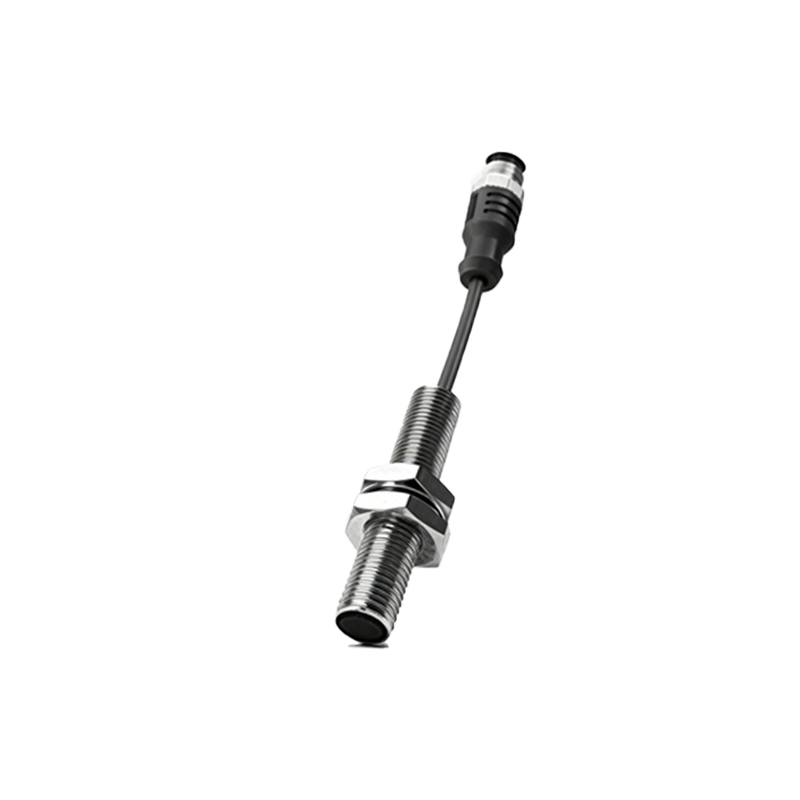
Key technical parameters must be carefully evaluated when selecting a proximity switch for a counter sensor. The sensing distance, or "sn," is nominal and must be derated for reliable operation, considering temperature, voltage, and target material. Switching frequency defines how many detection events per second the switch can handle, directly limiting the maximum counting speed. Factors like hysteresis (the difference between switch-on and switch-off points) prevent chatter in unstable conditions. Environmental robustness, indicated by IP (Ingress Protection) ratings, is crucial for withstanding dust, moisture, and washdowns in industrial settings. The output configuration (NPN sinking or PNP sourcing) must be compatible with the counter's input circuit.
The integration point is critical. Proper mounting, alignment, and shielding are necessary to avoid false triggers from vibration, adjacent metal, or electrical noise. For high-speed counting, the switch's response time and the counter's input filter settings must be harmonized to capture every event without registering noise. Advanced counters may offer functions like dual input for bidirectional counting (using two switches) or latch modes for precise positioning.
In conclusion, the proximity switch is not merely an accessory but the foundational sensory component of a counter sensor system. Its selection dictates the system's accuracy, reliability, and application scope. By meticulously matching the switch's technology—inductive, capacitive, photoelectric, or ultrasonic—to the target material, environmental conditions, and required speed, electrical engineers can design counting solutions that deliver precise data for process optimization, inventory control, and quality assurance. The ongoing evolution towards miniaturization, IO-Link connectivity for parameterization and diagnostics, and enhanced resilience ensures that proximity switches will continue to be indispensable in the smart factories and automated processes of the future.